

Private Horseback Riding Lessons for Kids
Private horseback riding lessons for kids build confidence, safety, and real skills through one-on-one coaching tailored to each child.
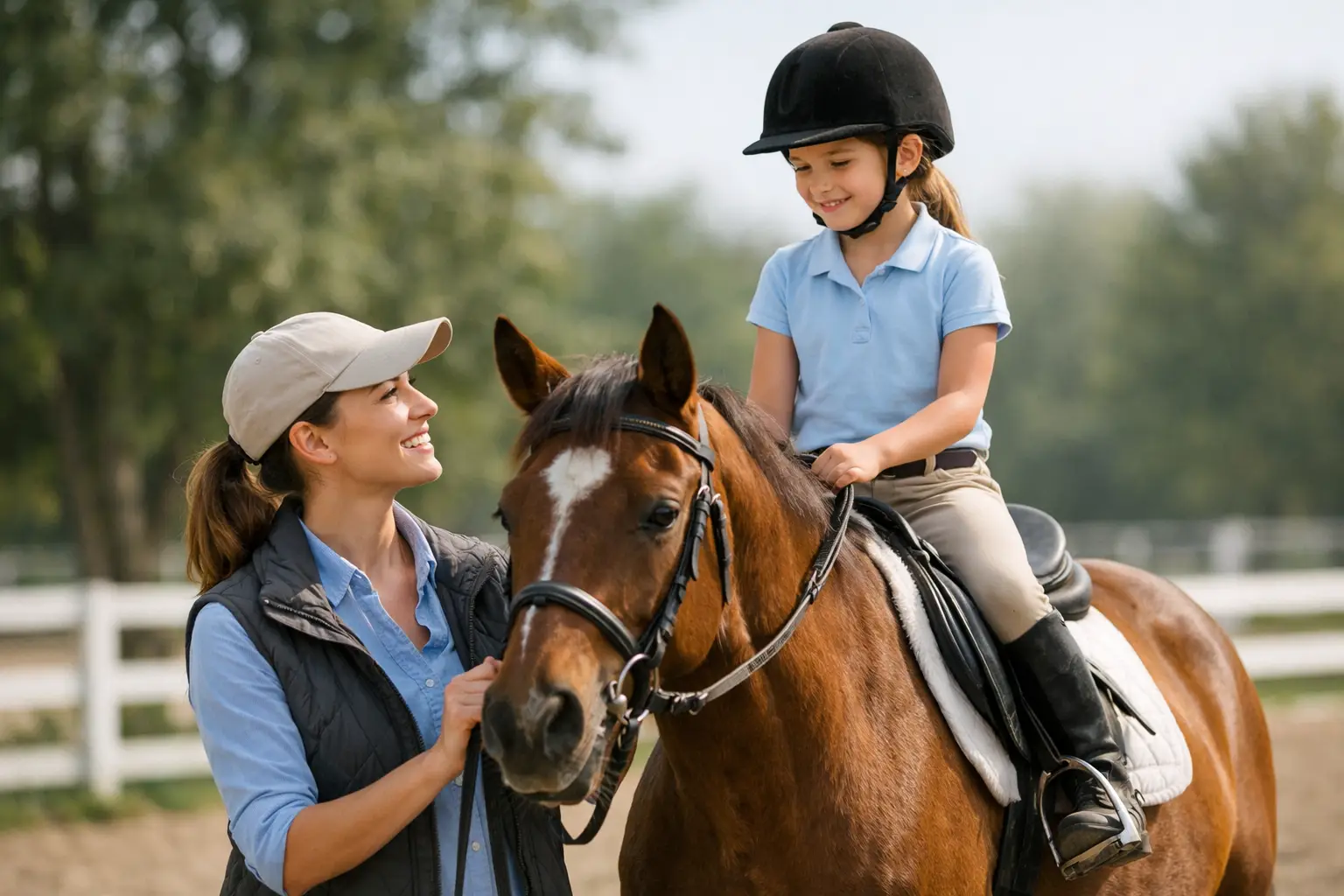
Some kids climb onto a horse and light up right away. Others need a little time, a quieter introduction, and an instructor who knows when to encourage and when to slow down. That is exactly why private horseback riding lessons for kids can make such a meaningful difference in the early stages of riding. For many families, the best start is not simply getting in the saddle. It is giving a child the right environment to learn safely, build trust, and develop real horsemanship from day one.
Why private horseback riding lessons for kids often work better
Children do not all learn the same way, especially around horses. One rider may be eager and physically bold but need help with patience and listening. Another may be naturally careful and kind with horses but need time to build confidence at the walk and trot. In a private lesson, the teaching can be adjusted in real time to fit the child in front of the instructor.
That personalized attention matters for safety, but it also matters for progress. A young rider who receives clear, immediate feedback tends to understand the connection between their body position, their cues, and the horse's response much faster. Instead of trying to keep up with a group, they can focus on the basics until those basics are solid.
For parents, this usually means a more thoughtful introduction to the sport. Riding is not like signing up for a general activity where every child follows the same pace. Horses are sensitive, athletic animals, and children benefit from instruction that treats riding as a skill to be built carefully and correctly.
What a child actually learns in a private riding lesson
A strong lesson program teaches more than steering and stopping. Riding skills matter, of course, but true equestrian education starts well before the child picks up the reins.
In private horseback riding lessons for kids, instruction often includes how to approach a horse safely, how to read basic body language, how to groom properly, and how to move calmly and respectfully around the barn. These details may seem small from the outside, but they build the foundation for safe habits and confident riding.
Once mounted, the lesson can be tailored to the rider's age, coordination, and experience level. A beginner may spend time learning balance, posture, and how to follow the motion of the horse at the walk. A more experienced child may work on steering accuracy, transitions, jumping basics, or dressage fundamentals. The advantage of a private setting is that each skill can be introduced when the child is ready for it, not when the rest of a class happens to move on.
That pacing is especially valuable for children who are still developing body awareness. Riding asks for balance, coordination, focus, and emotional regulation all at once. One-on-one coaching gives a child space to practice without feeling rushed.
Safety is more than helmets and rules
Parents often ask about safety first, and they should. A quality riding program takes safety seriously at every level, not just during the lesson itself.
That begins with horse selection. Not every horse is suitable for every child, and a good instructor thinks carefully about temperament, training, size, and responsiveness before making a match. A private lesson makes that match easier to monitor. If a child needs a steadier ride, more support, or a different level of challenge, adjustments can be made without disrupting a group.
Safety also depends on ranch design, horse handling standards, and the overall pace of instruction. Children learn best in an environment where expectations are clear and supervision is consistent. The right setting feels calm and organized, not chaotic. That atmosphere helps young riders stay focused and helps parents feel confident that their child is being taught with care.
It is also worth saying that safe instruction does not mean overly cautious instruction. Kids do well when they are challenged appropriately. The goal is to build skill and confidence step by step, so they can grow into capable riders rather than simply feeling entertained for an hour.
Confidence grows differently in a one-on-one setting
There is a big difference between a child who looks comfortable on a horse and one who truly understands what they are doing. Real confidence comes from competence. It grows when a rider learns how to solve small problems, communicate clearly, and recover from mistakes with support.
Private lessons create more room for that process. If a rider feels nervous, the instructor can break a task into smaller pieces. If a rider is ready for more, the lesson can become more technical. Either way, the child gets direct coaching that supports steady progress instead of uneven progress.
This matters especially for children who are either shy or highly driven. Shy riders often benefit from quieter instruction and more time to process. Highly motivated riders may want to move quickly, but they still need a program that protects the quality of their basics. A private lesson can support both personalities without forcing either one into the wrong pace.
When private lessons are the best fit
Not every child needs the same lesson format forever, but there are certain times when private instruction is especially helpful.
It is often the best choice for true beginners, because the first experiences around horses shape how a child feels about riding. It is also ideal for kids who need extra reassurance, those who are returning after a long break, and riders working toward specific goals in jumping or dressage.
Private instruction can also be a smart option for families who want more than casual riding exposure. If your goal is to help your child develop responsibility, discipline, and real horsemanship, individualized coaching usually gives you a clearer path. Progress is easier to measure when the instructor can track exactly what the rider is learning each week.
That said, private lessons are not about making the experience intense or pressured. For many children, they simply create a more comfortable setting to ask questions, make mistakes, and build a relationship with both horse and trainer.
What parents should look for in private horseback riding lessons for kids
The instructor matters, but so does the whole program around the lesson. Parents should look for a setting where horse care, rider education, and safety are treated as connected parts of the same standard.
A good program will explain how lessons are structured, what beginners can expect, and how horses are matched to riders. It should also be clear that learning includes horsemanship, not just saddle time. Children who understand grooming, handling, and respect for the horse usually become more thoughtful riders over time.
It also helps to look for a facility that is intentionally designed for teaching. Clean, functional spaces, well-managed horses, and direct trainer oversight all contribute to a better learning experience. In a boutique environment, there is often more opportunity for close attention, clearer communication with families, and a lesson plan that evolves as the rider develops.
For families in the Wimberley area, that kind of individualized approach can make riding feel less like a drop-in activity and more like a meaningful part of a child's growth. That is often where the long-term value is found.
The long-term value goes beyond riding
Horseback riding can absolutely become a serious athletic pursuit, but many of its benefits show up in everyday life long before a child enters a show ring. Children who ride often become more patient, more observant, and more accountable. They learn that animals respond to consistency, clarity, and calm energy. Those are useful lessons well outside the barn.
They also learn that progress is earned. Horses do not respond well to force, distraction, or shortcuts. Kids begin to understand that improving a skill takes repetition and humility. Some days feel easy. Some do not. That experience can be surprisingly grounding for children who are still learning how to handle challenge and frustration.
In the right program, riding also teaches empathy. A child starts to notice when a horse is relaxed, confused, or tense. They learn to pay attention to something beyond themselves. That awareness is one of the most valuable parts of good horsemanship, and it is often cultivated best in a private lesson where those quieter details are not lost in a crowd.
The right start in riding should feel safe, purposeful, and encouraging. When a child has the time, instruction, and individualized support to learn well, the lesson becomes more than an hour on horseback. It becomes a place where confidence is built carefully, skills are developed correctly, and a genuine respect for horses can take root for years to come.