

Beginner Horse Riding Lessons: What to Expect
Beginner horse riding lessons build confidence, safety, and real skills. Learn what to expect, what to wear, and how progress happens.
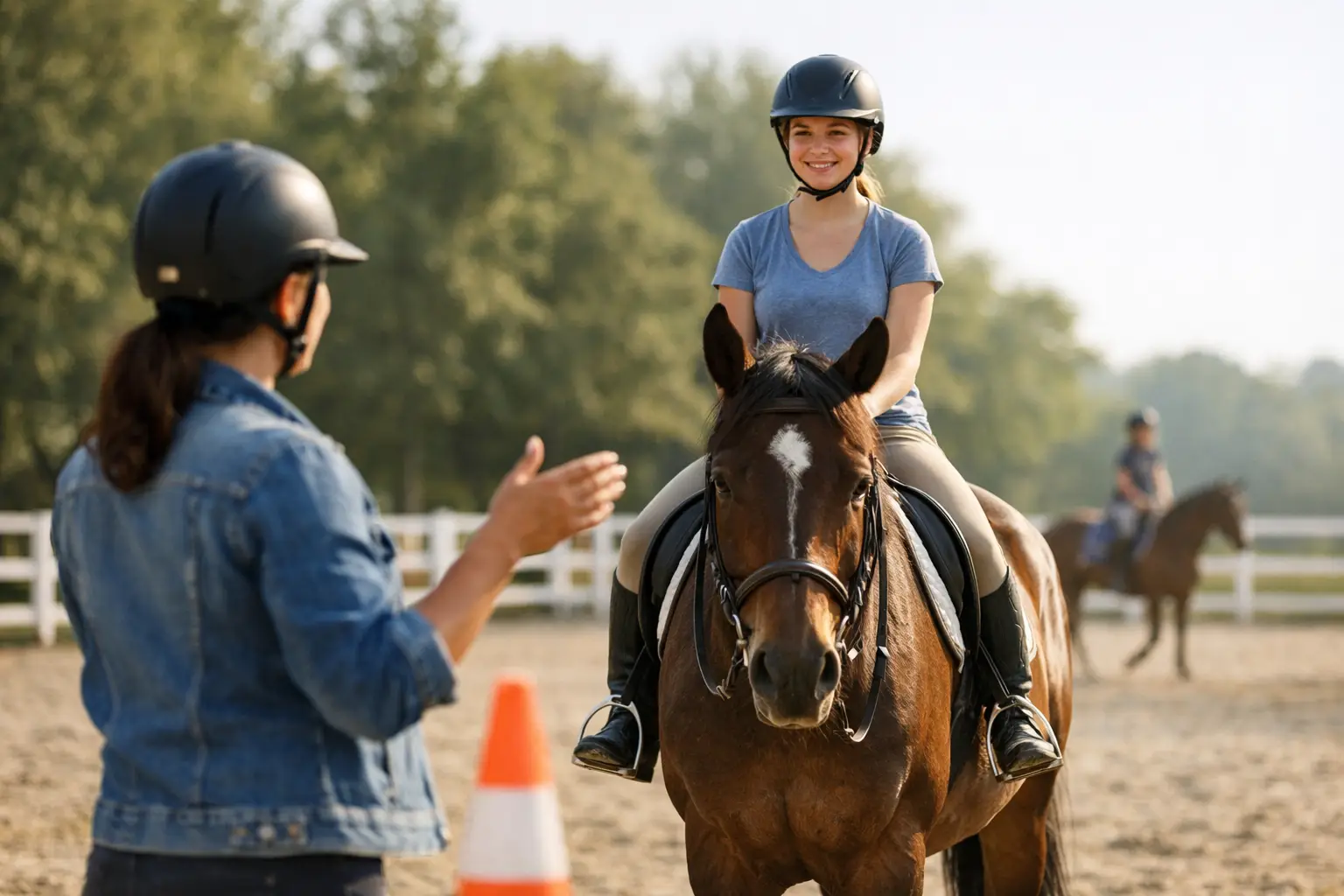
The first riding lesson usually starts before anyone puts a foot in a stirrup. A new rider meets the horse, learns how to move calmly in the barn, and begins to understand that riding is only part of horsemanship. That is one reason beginner horse riding lessons can shape confidence so quickly - when they are taught well, they help riders feel safe, capable, and connected from the very beginning.
For parents, that first lesson often comes with practical questions. Is this safe for my child? Will instruction be structured? Will my rider actually learn, or just be led around? Adult beginners tend to ask a different version of the same thing: will I feel out of place, or can I start at my own pace? A strong lesson program should answer those concerns with thoughtful instruction, clear expectations, and individual attention.
Why beginner horse riding lessons should start with horsemanship
Riding is a skill, but good riding rests on horse knowledge. In the early stages, riders need to learn how horses think, how to approach them, where to stand, and how to recognize basic body language. That foundation matters just as much as steering and balance because it builds safer habits from day one.
For younger riders, horsemanship creates structure and responsibility. For adults, it often removes anxiety. When a rider understands why a horse shifts weight, flicks an ear, or hesitates at something unfamiliar, the experience feels far less intimidating. Confidence grows faster when lessons explain the horse, not just the exercise.
In a private lesson setting, there is more room for that kind of instruction. Instead of trying to keep up with a group, a rider can ask questions, slow down when needed, and focus on details that would otherwise be missed.
What happens in a first lesson
A quality first lesson is usually calm, organized, and more educational than many people expect. New riders are often introduced to barn rules, basic safety practices, and the horse they will be working with. They may learn simple grooming tasks, how tack is used, and how to lead or stand beside a horse correctly.
Once mounted, the first goal is rarely speed or advanced technique. It is balance, position, and comfort. Most riders begin at the walk, learning how to sit correctly, hold the reins, and use simple aids to ask the horse to move, stop, and change direction. Depending on the rider's age, coordination, and comfort level, some may progress to posting at the trot fairly early, while others need more time. Both are normal.
That is one of the most important things to understand about beginner horse riding lessons: progress is not identical from rider to rider. Some students are naturally bold. Others are careful observers who build confidence more gradually. Good instruction respects both.
What beginners should wear and bring
The right clothing makes a real difference in comfort and safety. Riders should wear long pants that allow movement and a boot with a closed toe and a small heel. Athletic shoes are not ideal for riding because they can slide too far into the stirrup. A properly fitted helmet is essential and should meet current safety standards.
Beyond that, beginners do not need an expensive wardrobe to get started. In fact, keeping the first few lessons simple is often best. The focus should stay on learning, not on buying every piece of equipment at once. As commitment grows, an instructor can guide families or adult riders on what is worth investing in.
It also helps to bring water, arrive a little early, and come ready to listen. Riders who rush into the barn flustered tend to miss details that matter.
How confidence is built in beginner horse riding lessons
Confidence in riding is not created by pushing too fast. It is built through repetition, clear communication, and small wins that stack up over time. A rider learns how to mount smoothly, keep heels down, steer a straight line, and recover after a horse changes rhythm. These may look like simple skills from the outside, but each one teaches control and awareness.
For children, confidence often grows when expectations are consistent. They benefit from a coach who gives direct, encouraging feedback and keeps lessons structured. For adults, confidence usually improves when there is no pressure to perform for a group. Many adults start riding with some self-consciousness, especially if they are trying something new later in life. Private instruction helps remove that barrier.
The horse matters too. Beginner riders need suitable horses with steady temperaments and patient training. Even the best instructor is working uphill if the lesson horse is inconsistent, reactive, or confusing for a new student. Safe progress depends on matching the rider with the right equine partner for that stage of learning.
Why private instruction often makes a difference
Not every beginner needs the same pace, explanation style, or amount of support. That is where private lessons stand apart. One rider may need help relaxing through the hips and finding balance. Another may understand body position quickly but struggle with rein contact or turning accurately. In a one-on-one setting, those needs can be addressed in real time.
This is especially valuable for families who want riding to be more than an occasional activity. If the goal is real development, personalized coaching creates a clearer path. Skills are introduced intentionally, safety habits are reinforced consistently, and the rider's progress can be tracked more closely.
At a boutique program such as Eden Hills Equine, that individualized approach also supports the broader learning environment. Riders are not just moving through a crowded system. They are developing in a setting where horse care, instruction, and communication are meant to work together.
When progress feels slower than expected
Almost every beginner hits a point where something feels harder than it looked. Posting the trot may feel awkward. Steering may fall apart once a rider starts thinking about their hands, seat, and legs at the same time. A child who felt brave one week may feel nervous the next. None of that means the rider is failing.
Horseback riding is a coordination sport built on feel, timing, and trust. Those skills take time because they are learned in motion, with a living animal underneath you. Some breakthroughs happen suddenly, but most are gradual. A rider may struggle with a concept for several lessons, then one day it clicks.
The right response is not to rush past those moments. It is to coach through them. Patient instruction, suitable horses, and realistic expectations usually matter more than intensity in the early stages.
Signs of a strong beginner program
Families and new riders do not need to know every technical detail of the sport to recognize quality. A strong beginner program is organized, safety-minded, and clear about how riders progress. Instructors should be able to explain what a rider is working on and why. Lessons should feel purposeful, not random.
The physical environment matters as well. Clean, functional spaces, well-cared-for horses, and thoughtful barn routines all contribute to a safer and more professional experience. Beginners notice more than people think. If the environment feels calm and well managed, riders are more likely to relax and learn.
It also helps when instruction balances encouragement with standards. Riders should feel supported, but they should also be taught to pay attention, follow directions, and respect the horse. That balance is where confidence becomes competence.
Beginner horse riding lessons for children and adults
Children and adults often begin for different reasons, but both benefit from the same core elements: safety, individualized coaching, and a clear foundation. Children may be building responsibility and body awareness while discovering a new passion. Adults may be returning to a longtime interest or starting fresh with a goal that is entirely their own.
The teaching style may shift depending on age and experience, but the principles stay the same. Riders need to understand the horse, develop a secure position, and learn skills in a sequence that makes sense. There is no prize for skipping the basics. In fact, the riders who progress best later are usually the ones who were taught carefully at the start.
That early foundation becomes even more valuable if a rider eventually wants to pursue jumping, dressage, leasing, or horse ownership. Good beginner instruction does more than create a pleasant first experience. It sets the standard for everything that comes after.
The best first lesson leaves a rider feeling two things at once: challenged and encouraged. That balance is where real progress begins, and it is often what turns early curiosity into a lasting love of horses.