

Dressage Lessons for Beginners: What to Expect
Dressage lessons for beginners build balance, confidence, and communication. Learn what to expect, what you’ll practice, and how progress happens.
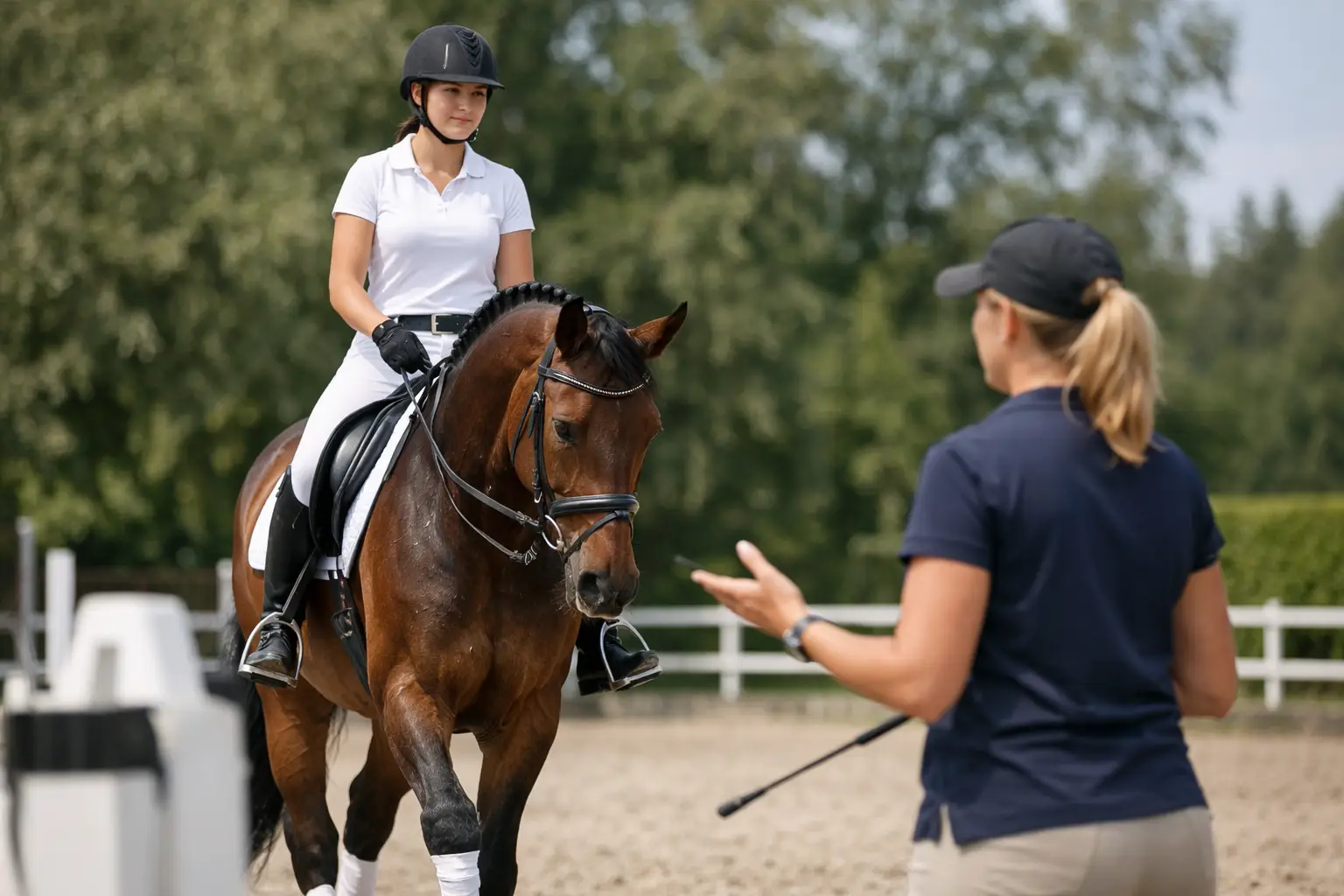
The first surprise in dressage lessons for beginners is usually this: it looks quiet from the ground, but in the saddle, there is a lot happening. A rider is learning how to sit with balance, use quiet aids, follow the horse’s movement, and communicate clearly without rushing or forcing. That is exactly why dressage can be such a valuable foundation for children, teens, adult riders, and horse owners who want real skill development from the beginning.
Dressage is often described as the art of riding well, but for a beginner, that simply means learning how to ride with purpose. Instead of focusing on speed or big fences, early dressage instruction builds position, rhythm, control, and connection. Those basics matter in every English discipline, and they also matter for safety. A rider who can steer accurately, maintain balance, and understand how a horse responds to leg, seat, and rein aids is in a much stronger position to progress with confidence.
Why dressage lessons for beginners are such a strong foundation
Beginners do not need fancy movement to benefit from dressage. In fact, the early stages are intentionally simple. Much of the work happens at the walk and trot, where riders can focus on posture, straightness, and timing instead of trying to do too much too soon.
This is one reason parents and adult amateurs often appreciate dressage-based instruction. It teaches patience and body awareness. Riders learn that better results come from consistency and clarity, not bigger motions or stronger hands. For a child, that can support discipline and responsibility. For an adult beginner, it often makes riding feel more approachable because progress is measurable, even when it looks subtle.
A thoughtful program also helps beginners understand the horse as a partner, not just a ride. Good dressage instruction includes horsemanship, feel, and respect for how horses learn. That creates better riders over time, especially in a private lesson setting where instruction can be adjusted to the individual horse-and-rider pair.
What happens in a first beginner dressage lesson
A first lesson usually starts before the rider gets on. A trainer may introduce grooming, tacking, basic safety, and how to lead or handle the horse correctly. That matters because confident riding starts with comfort on the ground. Riders who understand how to approach, groom, and prepare a horse tend to feel steadier once they are in the saddle.
Mounted work often begins with position. A beginner may practice how to sit evenly, where to place the hands, how to keep a long leg, and how to look ahead. Those points sound small, but they affect everything. If the rider tips forward, grips with the knee, or balances on the reins, the horse feels it immediately.
From there, the lesson may move into basic arena patterns. Large circles, changes of direction, riding the rail, and halting at specific points all help develop control and accuracy. The trainer is not just teaching the rider where to go. They are teaching how to get there with balance, rhythm, and clear communication.
If the beginner is very new, the lesson may stay at the walk. If the rider is ready, the trot may be introduced in short sections. It depends on confidence, coordination, and the temperament of the horse. A quality lesson program does not rush this process, because confidence grows faster when the rider feels successful.
Skills beginners usually work on first
Most early dressage lessons focus on a core set of riding skills. Riders learn how to keep a balanced seat, maintain steady rein contact without pulling, and apply leg aids in a way the horse can understand. They also work on transitions, such as walk to halt or walk to trot, because transitions teach attention and control.
Steering is another major piece. Riding a straight line or an even circle is harder than it looks. Beginners often discover that their own body position influences whether the horse drifts, speeds up, or loses balance. This is where private instruction becomes especially valuable. Immediate feedback helps riders correct small habits before they become bigger problems.
What beginners are not expected to do right away
There is sometimes a misconception that dressage starts with memorizing tests or performing advanced movements. It does not. A true beginner is not expected to collect the horse, sit a polished trot, or ride with advanced precision in the first few lessons.
The early phase is about building reliable basics. Some riders progress quickly into more technical work, while others need more time to develop strength and coordination. Both paths are normal. Progress in dressage is not just about talent. It is also about consistency, horse suitability, and instruction that meets the rider where they are.
What to wear and bring to dressage lessons for beginners
A beginner does not need an elaborate show wardrobe to start. The priorities are safety, comfort, and correct fit. A properly fitted riding helmet is essential. Riders should also wear boots with a heel so the foot stays more secure in the stirrup. Comfortable, close-fitting pants are typically better than loose athletic wear, which can bunch and distract in the saddle.
Some facilities provide lesson horses and tack, while others may have specific recommendations for gloves, fitted tops, or other essentials. If you are a parent preparing a child for lessons, it helps to ask ahead so the first experience feels organized and calm.
It is also worth bringing the right mindset. Beginner dressage can be mentally demanding because riders are paying attention to details that are easy to miss from the ground. That is normal. Riders often leave a good lesson feeling both encouraged and challenged.
How long it takes to feel comfortable
This depends on the rider. Children who are naturally relaxed around horses may settle in quickly. Adult beginners sometimes need more time, especially if they are managing nerves or learning a completely new set of physical skills. Neither is a problem.
What matters most is consistency. Weekly lessons with thoughtful coaching usually produce far better results than sporadic rides. The rider develops muscle memory, the trainer can build on previous work, and confidence has a chance to grow steadily instead of starting over each time.
The horse matters too. A suitable schoolmaster or carefully selected lesson horse can make a tremendous difference for a beginner. A calm, educated horse helps the rider learn correct feel. A horse that is overly sensitive or confusing for the rider can slow progress. Matching horse and rider well is part of quality instruction.
Why private instruction often works best for beginners
Dressage is detail-oriented, and beginners benefit from having those details taught clearly. In a private lesson, the trainer can focus on the rider’s posture, timing, confidence level, and communication with the horse in real time. Small corrections happen immediately, which often leads to faster and safer improvement.
That level of attention is especially helpful for nervous riders, young students, and horse owners who want their horse’s training supported alongside their own education. It also creates room for individualized pacing. One rider may need more work on balance, while another may be ready to refine transitions and accuracy. A one-on-one approach respects those differences.
At a boutique facility such as Eden Hills Equine, that personalized instruction can also support stronger horsemanship habits overall. Riders are not just learning a pattern for the day. They are learning how to ride thoughtfully, care for the horse responsibly, and build skills that last.
How to know if beginner dressage lessons are a good fit
Dressage can be a great fit for riders who like structure, clear goals, and steady progress. It is also an excellent starting point for riders who may eventually want to jump, compete, lease a horse, or simply become more effective and confident in the saddle.
That said, some beginners arrive expecting constant action and may need help understanding the value of the quieter work. Dressage rewards patience. The payoff is not always instant, but it is meaningful. Riders who stay with the basics often develop better position, better feel, and better judgment than riders who skip ahead.
If you are choosing lessons for a child, dressage-based instruction can offer more than riding ability. It teaches focus, responsibility, and respect for the horse. If you are an adult rider, it provides a clear path to improving without pressure to perform beyond your current level. If you already own a horse, it can create a stronger communication system that improves everyday riding, not just time in the arena.
The best beginner lesson is not the one that looks the most impressive from the outside. It is the one that leaves the rider a little more balanced, a little more informed, and more eager to come back next time.