

8 Benefits of Private Riding Lessons
Discover the benefits of private riding lessons, from safer skill-building to faster progress, stronger horsemanship, and more confident riders.
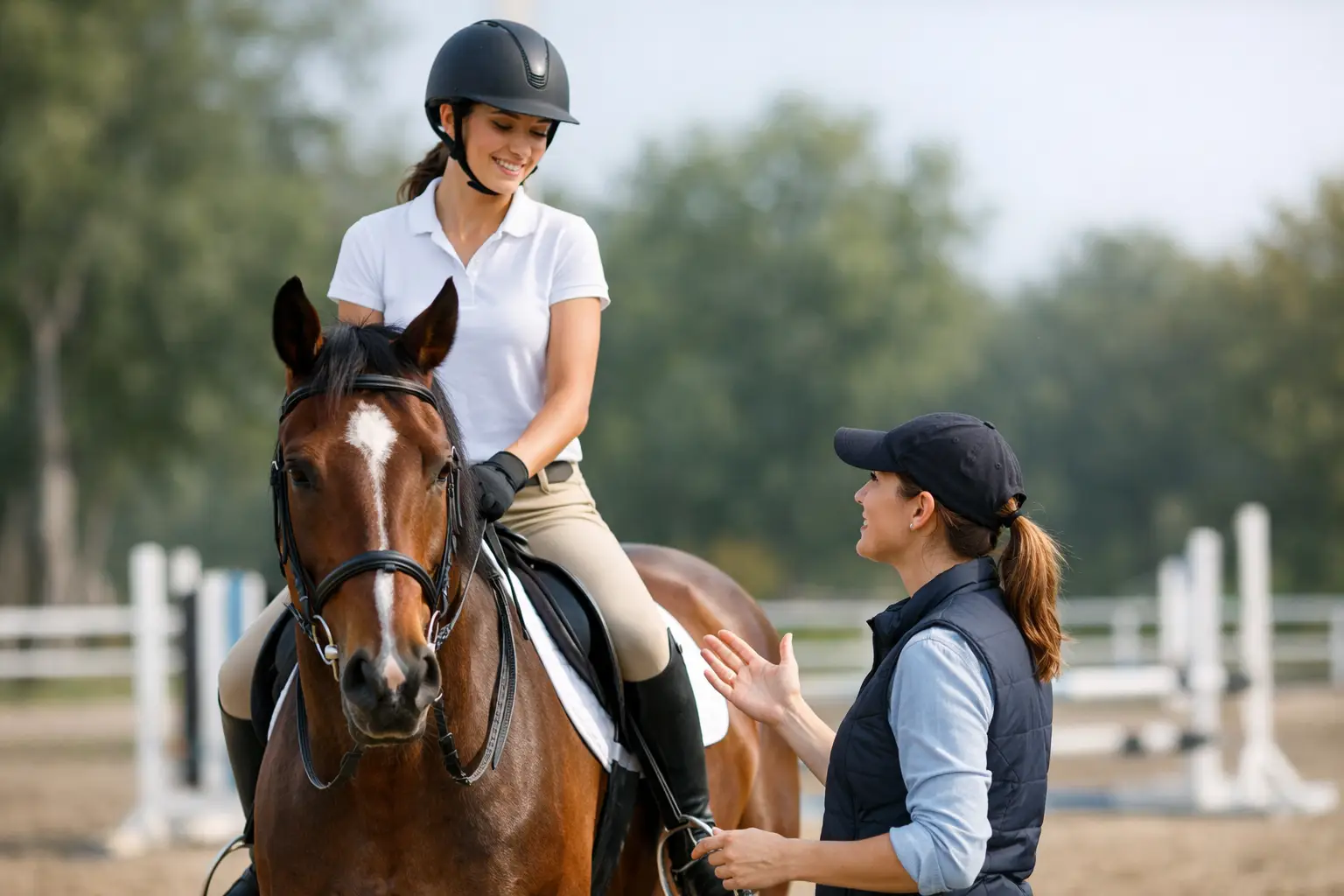
A rider who spends half the lesson waiting for a turn may still have fun, but fun alone does not always build confidence, consistency, or real horsemanship. The benefits of private riding lessons become clear when every minute in the saddle is spent learning, adjusting, and improving with an instructor focused on one rider, one horse, and one set of goals.
For many families and adult riders, that level of attention is not a luxury. It is what makes riding safer, clearer, and more productive. Private instruction gives beginners a steadier start, helps intermediate riders move through plateaus, and gives experienced riders the kind of precise coaching that refinement in dressage or jumping actually requires.
Why the benefits of private riding lessons stand out
Riding is not a one-size-fits-all sport. Two riders at the same age or stated level can have completely different strengths. One may be naturally balanced but hesitant. Another may be brave over fences but weak on the flat. A horse may be kind and forgiving one day, then distracted by weather, fitness, or environment the next.
In a private lesson, instruction can respond to all of that in real time. Instead of teaching to the middle of a group, the trainer can adjust the pace, simplify an exercise, raise expectations, or spend ten extra minutes on one issue that is holding everything else back. That kind of flexibility matters because riding skills are layered. If a rider does not fully understand position, timing, or feel, it tends to show up everywhere.
This is one reason private lessons often lead to more measurable progress. Not because they are magically easier, but because they remove wasted time and let the rider work exactly where growth needs to happen.
Private riding lessons often improve safety
Safety is one of the most practical benefits for parents and riders to consider. Horses are sensitive, athletic animals, and even calm school horses deserve careful handling and thoughtful instruction. In a private setting, the trainer can keep close eyes on mounting, rein length, leg position, spacing, transitions, and rider focus from start to finish.
That matters especially for beginners and younger riders. Small mistakes can be corrected before they become habits, and nerves can be addressed before they turn into panic. A rider who feels uncertain often needs immediate coaching, not delayed feedback three turns later.
Private lessons also create space for horsemanship instruction that supports safety on the ground. Learning how to approach, lead, groom, tack up, and read a horse's body language is part of becoming a capable rider. When those skills are taught carefully, confidence tends to grow in a more lasting way.
Faster progress, but in a way that makes sense
Parents often ask whether private lessons help riders advance more quickly. In many cases, yes. But the real advantage is not speed for its own sake. It is quality of progress.
A private lesson allows the rider to practice more, receive more corrections, and understand why a change works. Instead of repeating an exercise with limited feedback, the rider gets immediate instruction on details like straightness, rhythm, contact, eyes, upper body alignment, or the timing of an aid. Those details are what turn effort into skill.
There is a trade-off, of course. Group lessons can offer camaraderie and teach riders to work around others in an arena. Both formats can have value. But when a rider needs to establish fundamentals, regain confidence, or fine-tune performance, one-on-one instruction usually offers a clearer path forward.
The benefits of private riding lessons for confidence
Confidence in riding is rarely built by praise alone. It comes from understanding what is happening and knowing how to respond. Private lessons support that kind of confidence because the rider gets explanations that match their age, experience, and learning style.
Some riders need calm repetition. Others do better when the lesson is more technical and goal-driven. A private instructor can adjust communication so the rider stays challenged without feeling overwhelmed.
This is especially helpful after a setback. Maybe a child had a scary moment at the canter. Maybe an adult returning to riding feels frustrated that old skills are not yet consistent. In a private lesson, the trainer can rebuild trust step by step, rather than asking the rider to keep pace with a group before they are ready.
That confidence tends to carry beyond the saddle. Riders who know how to prepare, listen, and solve small problems often become more independent and more responsible around horses in general.
Better lessons for horse-and-rider partnership
When riders work consistently with the same horse or are developing with their own horse, private instruction becomes even more valuable. The trainer is not only teaching riding technique. They are observing a partnership.
That means they can notice patterns that a more general lesson format might miss. Is the horse stiff to one side? Does the rider brace in downward transitions? Is the horse backing off a fence because of rider hesitation or because the line is unclear? These questions are hard to answer well without focused attention.
For owners, this level of coaching can be especially important. Good training decisions depend on understanding both sides of the equation. Sometimes the answer is to strengthen the rider's position. Sometimes the horse needs a different warm-up, a simpler exercise, or a more consistent ride schedule. Private lessons make those distinctions easier to see.
Stronger horsemanship, not just riding time
One of the most overlooked benefits of private riding lessons is how naturally they support horsemanship education. Riding well is not only about what happens during the lesson. It also depends on how a rider cares for the horse, notices changes, and understands daily management.
In a boutique program with a strong instructional standard, private lessons can include conversations about tack fit, grooming habits, turnout, condition, behavior, and work routines. Those details help riders become more observant and respectful horse people.
For parents, this often matters just as much as athletic progress. Many families are looking for a structured environment where children learn discipline, responsibility, patience, and empathy alongside technical skill. Private lessons create room for those lessons to be taught intentionally rather than rushed.
More useful feedback for intermediate and advanced riders
As riders become more experienced, improvement usually gets more technical. The basic instruction that works early on is no longer enough. A rider working on lead changes, course strategy, connection, lengthening and shortening stride, or more effective flatwork needs detailed coaching.
Private lessons make that level of feedback possible. The trainer can watch one turn, one approach, one transition, and address the exact issue rather than offering broad advice. Sometimes the correction is physical, like steadier lower leg support. Sometimes it is tactical, like riding a more balanced track to a fence. Sometimes it is mental, like improving focus between movements.
This is where serious riders often see the greatest value. Not every ride needs to be intense, but when goals matter, precision matters too.
A better fit for busy families and adult riders
Scheduling is not a small issue. Families often juggle school, sports, and travel, while adult amateurs are fitting riding into work and home responsibilities. Private lessons can make that time feel better spent because the rider is engaged throughout the session.
That does not mean every rider always needs private instruction. Some enjoy a combination of lesson types. But when time is limited, many people prefer the efficiency of a lesson built around their current needs rather than a group plan.
In a smaller, more attentive program, that structure can also create stronger communication between trainer, rider, and parent or owner. Expectations are clearer. Progress is easier to track. Goals can be adjusted before frustration builds.
Is private instruction always the right choice?
It depends on the rider, the stage of training, and the overall program. A very social child may enjoy occasional group experiences. A rider preparing for show environments may benefit from learning to work around others. Those are real advantages.
Still, private lessons tend to offer the strongest foundation when safety, confidence, individualized progress, and horsemanship are the priorities. They give riders space to learn thoroughly, not just quickly. They also support the kind of trainer relationship that helps small issues get addressed before they become larger ones.
At a facility like Eden Hills Equine, where instruction is intentionally individualized and horse care is part of the standard, that one-on-one format supports the full picture of rider development. The goal is not simply to keep riders busy. It is to help them become capable, educated, and confident with horses.
The right lesson should leave a rider with more than a tired pair of legs. It should leave them clearer, steadier, and more connected to the horse beneath them.