

What Is a Semi Private Riding Lesson?
What is a semi private riding lesson? Learn how shared instruction works, who it suits best, and when private lessons offer better progress.
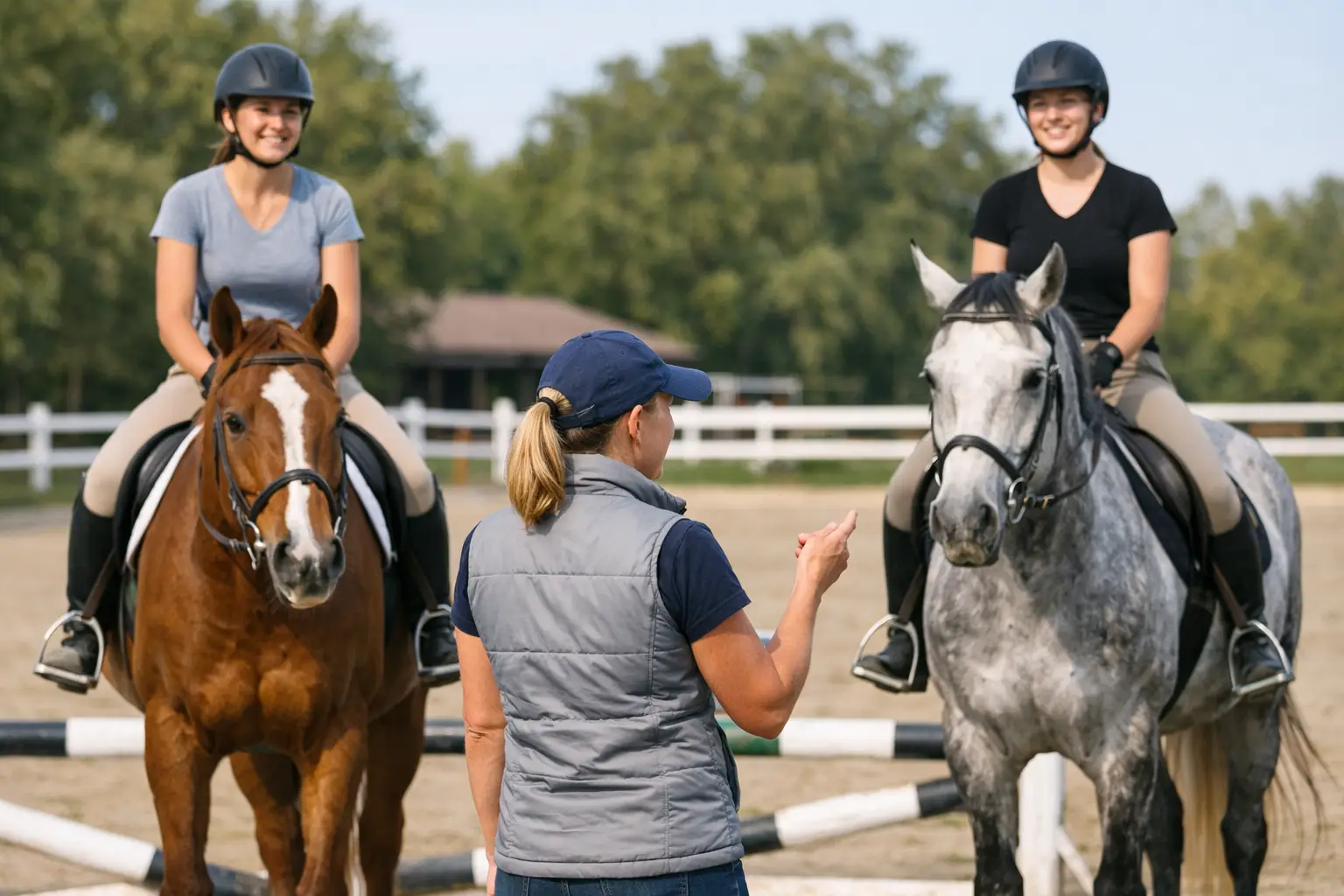
If you are comparing lesson options for yourself or your child, one question usually comes up quickly: what is a semi private riding lesson, and how is it different from a private lesson? The short answer is that a semi private lesson includes two riders working with one instructor at the same time. The more useful answer is that it can be a very good fit for the right riders, horses, and goals, but it is not automatically the best choice for every stage of development.
In a thoughtful equestrian program, lesson format matters. Riding is not just about learning to steer, post, or jump a course. It is also about timing, feel, safety, horse care, and confidence. The structure of the lesson affects how much individual coaching a rider receives and how quickly small issues are noticed and corrected.
What is a semi private riding lesson?
A semi private riding lesson is a shared lesson with two riders and one instructor. Those riders may be close in age, similar in skill level, or working on related goals. Instead of receiving the instructor's full attention for the entire session, each rider gets individualized feedback within a paired format.
That distinction matters. A semi private lesson is not the same as a large group lesson where several riders circle the arena together with limited one-on-one input. In a well-run semi private setting, the instruction should still feel personal. The trainer is watching both riders closely, offering corrections, adjusting exercises, and keeping the lesson organized around what each horse-and-rider pair needs.
For many families, semi private lessons sound appealing because they offer a balance. Riders still get meaningful coaching, but they also gain the energy and motivation that can come from learning alongside another person.
How a semi private lesson usually works
Most semi private lessons are built around compatibility. Two riders may warm up together, work on similar flatwork patterns, or take turns over fences while the instructor coaches each one. Sometimes both riders practice the same skill at the same time. Other times, the trainer alternates attention more directly, asking one rider to halt and review position while the other completes an exercise.
A good semi private lesson should never feel chaotic. The instructor should be able to keep both riders engaged, safe, and challenged without rushing through corrections. That usually works best when riders are reasonably well matched. If one rider is brand new and the other is much more advanced, one of them will often end up waiting, repeating basics, or moving too fast.
The horses matter too. Pairing two suitable school horses with two riders who can ride at a similar pace creates a much smoother lesson than trying to make an uneven match work.
Who benefits most from semi private lessons?
Semi private lessons can be an excellent choice for riders who already have some basic independence. If a student can safely walk, steer, halt, and follow directions without constant hands-on management, sharing lesson time may work very well.
This format often suits siblings, friends, teens, and adults who enjoy a little social connection while still taking instruction seriously. It can also benefit riders who like seeing another person practice the same skill. Watching someone else work through a transition, a course, or a position correction can reinforce the lesson in a different way.
For intermediate riders, semi private instruction may feel especially natural. At that level, students often need repetition, refinement, and better understanding rather than minute-by-minute assistance. They can ride more independently, process feedback faster, and stay productive while the instructor coaches the other rider.
When semi private lessons may not be the best fit
There are times when shared instruction is simply not the strongest choice. A complete beginner usually benefits from private lessons first. Early riding skills require close supervision, clear repetition, and fast correction before small habits become bigger problems. New riders are also learning barn safety, basic horse behavior, grooming routines, and how to stay organized around a large animal. That is a lot to absorb.
Private lessons are also often the better fit for riders working through fear, rebuilding confidence after a fall, or addressing a specific challenge such as canter transitions, jumping nerves, or inconsistent contact. In those situations, progress often depends on the instructor being able to focus fully on one horse-and-rider pair.
Horse owners in training programs may need that same level of attention. If the goal is to develop a custom plan for a particular horse, evaluate performance issues, or prepare for competition, dedicated instruction usually produces clearer feedback and more measurable progress.
Semi private vs. private riding lessons
The biggest difference between semi private and private lessons is not simply the number of riders in the arena. It is the amount of direct instructor attention each rider receives.
In a private lesson, every exercise, correction, and adjustment is built around one student and one horse. The pace can change instantly based on how the ride is going. If the rider needs more time at the walk, the lesson stays there. If the rider is ready to move ahead, the instructor can progress without holding anyone else back.
In a semi private lesson, that attention is shared. A strong instructor can still deliver highly personalized coaching, but the lesson has to accommodate two riders at once. That creates trade-offs. Some riders enjoy the shared environment and stay motivated by it. Others progress faster when every minute is tailored to their exact needs.
For parents deciding between the two, it helps to think beyond price or scheduling. Ask what kind of support your child needs right now. Are they building a foundation, or refining skills they already have? Do they focus well with another rider present, or do they do better in a quieter, more direct setting?
What to look for in a quality semi private program
Not every shared lesson format offers the same value. A quality semi private program should still feel structured, personal, and safe. The riders should be paired intentionally, the horses should be appropriate, and the instructor should have the capacity to coach both students well.
You should also expect clear standards around horsemanship. Riding progress does not happen in isolation from horse care, tack handling, barn etiquette, and safety habits. When those pieces are taught alongside riding skills, students tend to become more competent and more confident.
It is also worth paying attention to the setting itself. A lower-volume program often has an easier time preserving lesson quality because horses, riders, and trainer attention are not stretched thin. That can make a real difference, especially for families who want thoughtful instruction rather than a rushed experience.
How to know which lesson type is right for you
The best lesson format depends on the rider's current stage, personality, and goals. A child who is eager, attentive, and already comfortable at the basics may thrive in a semi private lesson with a well-matched partner. Another child may look confident from the ground but still need the reassurance and consistency of one-on-one instruction.
Adult riders often have their own considerations. Some enjoy the camaraderie of learning with another rider, while others prefer a private setting where they can ask questions freely and work without feeling observed. Neither preference is wrong. It simply changes what environment will help them ride their best.
If your goals are serious, whether that means stronger fundamentals, better flatwork, improved jumping, or more polished dressage basics, it helps to choose a program that can adjust as you grow. Many riders benefit from private lessons at first and move into semi private lessons later, or alternate between the two depending on what they are working on.
A practical way to think about what is a semi private riding lesson
A semi private riding lesson is best understood as a shared coaching format, not a lesser version of private instruction. When the pair is appropriate and the teaching is thoughtful, it can be productive, engaging, and enjoyable. When the riders are mismatched or the lesson is too crowded to feel personal, the benefits fade quickly.
That is why the right question is not only what is a semi private riding lesson. The better question is whether it supports the kind of progress, attention, and confidence you want from your riding program. The strongest lesson choice is the one that meets the rider where they are, protects safety, and leaves room for steady growth over time.
If you are unsure which format fits best, start by looking at the rider, not just the schedule. The right structure has a way of making progress feel steadier, safer, and far more rewarding.