

Adult Riding Lessons: What to Expect
Adult riding lessons build confidence, skill, and horsemanship. Learn what to expect, how to start, and how private instruction supports progress.
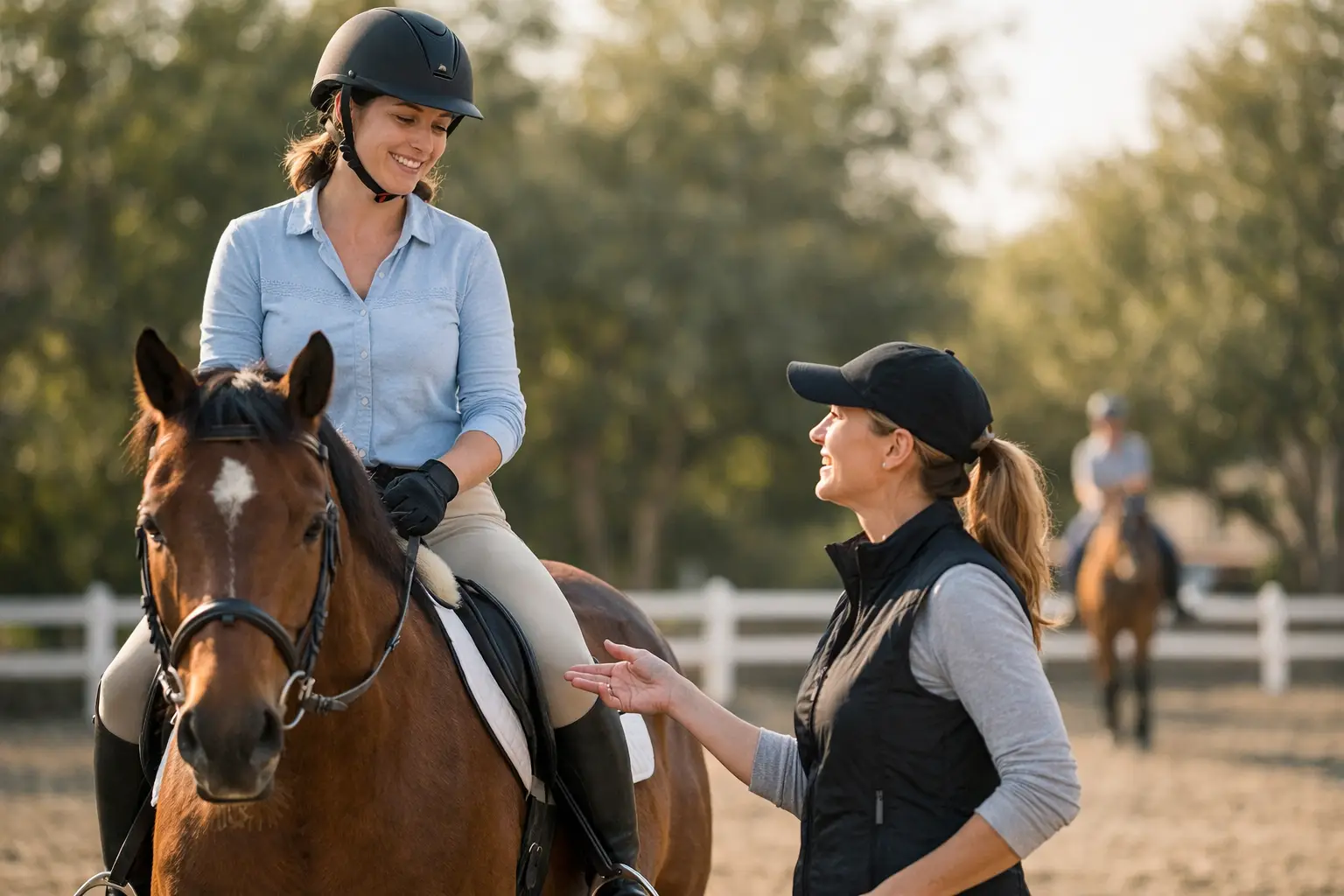
Starting something new as an adult can feel harder than it should, especially when that something involves a 1,000-pound animal. Yet adult riding lessons are often where some of the most focused, rewarding progress happens. Adult riders tend to ask thoughtful questions, notice details, and appreciate that good riding is not about looking polished on day one. It is about learning to communicate clearly, ride safely, and build real confidence over time.
For many adults, the first concern is not whether riding will be enjoyable. It is whether they are too late to begin, too nervous to try, or too busy to improve. In reality, adult beginners and returning riders often do very well when instruction is structured, individualized, and paced appropriately. The right lesson program meets you where you are and gives you room to grow without pressure.
Why adult riding lessons work so well
Adults usually come to riding with a clear reason. Some loved horses as children and are finally making time for themselves. Some want a new challenge that feels meaningful and hands-on. Others are returning after years away and want to rebuild confidence carefully.
That clarity helps. Riders who understand why they are there often stay more engaged in the learning process. They are more likely to value horsemanship, ask about safety, and listen closely to feedback. Progress may still take time, because riding is a skill built through repetition and feel, but adults often appreciate that process more than they expect.
There is also a practical side to adult learning. Mature riders benefit from understanding the why behind each exercise. When an instructor explains how balance affects the horse, why rhythm matters, or how quiet hands create a better connection, adults tend to apply that information with purpose. That can make lessons feel both mentally engaging and physically rewarding.
What to expect in your first adult riding lessons
Your first lesson usually starts before you ever put a foot in the stirrup. A thoughtful program will begin by learning about your experience level, comfort around horses, physical concerns, and goals. Someone who has never touched a horse needs a different introduction than a rider coming back after a ten-year break.
In many cases, the first lesson includes groundwork, basic barn safety, and an introduction to grooming and tacking. That is not extra filler. It is part of becoming a capable, confident horse person. Understanding how to approach a horse, where to stand, how to read body language, and how tack works builds trust on both sides.
Once mounted, early instruction focuses on the basics. You may work on posture, rein contact, how to steer, how to stop, and how to move with the horse at the walk. Depending on your comfort and the lesson plan, you may also begin trotting. For some riders, that happens quickly. For others, it takes a little more time. Both are normal.
A good first experience should feel supportive, not rushed. You should leave with a clearer sense of what you learned, what needs practice, and what the next step looks like.
Private instruction makes a difference
Adult riders often make faster, steadier progress in private lessons because the instruction is tailored in real time. That matters for beginners, but it matters just as much for experienced riders. No two adults arrive with the same background, confidence level, learning style, or physical strengths.
In a private setting, the lesson can adjust around you and the horse that day. If you are tense, the instructor can slow things down and focus on relaxation and position. If you are progressing well, the work can become more technical. If you are returning after an injury or long break, the lesson can be structured to rebuild skill without overwhelming you.
This one-on-one format also supports safer learning. Riding is a sport where details matter. Small corrections in posture, timing, and balance can make a significant difference in how secure and effective you feel. Personalized coaching helps those corrections happen early, before unhelpful habits settle in.
For a boutique program, that individualized attention is not simply a luxury. It is part of how progress becomes measurable and sustainable.
Adult riding lessons are about more than riding
One of the biggest surprises for new riders is how much horsemanship shapes the riding itself. The strongest programs do not treat horse care and riding skill as separate subjects. They teach them together.
That means learning how horses think, how they respond to pressure, how daily care supports performance, and how consistency creates trust. These lessons matter whether your goal is recreational riding, dressage, jumping, or eventually leasing or owning a horse.
Adults often appreciate this broader education because it gives context to every ride. You are not just memorizing instructions. You are learning how your horse experiences the session too. That creates better timing, better decision-making, and a more respectful partnership.
Common concerns adults have before they start
Nervousness is extremely common, even among people who are excited to begin. Some adults worry about falling. Some feel self-conscious about being beginners. Others are concerned that they are not fit enough, coordinated enough, or young enough.
Most of these concerns soften once lessons begin in the right environment. A safety-first facility, well-matched lesson horses, and calm, attentive instruction can change the experience quickly. Confidence does not come from being told not to worry. It comes from doing things step by step and seeing that you can handle them.
Physical fitness can help, but you do not need to arrive already strong and polished. Riding develops balance, body awareness, coordination, and core stability over time. What matters more at the beginning is willingness to listen, practice, and stay patient with yourself.
It is also worth saying that adults often progress unevenly. One week you may feel balanced and brave. The next week you may feel awkward again. That is normal. Riding is not a straight line, and mature riders usually benefit from remembering that learning a complex skill includes ups and downs.
How to choose the right lesson environment
Not every lesson program is the right fit for every adult. If you are looking for a serious, confidence-building experience, pay attention to how instruction is structured and how the horses are cared for.
Look for a program that values safety in practical ways, not just in marketing language. The facility should feel organized and well maintained. Horses should appear healthy, suitable for their jobs, and matched thoughtfully to riders. Instruction should be clear and engaged, with attention to both rider development and horse welfare.
It also helps to ask how lessons are individualized. Adult riders benefit from a plan. Whether your goal is basic confidence, improved flatwork, jumping, dressage foundations, or returning to the saddle after years away, your instruction should reflect that goal rather than treating every rider the same.
At Eden Hills Equine, that individualized approach is central to how riders develop. Private instruction creates space for careful coaching, honest feedback, and meaningful progress without the distractions of a high-volume lesson setting.
Setting realistic goals for long-term progress
Adults sometimes put too much pressure on early milestones. They want to know how many lessons it will take to trot confidently, canter, jump, or ride independently. The honest answer is that it depends on consistency, prior experience, comfort level, and goals.
A rider taking regular private lessons with strong instruction will usually progress more efficiently than someone riding sporadically. Still, fast is not always better. A solid foundation in balance, position, and horse care pays off later, especially if your interests become more competitive or technical.
It helps to think in phases. In the beginning, the goal may simply be comfort and control at the walk and trot. Later, it may become developing an independent seat, refining aids, or learning more advanced flatwork. If you stay consistent, those phases build on each other in a way that feels much more natural than chasing shortcuts.
The best adult riders are not always the boldest on day one. They are often the ones who stay curious, stay coachable, and keep showing up.
If you have been considering riding for months or even years, you do not need to wait for the perfect moment. Adult riding lessons can begin with one thoughtful first step, and that step often leads to far more confidence, skill, and enjoyment than people expect.