

Best Age for Riding Lessons? It Depends
Wondering about the best age for riding lessons? Learn what matters most for safety, confidence, and long-term progress in young and adult riders.
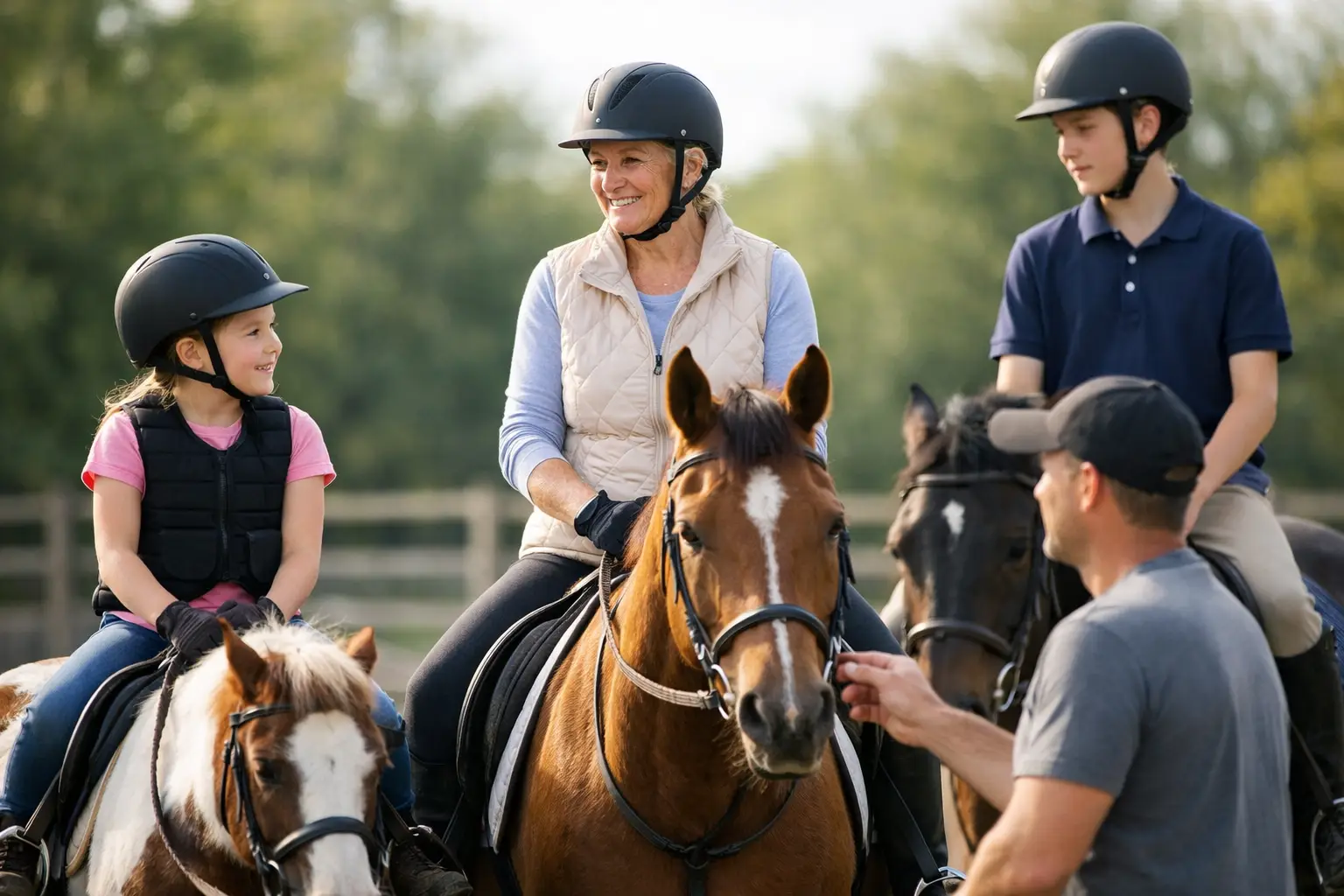
A child who begs for pony time at age four and a cautious beginner who starts at forty can both become strong riders. That is why the best age for riding lessons is not one magic number. It is a mix of physical readiness, attention span, confidence, and the kind of instruction a rider receives in those early lessons.
For most families, the real question is not simply, “How young is too young?” It is, “When can my child start in a way that is safe, positive, and truly educational?” For adults, it is often, “Am I too late to begin?” In both cases, the answer is more encouraging than many people expect.
What is the best age for riding lessons?
In practical terms, many children are ready to begin formal riding lessons around ages six to eight. At that stage, they often have enough body awareness, focus, and listening skills to follow directions and build basic riding habits. They are usually better able to understand simple safety rules, stay engaged for the length of a lesson, and start connecting what their hands, seat, and legs are doing.
That said, some five-year-olds are quite prepared, while some eight-year-olds benefit from waiting a little longer. Maturity matters more than age alone. A younger child with patience, balance, and the ability to take instruction may do very well. An older beginner who is nervous, easily distracted, or physically tentative may need a gentler start.
Adults often ask if they missed their window. They have not. Riding is one of the few sports people can begin later in life and still find deep enjoyment, real skill development, and meaningful progress. Adult riders often learn quickly because they can process feedback, ask thoughtful questions, and commit to consistent practice.
Why age matters less than readiness
Horseback riding asks a lot of a beginner. A rider has to listen, balance, coordinate movement, and stay calm around a large animal. That is a lot for anyone, especially a child. This is why readiness is a better guide than a birthday.
A ready beginner can usually separate excitement from impulse. They can pause, listen for instructions, and try again when something feels unfamiliar. They do not need to be fearless. In fact, a little healthy caution is often a good thing. The key is whether they can stay teachable.
Physical readiness matters too. A beginner should have enough core strength and body control to sit upright, maintain balance at the walk, and follow simple corrections. Fine motor skill is not expected on day one, but basic coordination helps. For children, stamina is part of the picture. Some very young riders love horses but tire quickly, which can turn a good experience into an overwhelming one.
Emotional readiness may be the most overlooked factor. Horses are sensitive animals, and riding lessons work best when a student can handle a few new feelings at once - excitement, nerves, correction, and gradual challenge. A rider who can stay calm enough to learn tends to build confidence much faster.
Signs a child is ready to start lessons
Parents often know when interest is real and when it is just a passing fascination. A child may be ready for lessons if they consistently show interest in horses, can follow two- or three-step directions, and are comfortable separating from a parent for the duration of a lesson. It also helps if they can wear required safety gear without a struggle and stay attentive in a structured setting.
Another good sign is coachability. If a child can hear, “heels down,” “look up,” or “hold the reins softly,” and make an honest effort to respond, that is a strong foundation. Riding is a skill-building process. Children who enjoy learning, not just the idea of riding, often thrive.
It is also worth watching how a child behaves around animals in general. Respectful curiosity is a positive sign. Rough handling, impulsive movement, or difficulty with boundaries can mean they need more time before formal instruction.
When younger riders can benefit from an early start
There are cases where starting earlier makes sense. A younger child who is physically coordinated, emotionally steady, and enrolled in carefully structured private instruction may do very well. The important detail is not simply being on a horse. It is the quality and pace of the experience.
For very young beginners, the first stage should be about balance, confidence, routine, and horse sense. That may mean shorter sessions, more one-on-one support, and an emphasis on safe handling as much as riding itself. Children who begin this way often develop comfort and respect around horses before more technical riding skills are introduced.
This is where individualized teaching makes a real difference. In a private lesson setting, the instructor can adjust the horse, the pace, and the expectations to the rider in front of them. That allows younger students to build skill without being rushed to keep up with a group.
Why some children should wait
Waiting is not failure. Sometimes it is the smartest choice. If a child struggles to listen in active environments, has a very short attention span, or becomes frustrated quickly when corrected, a delay can lead to a better first experience later.
The same is true for children who are drawn to horses but not yet prepared for the structure that lessons require. Loving animals is wonderful, but riding instruction includes rules, repetition, and responsibility. If those pieces are not in place yet, a family may get more value from waiting a season and revisiting the idea when the child is more mature.
A good start matters. Early lessons should build confidence, not just check a box.
Best age for riding lessons for teens and adults
Teens often make excellent beginners because they can combine physical ability with stronger focus. They may progress quickly once they understand the basics, especially if they are motivated by goals such as jumping, dressage, or leasing a horse in the future. At the same time, teens can be hard on themselves. They benefit from instruction that keeps standards high while making room for mistakes.
Adults bring a different set of strengths. They are usually intentional, disciplined, and capable of understanding the why behind each exercise. They also tend to appreciate the horsemanship side of riding - grooming, tacking, horse behavior, and routine care. That broader understanding can make them thoughtful, capable riders.
The trade-off is that adults sometimes carry more fear. They understand risk in a way that children often do not. Good instruction helps by building trust step by step. A calm horse, a clear lesson plan, and an environment designed around safety go a long way.
What makes a first lesson program successful
The best beginner programs are not defined by age brackets alone. They are defined by fit. The horse should be appropriate, the instruction should be clear, and the rider should feel supported without being coddled.
A strong first lesson program teaches more than how to sit in the saddle. It introduces safe behavior around horses, basic grooming and handling, and the habits that create long-term success. Riders who learn horsemanship alongside riding tend to become more confident and more capable over time.
This is especially important for families looking for more than a casual activity. When instruction is thoughtful and personalized, students gain discipline, patience, and real responsibility. Those qualities matter just as much as posting the trot.
At a boutique program such as Eden Hills Equine, private instruction allows each rider to progress at the right pace while keeping safety and horse welfare at the center of the experience. For beginners, that kind of attention can make all the difference.
How parents can decide if now is the right time
If you are unsure whether your child is ready, ask practical questions instead of focusing only on age. Can they listen and respond consistently? Are they physically steady enough for a beginner lesson? Do they want to learn, or do they simply like the idea of horses? Would they benefit from one-on-one instruction rather than a busier group setting?
It also helps to think beyond the first ride. The most rewarding riding journeys usually come from consistent lessons over time. Starting when a child is truly ready often leads to better habits, safer rides, and stronger confidence than starting as early as possible.
For adults, the question is even simpler. If you are interested, willing to learn, and open to beginning at the basics, now is a perfectly good time to start. The right instruction meets you where you are.
The best age for riding lessons is the age when a rider can begin with curiosity, structure, and the right support around them. For some that is six. For others it is sixteen or sixty. A good first step is not about being early. It is about being ready, and then building from there.