

How Private Riding Lessons Work
Learn how private riding lessons work, what to expect in each session, and why one-on-one coaching helps riders build skills, safety, and confidence.
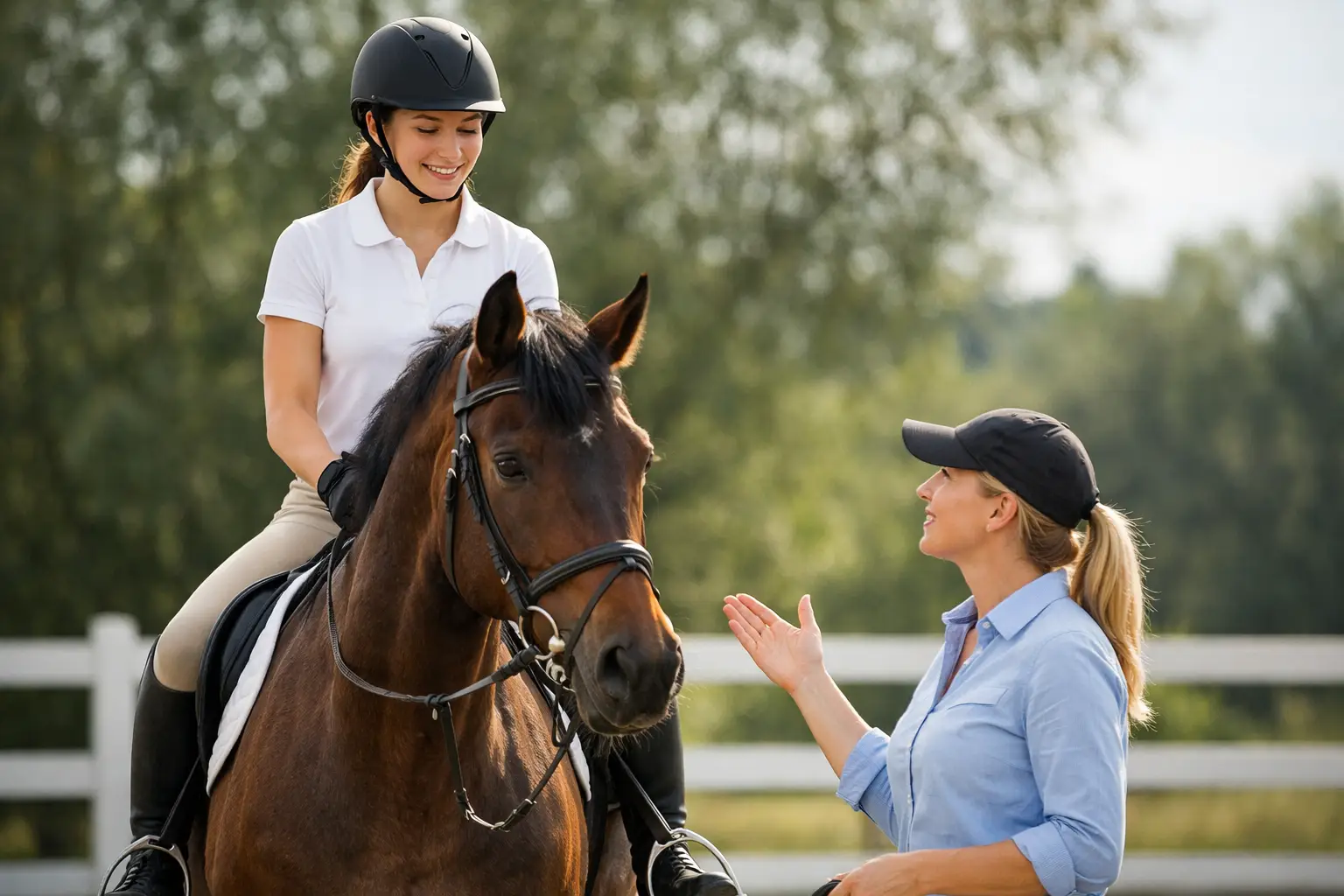
A rider who gets lost in a group lesson often looks fine from a distance. The horse is moving, the line is circling, and the instructor is teaching. But the small things that matter most - balance, timing, confidence, feel, and safety habits - are much harder to catch when attention is split across several riders. That is exactly why families and dedicated riders often ask how private riding lessons work and whether they are worth it.
Private riding lessons are built around one rider, one instructor, and a plan that fits that rider’s experience, goals, and comfort level. Instead of trying to keep pace with a group, the rider works at the speed that makes sense for them. For some, that means learning how to approach a horse safely and steer with confidence. For others, it means refining flatwork, improving jumping technique, or developing a more educated position in dressage.
How private riding lessons work in practice
At their core, private lessons are simple. The instructor evaluates the rider, selects the right horse if a lesson horse is being used, and structures the session around specific goals. That sounds straightforward, but the value is in the detail.
A beginner’s lesson may start before the rider even gets in the saddle. Learning how to halter, lead, groom, tack up, and read basic horse behavior is part of real horsemanship. In a private setting, those skills are not rushed. A child who is nervous around a large horse may need time to learn where to stand, how to move calmly, and why certain safety rules matter. An adult beginner may want more explanation about equipment, rider aids, and what the horse is feeling underneath them. Private instruction makes room for that.
Once mounted, the lesson usually follows a clear progression. The rider warms up, reviews previous skills, and works on one or two targeted areas. The trainer may adjust stirrup length, fix hand position, explain a turn more clearly, or help the rider understand why the horse is responding in a certain way. Because the lesson is one-on-one, corrections happen in real time and are tied directly to what the rider is doing at that moment.
That individual attention tends to produce more measurable progress. When a trainer can watch every transition, every circle, and every jump approach without distraction, patterns become obvious sooner. A rider who tips forward, braces in the reins, or loses outside support in turns can get immediate feedback before the habit becomes ingrained.
What happens during a typical private lesson
The structure varies based on age, discipline, and experience, but most lessons include a few consistent elements. There is usually a check-in at the beginning, where the instructor gauges how the rider is feeling and what needs attention that day. Some riders arrive ready to tackle new challenges. Others need a quieter ride, especially if confidence has taken a hit or the horse has had an off day.
The riding portion often begins with basics that never stop mattering. Position, rhythm, steering, transitions, and connection are not just beginner concepts. They are the foundation of good riding at every level. In a quality private lesson, even advanced work is usually built on those fundamentals rather than skipping past them.
As the ride progresses, the trainer may introduce exercises chosen for a very specific reason. A rider working on straightness might use ground poles and centerlines. A jumper may practice pace and track to a single fence before moving into a course. A dressage rider may focus on bend, transitions within the gait, or accuracy in figures. The lesson is not random. It is designed to connect today’s work to the rider’s long-term development.
Private lessons also create more room for questions. Riders can ask why the horse drifted, why a canter lead was missed, or what a half-halt should feel like without worrying about slowing down a group. For parents of young riders, that matters too. Clear communication helps families understand what their child is learning and how progress is being measured.
Why one-on-one instruction often leads to faster progress
One of the biggest advantages of private instruction is precision. Riding is highly physical, but it is also subtle. Two riders can be told the same direction and still need completely different corrections. One may need more leg. Another may need softer hands. A third may need to relax enough to let the horse move forward.
In a private lesson, the trainer can teach to the actual rider instead of the average level of a group. That does not just help the rider improve faster. It often helps them improve better.
That distinction matters. Fast progress without solid basics can create bigger problems later. A rider who starts jumping before they have independent balance on the flat may look advanced for a while, but gaps usually show up under pressure. Private lessons make it easier to build the underlying skills that support long-term success.
There is also a confidence factor. Some riders learn best when they are not comparing themselves to others. Children, especially, may be more willing to ask questions or admit they are unsure when they have the instructor’s full attention. Adult riders often feel the same way. A private format removes a lot of the social pressure and replaces it with focused coaching.
How private riding lessons work for beginners versus advanced riders
The answer depends on where the rider is starting.
For beginners, private lessons usually focus on safety, comfort, and basic communication with the horse. That includes how to sit correctly, stop, steer, post the trot, and understand the horse’s movement. Just as important, it includes barn manners and horse handling skills that shape responsible horsemanship from the start.
For intermediate riders, lessons often become more technical. The instructor may focus on improving consistency, strengthening the rider’s position, refining aids, and building a better understanding of why the horse responds the way it does. Riders at this stage benefit greatly from individualized feedback because small adjustments begin to produce much bigger results.
For advanced riders and horse owners, private lessons may look more like strategic training sessions. The rider could be working toward show goals, improving dressage scores, developing a young horse, or solving a performance issue in jumping. At that level, the trainer’s ability to tailor the ride to both horse and rider becomes especially valuable. A horse-and-rider pair rarely needs generic instruction. They need specific coaching that takes both sides of the partnership into account.
What parents should know before signing up
Parents often want to know whether private lessons are too intense for a child. In most cases, the opposite is true. A well-run private lesson can be the most supportive environment for a young rider because the pace is adjusted to the child’s age, attention span, and confidence level.
That said, private instruction works best when expectations are clear. Progress in riding is not perfectly linear. Some weeks a child will master something new. Other weeks they may need to revisit basics, especially if they are growing, gaining strength, or processing nerves. A thoughtful trainer does not treat that as failure. They treat it as part of development.
Parents should also expect horsemanship to be part of the process, not just time in the saddle. Riding well starts with understanding horses on the ground. Learning patience, responsibility, and safe habits around the barn is part of the value.
Is a private lesson always the right fit?
Not always. Group lessons can be useful for riders who are ready for shared exercises, peer motivation, and a more social learning environment. Some riders enjoy the energy of a group and benefit from watching others.
But private lessons are often the strongest fit when safety, confidence, individualized progress, or serious skill development are top priorities. They are especially helpful for beginners, nervous riders, returning riders, children who need focused attention, and competitive riders working toward specific goals.
At a boutique program like Eden Hills Equine, that personalized structure is part of what makes the experience different. Riders are not treated like they need to fit a standard system. The lesson is built around the rider and, when applicable, the horse beneath them.
If you are considering private instruction, the best question is not whether it looks different from a group lesson. It is whether your rider would benefit from coaching that sees every detail, answers every question, and builds progress one thoughtful ride at a time.