

Private Lessons vs Group Lessons for Riding
Private lessons vs group lessons for riding comes down to goals, safety, pace, and confidence. Learn which format fits your rider best.
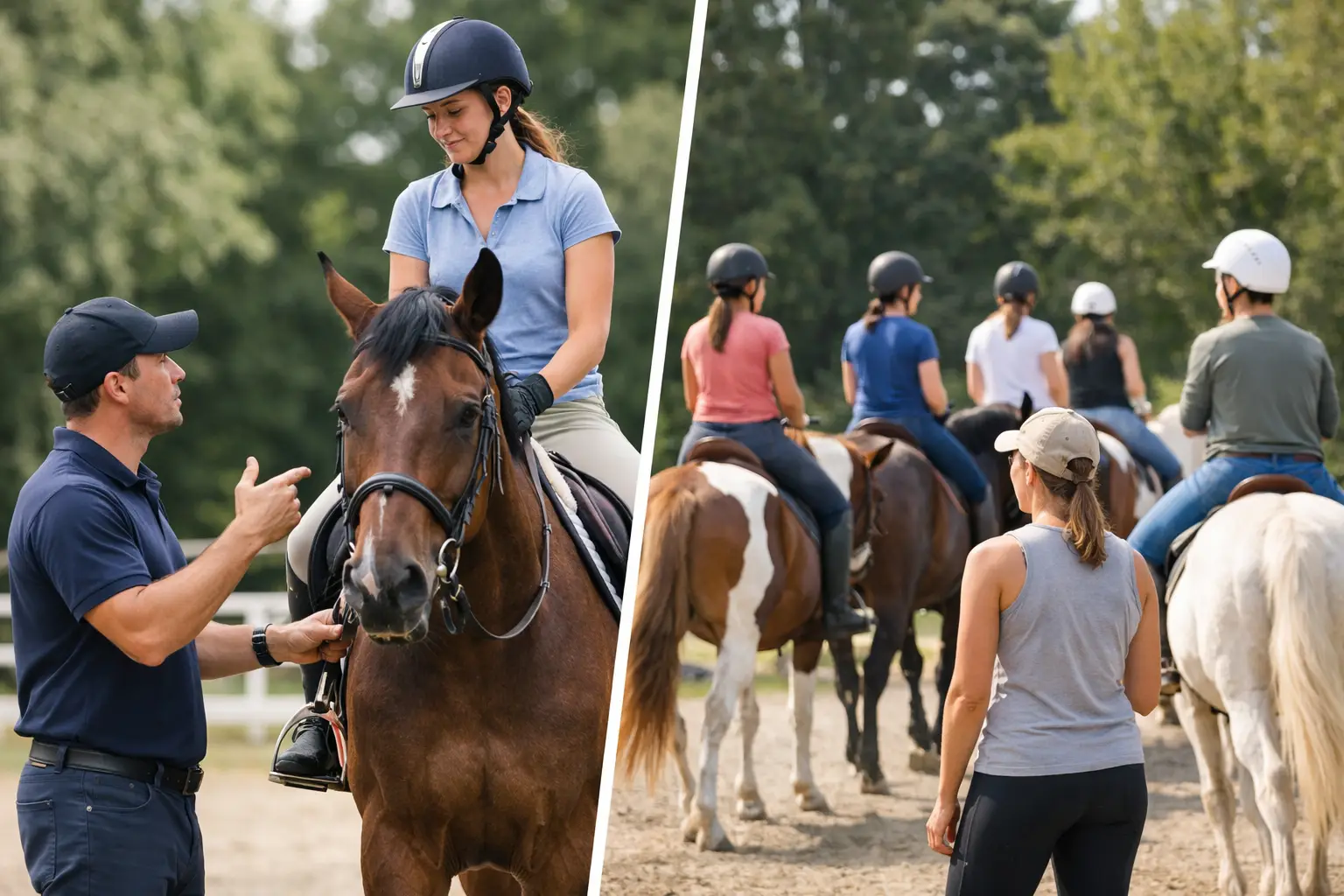
A rider who is nervous about steering in one corner of the arena needs something very different from a rider polishing lead changes or preparing for a first show. That is why private lessons vs group lessons is not a small scheduling choice. It shapes how a rider learns, how safe they feel, and how quickly they build real horsemanship.
For many families, the question starts with budget or availability. Those factors matter, but they are not the whole picture. In riding, the lesson format affects attention, communication, horse selection, and the kind of progress a trainer can measure week to week.
Private lessons vs group lessons: what really changes
The biggest difference is simple. In a private lesson, the instructor teaches one rider at a time. In a group lesson, that instructor divides attention among several riders who may be working on related skills at the same time.
That difference shows up in every part of the experience. A private lesson allows the trainer to adjust the horse, exercises, pacing, and coaching style to one rider in real time. If a child is struggling with posting rhythm, the entire lesson can slow down and focus there. If an adult rider is returning after years away and needs confidence before cantering, the trainer can build that foundation without pressure.
In a group setting, there can be valuable energy and camaraderie, but the lesson has to move at a pace that works for everyone in the ring. That means some riders get held back while others are asked to keep up before they fully understand a concept.
Neither format is automatically better in every case. The right choice depends on the rider's age, goals, confidence level, and how much individualized support they need.
When private riding lessons make the most sense
Private instruction is often the best fit when safety, confidence, and precision matter most. That includes true beginners, young children, riders rebuilding confidence, and advanced students working on technical goals in jumping or dressage.
A beginner benefits from clear, immediate feedback. Riding asks a student to manage position, balance, reins, leg, direction, and awareness of the horse all at once. In a private lesson, the trainer can catch small issues early before they become habits. That tends to create steadier progress and a calmer learning experience.
For children, one-on-one instruction also gives the trainer more room to teach horsemanship, not just riding. Learning how to approach a horse, how to read body language, how to groom properly, and how to handle equipment with care all deserve focused attention. Those details build safe, responsible riders over time.
Private lessons also serve experienced riders well. Once a rider begins refining transitions, adjusting stride, improving straightness, or working through a specific challenge with their horse, generic instruction is rarely enough. Small adjustments matter. Timing matters. Consistency matters. Individual coaching can make those details easier to understand and repeat.
At a boutique program like Eden Hills Equine, that kind of focused instruction is especially valuable because the trainer can look at the whole horse-and-rider pair, not just the skill of the day. That leads to more thoughtful progress and better long-term development.
Where group lessons can still be valuable
Group lessons do offer benefits, especially for riders who are comfortable, independent, and motivated by a shared environment. Some students enjoy learning alongside peers. Watching another rider practice the same skill can help reinforce what the trainer is teaching. For social riders, that group dynamic can make lessons fun and encouraging.
A group can also help a rider learn arena awareness. Sharing space, passing safely, following directions in order, and staying focused while others are moving nearby are all useful skills. For riders who already have a basic foundation, that environment can add a practical layer to their education.
Still, group lessons work best when riders are carefully matched by age, experience, and goals. If one student is still learning to stop while another is ready to jump a course, neither rider gets the ideal lesson. The stronger rider waits, and the newer rider may feel overwhelmed.
That mismatch is where group lessons can lose their value quickly.
Safety and supervision are not the same in every format
Safety is one of the most important factors in the private lessons vs group lessons decision, especially for parents of younger riders.
In private instruction, the trainer has a clearer line of sight on one rider's position, focus, and response to the horse. If something starts to go wrong, the correction is immediate. The horse can also be selected more intentionally for that rider's size, ability, and confidence level.
In a group, even with a careful instructor, attention is naturally split. That does not make group lessons unsafe by default, but it does change the level of direct supervision each rider receives in any given moment. The more moving parts in the arena, the more a rider needs to manage independently.
This is why many families prefer private lessons at the beginning. Riders can build balance, control, and confidence before adding the extra demands of riding among others.
Progress, plateaus, and learning style
Some riders learn quickly in a shared lesson because they are visual learners. They watch, process, and apply. Others need direct feedback every few strides. They may understand a concept only when the trainer explains it in relation to their own body, their own horse, and their own timing.
Private lessons tend to shorten the gap between instruction and correction. If a rider collapses a hip, tips forward, or loses outside rein support, the trainer can address it right away and keep building from there. Over time, that level of precision often creates cleaner basics.
Group lessons can still produce progress, but it may come in a less direct line. Riders often spend more time waiting for turns, listening to corrections meant for others, or repeating exercises that are not perfectly matched to their current level. For some students that is fine. For others, it leads to frustration or slower development.
This is where honesty matters. A rider who needs reassurance, structure, and close coaching usually benefits more from private instruction. A rider who is independent, steady, and socially motivated may enjoy the rhythm of a well-run group.
Cost matters, but value matters too
It is fair to say that group lessons are often priced lower per rider. For some families, that can make them feel like the obvious choice. But cost alone does not always show the full value of the lesson.
If a rider makes faster, safer, more confident progress in private instruction, the investment may go further than a lower-priced format that requires more time to achieve the same result. This is especially true when a rider is working through fear, inconsistency, or specific performance goals.
The better question is not just, "Which lesson costs less?" It is, "Which format gives this rider the instruction they actually need right now?"
For serious riders and horse owners, that answer often points to the format that provides the most accurate feedback and the most intentional development.
How to choose the right fit for your rider
If your child is brand new, easily distracted, or still building confidence around horses, private lessons are usually the stronger starting point. The same is true for adults who want a calm, professional environment where they can learn without feeling rushed or compared.
If a rider already has solid basics, follows directions well, and enjoys learning with peers, a group lesson may be appropriate in the right setting. The key is making sure the group is genuinely compatible in skill level and lesson goals.
It is also worth remembering that this does not have to be permanent. Some riders begin in private lessons, then add small group experiences later. Others do mostly private instruction and occasionally join group rides or clinics to broaden their skills. Good training is rarely one-size-fits-all.
The best programs look at the rider in front of them and choose the lesson structure that supports safe growth, not just a full schedule.
Private lessons vs group lessons for long-term horsemanship
Riding is not only about what happens in the saddle for 45 minutes. It is about judgment, responsibility, consistency, and the relationship between horse and rider. That is why lesson format matters beyond convenience.
Private lessons often create more room for those deeper conversations. A trainer can explain why a horse is reacting a certain way, how the rider's body influences the outcome, and what needs to happen between lessons to keep improving. That kind of education builds horsemen and horsewomen, not just students who can follow a pattern in the ring.
For families who want more than a recreational activity, that distinction matters. The strongest riding foundations are built through careful instruction, thoughtful horse care, and a pace that protects both confidence and safety.
If you are deciding between the two, start with your rider's real needs rather than the most convenient format. The right lesson should leave a rider feeling clearer, safer, and more capable each time they step out of the saddle.