

Why One on One Riding Instruction Works
See how one on one riding instruction builds safety, confidence, and steady progress for new, young, and advanced riders alike.
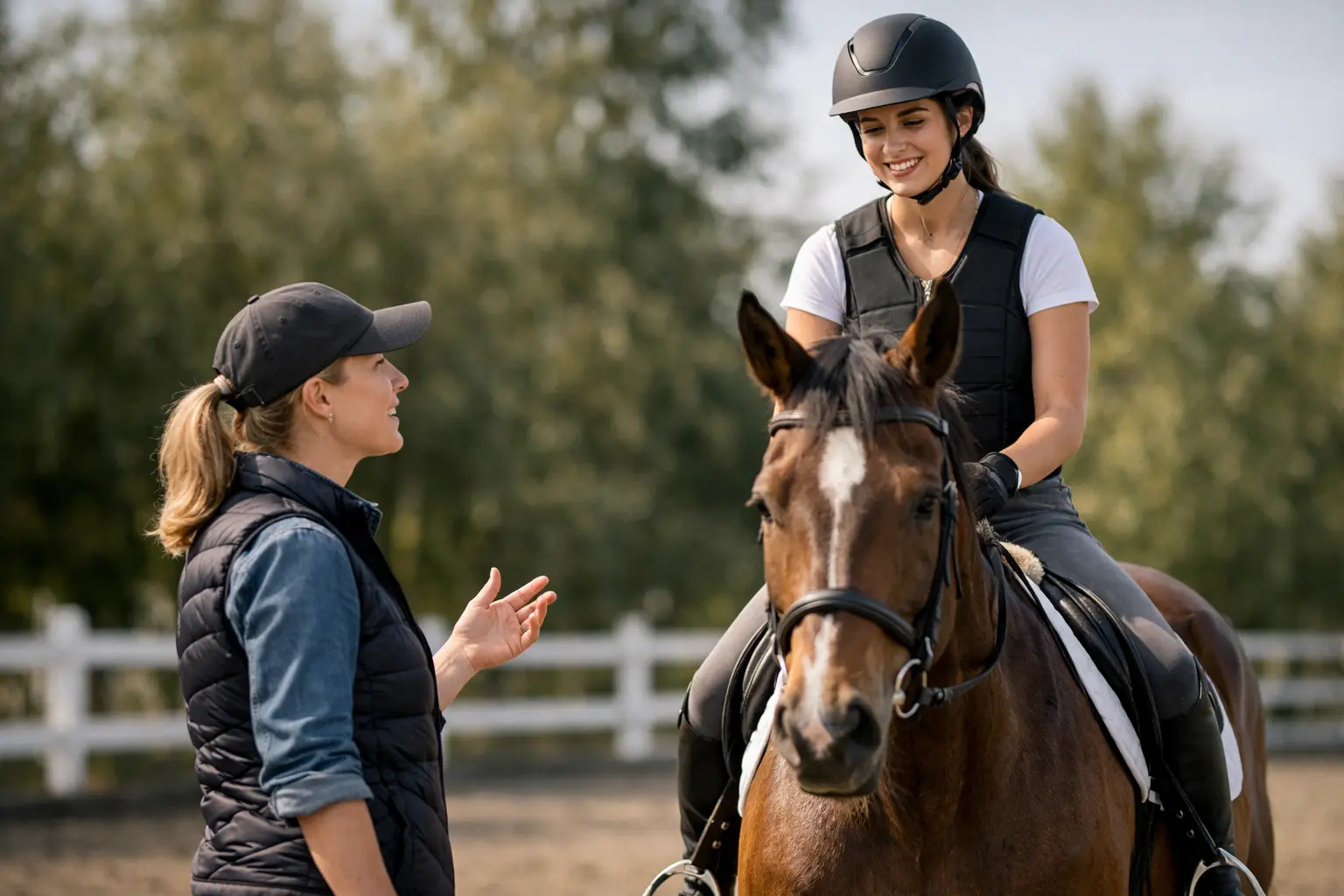
A rider who is gripping with the knee, tipping forward over jumps, or losing the outside rein does not need a generic correction shouted across an arena. They need a trainer watching closely enough to catch the pattern, explain the cause, and adjust the lesson in real time. That is where one on one riding instruction changes the experience.
Private lessons create space for real teaching. Instead of sharing attention with a group, the rider gets immediate feedback, a lesson plan built around current goals, and coaching that fits both skill level and confidence level. For families, that often means a safer and more structured introduction to horses. For experienced riders, it means finer detail, stronger flatwork, and more meaningful progress over time.
What one on one riding instruction actually changes
In riding, small details matter. A dropped shoulder can affect a turn. An inconsistent leg can change a horse's rhythm. A moment of hesitation can turn into a refusal at a jump or tension in a dressage test. In a private lesson, those details are not missed because the trainer is not dividing attention between several riders at once.
That level of focus matters for beginners, but it is just as valuable for intermediate and advanced riders. New riders need careful guidance on position, balance, rein contact, and basic horse handling. More developed riders need help refining aids, improving feel, and understanding how their choices influence the horse underneath them. In both cases, progress is faster when instruction is specific rather than broad.
One-on-one coaching also allows the lesson to shift when needed. If a rider arrives nervous after a fall, the session can be adjusted to rebuild confidence without losing structure. If a horse feels unusually fresh or distracted, the trainer can spend more time on connection, responsiveness, or transitions before moving on. That flexibility is hard to create in a group format where everyone must stay on the same track.
Safety improves when teaching is individualized
Safety is one of the strongest reasons families choose private instruction, and rightly so. Riding is a sport that asks a lot from the rider and the horse at the same time. Good instruction should reduce avoidable risk by teaching correct habits early and reinforcing them consistently.
In one on one riding instruction, a trainer can watch every stage of the ride, from mounting and rein adjustment to warm-up, transitions, and cooldown. That makes it easier to correct unsafe posture, rushed decision-making, or missed communication before those issues become bigger problems. Riders are not waiting for help while the instructor addresses someone else across the ring.
For children, this often leads to a calmer start. They can ask questions freely, practice skills at an appropriate pace, and learn barn expectations clearly. Parents also benefit because they can see that instruction is structured, attentive, and based on skill development rather than simply keeping children occupied for an hour.
Safety is not just about preventing falls. It is also about building riders who understand horses, respect boundaries, and know how to stay thoughtful under pressure. That kind of horsemanship takes time, and private instruction gives it room to grow.
Confidence grows faster when riders feel seen
Many riders struggle not because they lack ability, but because they are overwhelmed, self-conscious, or unsure what to fix first. A private lesson removes much of that pressure. There is no need to compare progress with others in the arena, and no need to keep up with a group pace that may not match the rider's needs.
That matters for beginners who are still learning how to steer, post, and canter. It also matters for riders returning after years away from the saddle, or for those working through nerves after a difficult experience. When the trainer can respond to the rider's mindset as well as the technical issue, confidence becomes more durable.
The best confidence is not empty praise. It comes from clear improvement. A rider hears one correction, understands it, tries it again, and feels the horse respond. That cause-and-effect learning is powerful. Over time, it helps riders trust their own feel, make better decisions, and ride with more consistency.
Private lessons support better horsemanship, not just better riding
Strong equestrian programs do not treat riding as separate from horse care. Riders need to learn how horses think, how they communicate discomfort, and how daily handling shapes behavior under saddle. One of the biggest advantages of private instruction is that the trainer has time to teach beyond the riding exercise itself.
That might mean explaining why a horse needs a longer warm-up, how to recognize tension in the topline, or when a rider's hand is creating resistance instead of softness. It may include grooming standards, tack fit awareness, arena etiquette, or basic horse management habits that help riders become more capable and responsible around horses.
For young riders especially, this is where much of the long-term value lives. Families are often looking for more than a sport. They want structure, accountability, discipline, and practical confidence. Personalized instruction makes those lessons easier to teach because the trainer can connect them directly to the rider's daily actions and choices.
One on one riding instruction for different skill levels
Private lessons are sometimes seen as something only beginners need. In reality, they are effective at every stage, but the reason changes as the rider develops.
For beginners, one-on-one instruction creates a solid foundation. The rider learns how to sit correctly, hold the reins with purpose, follow motion, and understand basic aids before bad habits become deeply ingrained. Early consistency matters because riding builds skill on top of skill.
For children and teens, the benefit is often structure. Lessons can be paced to the rider's maturity, attention span, and physical strength. A trainer can insist on correct basics while still keeping the experience encouraging and engaging.
For adult amateurs, private coaching often provides the reassurance that group settings do not. Adults tend to be thoughtful riders, but they can also carry tension or hesitation. Individualized teaching helps them progress without feeling rushed.
For competitive or advanced riders, private lessons allow for detail. Work on adjustability, straightness, connection, course strategy, or test preparation requires precise coaching. Subtle improvements in timing and balance can make a major difference, and those improvements are easier to achieve when the trainer's focus stays on one horse-and-rider pair.
What to expect from a high-quality private lesson
A well-run private lesson should feel purposeful from start to finish. The rider should know what they are working on and why it matters. Corrections should be specific, not vague. The trainer should be able to explain not only what to change, but what effect that change will have on the horse.
The atmosphere should also balance standards with encouragement. Riders improve best when expectations are clear and support is consistent. That does not mean every lesson feels easy. Some sessions are about rebuilding basics, solving resistance, or repeating the same exercise until it clicks. That is part of real progress.
It also helps when the program itself is built around individualized care. In a boutique setting like Eden Hills Equine, private instruction fits naturally because the entire environment is designed for attention to detail, rider development, and horse well-being. That kind of setting supports better teaching because it values consistency, safety, and thoughtful horsemanship at every level.
Is private instruction always the right choice?
Usually, but not automatically. Some riders benefit from occasional group experiences once they have a foundation, especially if they need exposure to sharing space, riding with distractions, or learning informal show-ring rhythm. Group lessons can also add a social element that some children enjoy.
Still, private instruction is often the strongest choice when safety, confidence, and measurable skill development are the priorities. It gives riders the chance to build correctly before adding complexity. It also helps trainers identify issues early, whether those issues come from the rider, the horse, or the communication between them.
That early attention can save a great deal of frustration later. It is much easier to build good habits from the beginning than to spend months undoing preventable ones.
When riders receive focused teaching, horses benefit too. They get clearer aids, more consistent rides, and a partner who understands how to support rather than confuse them. That is good for performance, but it is also good for the horse's daily experience.
The right lesson format should do more than fill a schedule. It should help riders become safer, more capable, and more confident with every ride. When instruction is personal, attentive, and grounded in horsemanship, progress stops feeling random and starts feeling earned.