

Full Care Horse Boarding Guide for Owners
A full care horse boarding guide for owners who want safe, consistent horse care, clear services, and the right fit for training and daily management.
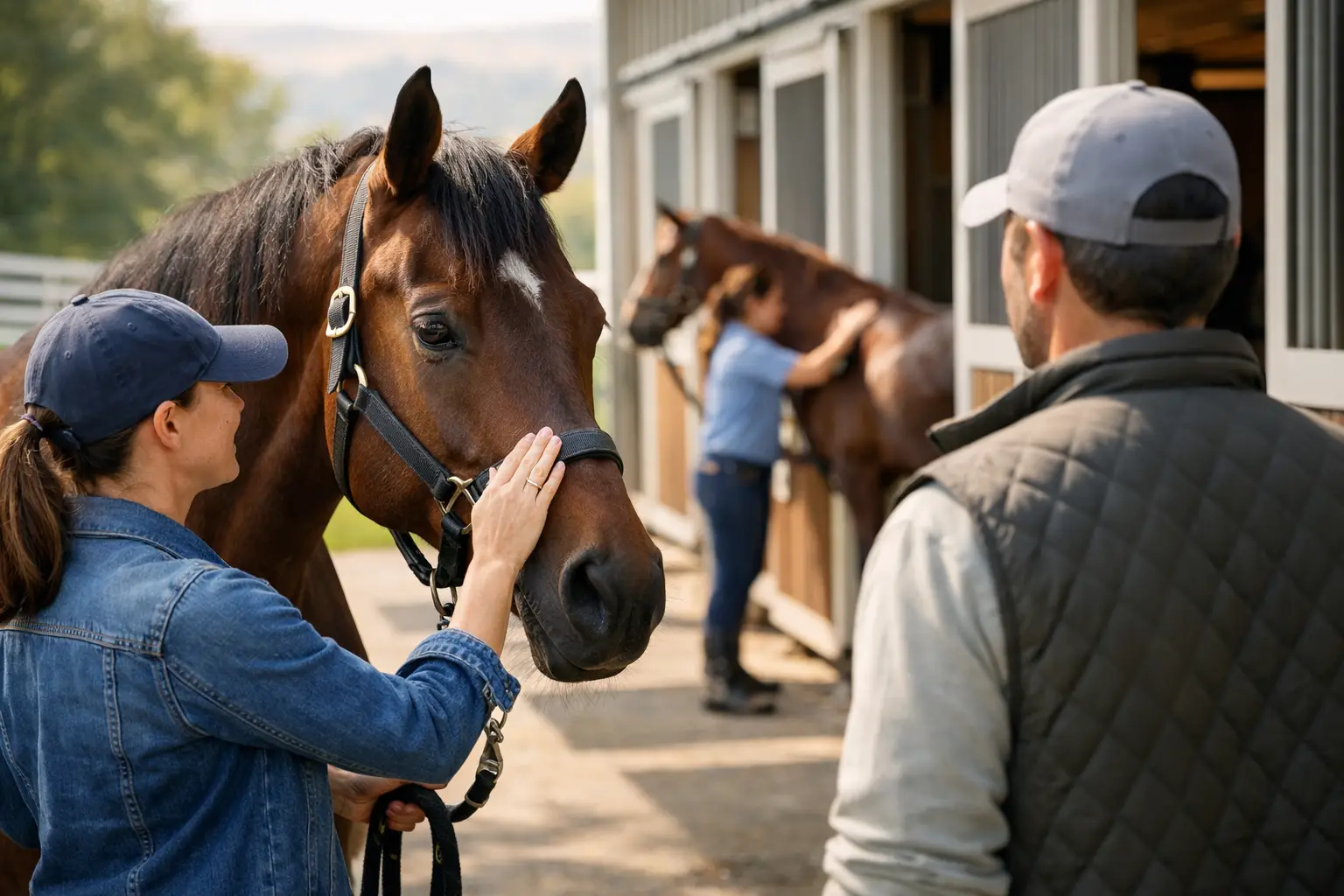
The first time you price board for your horse, the monthly number can feel simple. Then the real questions start. Who is checking your horse every day? How are feed changes handled? What happens if your horse pulls a shoe, drops weight, or needs a quieter turnout routine? A good full care horse boarding guide should answer those questions before they become stressful.
For many owners, full-care boarding is not about convenience alone. It is about consistency, safety, and knowing your horse is managed by people who notice small changes before they become bigger problems. If you are a parent supporting a young rider, an adult amateur balancing work and family, or an owner with performance goals in dressage or jumping, the quality of daily care matters just as much as the arena.
What full-care boarding really means
Full-care boarding generally means the barn handles your horse's core daily needs. That usually includes feeding, watering, stall cleaning, turnout, and basic observation. In many programs, it also includes holding for routine vet or farrier visits, blanketing when needed, and coordination around the horse's normal schedule.
The key word, though, is generally. Full care is not a universal package. One program may include multiple daily checks, individualized feeding, and hands-on communication about changes in condition. Another may cover the basics but leave more details to the owner. That is why the label matters less than the actual standard of care.
A horse that thrives in a busy, simple routine may need less customization. A horse in active training, a senior horse, or a horse with maintenance needs may require closer management. Owners are often happiest when they choose a program based on how the horse will be cared for in real life, not just how the service is named.
A full care horse boarding guide to the details that matter
When owners compare boarding options, they often focus first on visible features like the arena, tack room, or turnout space. Those things matter, but the daily systems behind the scenes matter more.
Start with feeding. Ask what type of hay is used, how often horses are fed, and whether grain or supplements can be individualized. A well-managed feeding program should not treat every horse exactly the same. Metabolism, workload, age, and health all affect what a horse needs.
Turnout is another major factor. Some horses do well with longer turnout and active social time. Others need more controlled arrangements. What matters is not only whether turnout is offered, but how it is supervised, how groups are selected, and how the staff responds if a horse needs a different setup.
Stall care also tells you a lot about a program. Clean stalls are the visible part, but consistency is the deeper issue. Horses do best when they have a predictable routine, fresh water, and a clean environment that supports respiratory health and overall comfort.
Then there is observation. Horses rarely announce a problem clearly at first. A quality full-care program notices when a horse is drinking less, standing differently, acting dull, or losing topline. That kind of attention is hard to put on a price sheet, but it is often what owners value most once their horse is in a program.
The value of individualized management
Not every horse needs intensive management, but every horse benefits from thoughtful management. That is especially true in a boutique setting where staff can know each horse as an individual rather than as a stall number.
Individualized care can look simple from the outside. It may mean soaking feed for one horse, adjusting turnout timing for another, or flagging subtle behavior changes before a training ride. For the owner, it creates peace of mind. For the horse, it creates a routine that supports health, soundness, and performance.
This is also where communication matters. Owners should know who to contact, how updates are handled, and what happens when a concern comes up. Some owners want frequent check-ins. Others want to know they will be contacted when something truly needs attention. Neither preference is wrong, but clarity is important from the beginning.
Boarding and training often work best together
For many horses and riders, boarding is only one part of the picture. If your goals include better flatwork, confidence over fences, improved dressage basics, or more consistency in your horse's behavior, the best boarding setup may be one that supports regular training.
That does not mean every boarded horse needs a full training schedule. It means the care team and training program should work in the same direction. A horse in lessons or training benefits when the people handling daily care understand the bigger plan. If your horse is building topline, returning to work, learning new skills, or managing fitness carefully, the details of feed, turnout, and routine need to support that.
For parents, this matters too. A young rider often makes the most progress in an environment where instruction, horse care, and horsemanship education are connected. Riding is only part of learning to own or lease a horse well. Good boarding programs reinforce responsibility, safety, and horse-first thinking.
Questions owners should ask before committing
A practical full care horse boarding guide is not complete without the right questions. Ask how many times horses are checked each day and who lives or works on site. Ask what happens in bad weather, how schedule changes are handled, and whether the staff has a plan for minor injuries or emergencies.
You should also ask about the culture of the program. Is the environment structured and calm? Is safety taken seriously in the barn, arena, and turnout areas? Are expectations clear for owners, riders, and visitors? A well-run facility usually feels organized without feeling rigid.
It is also smart to ask how the barn supports different kinds of horses and riders. A family with a first horse may need more guidance and communication. An experienced owner with a horse in regular training may care more about performance support and consistency. The best fit is not always the most elaborate program. It is the one that aligns with your horse's needs and your goals.
Signs a program may be the right fit
A strong boarding program often feels steady rather than flashy. Horses look settled. Staff members know the horses. The facility is clean, functional, and designed with safety in mind. Routines seem intentional.
Look for signs that care is proactive, not reactive. Water should be clean, feed rooms organized, fencing maintained, and horses observed with attention. If a program emphasizes individualized care, you should be able to hear that in the way staff talks about management decisions.
Trainer access is another sign of quality, especially for owners who want support beyond basic care. When coaching, horse management, and rider development are connected, progress tends to be more measurable and less frustrating. That can be especially valuable for owners who want a long-term home for both the horse and the rider.
In a setting like Eden Hills Equine, that level of personal attention is part of the value. A smaller, highly attentive environment can offer more than a stall and feeding schedule. It can create a consistent system where horses are cared for thoughtfully and riders are supported with purpose.
When full care may not mean the same thing for every owner
There is no single perfect package because horses and owners are not all in the same season. A family buying a child's first horse may prioritize safety, supervision, and educational support. An adult amateur may want dependable care plus flexible lesson scheduling. A competitive rider may need boarding that works hand in hand with a training plan.
That is why the best decision usually comes down to fit. A lower monthly fee may look appealing until you add up extra charges, inconsistent communication, or gaps in daily management. A more comprehensive program may cost more up front but reduce stress, improve the horse's condition, and support better progress over time.
The right boarding choice should make your life clearer, not more complicated. You should feel confident that your horse's daily needs are understood, your goals are respected, and the people caring for your horse are paying attention for the right reasons.
When you tour a program, pay attention to the small things. They often tell the truth. A horse that is comfortable, a routine that is consistent, and a team that communicates clearly will usually matter far longer than any polished first impression. Choose the place where your horse can be known well and cared for with intention.