

Horse Lease for Beginners: What to Know
Horse lease for beginners made simple. Learn lease types, costs, responsibilities, and how to choose the right fit for safe rider growth.
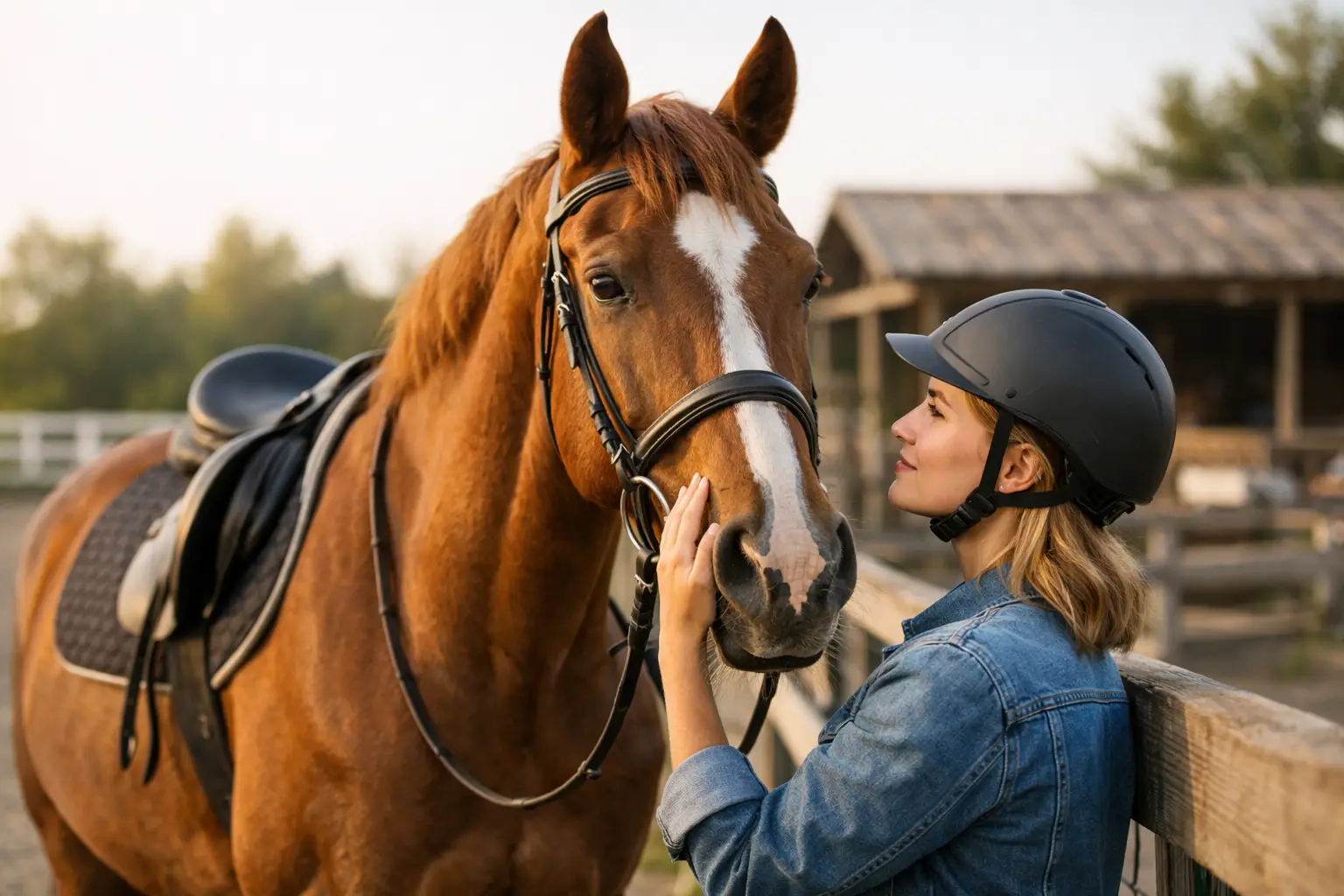
Buying your first horse can feel like a giant leap. A horse lease for beginners offers a more measured way to build skills, confidence, and responsibility before taking on full ownership.
For many riders and parents, leasing is the stage where riding becomes more than a weekly lesson. You start forming a relationship with one horse, learning its habits, and showing up with greater consistency. That can be exciting, but it also comes with real obligations. A good lease should support rider progress and horse welfare at the same time.
What a horse lease for beginners actually means
A horse lease is an agreement that gives a rider the right to use a horse for a set period of time under specific terms. In most beginner situations, the rider does not own the horse. Instead, they pay a monthly fee or other agreed amount for access to the horse on certain days and under certain conditions.
That access can vary quite a bit. Some leases allow a rider to treat the horse almost like their own several days a week. Others are much more limited and work best as a step between lessons and ownership. The details matter, because the word lease can mean very different things depending on the horse, the rider's experience, and the program structure.
For beginners, the best lease setup is usually one that adds independence gradually. A rider may still take regular lessons, follow trainer guidance, and ride within clear boundaries. That kind of structure protects safety while helping the rider grow.
Why leasing appeals to beginner riders and families
The biggest benefit is experience. Riding one horse consistently teaches much more than hopping on whichever lesson horse is available that day. A beginner starts noticing how the horse responds to different aids, what its normal behavior looks like, and how routines affect performance.
That consistency often leads to faster progress. Riders develop feel, timing, and confidence when they work with the same horse over time. For children and teens, it can also strengthen accountability. They begin to understand that horsemanship includes grooming, tacking up, cooling out, and paying attention to the horse's physical and emotional needs.
Leasing can also make financial sense compared with ownership. It typically offers more ride time and relationship-building without the full purchase price and without every long-term decision resting on the family's shoulders. That said, leasing is not a cheap substitute for ownership. It is its own commitment, and it should be treated seriously.
The most common lease types
Full lease
A full lease usually gives the rider broad access to the horse, sometimes similar to ownership without actually buying the horse. The rider may have use of the horse most or all days of the week, depending on the agreement.
For a beginner, a full lease can be too much if the rider is still developing basic skills or needs close supervision. It can be a good fit for a committed rider in a structured training program, but only if there is strong trainer oversight and a suitable horse.
Partial lease
A partial lease, sometimes called a half lease, is often the better starting point. The rider has access to the horse on a set number of days each week and usually continues lessons as part of the arrangement.
This option gives families a clearer schedule, lower cost than a full lease, and a manageable level of responsibility. It also leaves room for the horse to stay in a consistent program.
Care lease or on-site lease
Some beginner leases are built around a supervised, on-site format. The horse remains in training, the rider follows barn and trainer guidelines, and ride times, lessons, and care expectations are clearly outlined.
This tends to be one of the safest and most productive models for newer riders. It combines personal connection with professional structure, which is especially valuable when a family is still learning how much commitment they truly want.
Costs beginners should expect
Lease costs depend on the horse, the program, the number of ride days, and what is included. The lease fee itself is only part of the picture.
Families should ask whether lessons are required and whether they are included in the monthly amount. They should also ask about tack use, farrier and veterinary responsibilities, show fees, grooming expectations, and what happens if the horse becomes temporarily unavailable.
In some leases, many care costs stay with the owner. In others, the lessee shares or assumes part of those expenses. Neither approach is automatically better. What matters is clarity.
A lower monthly fee is not always the better value if the arrangement lacks instruction, support, or a horse that truly suits the rider. A more structured lease may cost more on paper but provide a safer and more educational experience.
How to tell if a rider is ready to lease
Leasing should serve the rider's development, not rush it. A beginner may be ready when they are riding consistently, following directions well, and showing interest in horsemanship beyond the saddle.
Emotional readiness matters too. Young riders often love the idea of having "their" horse, but the daily reality includes routine, patience, and adapting when things do not go perfectly. Horses are not machines. Some days feel easy and some do not.
Parents should also consider schedule readiness. A lease works best when the family can commit to regular ride days, lessons, and communication with the trainer. If attendance is inconsistent, a lease may create pressure instead of progress.
Questions to ask before signing a lease
This is where many beginner families need the most guidance. A lease agreement should be specific, easy to understand, and discussed thoroughly before anyone commits.
Ask how many days per week the rider may use the horse and whether those days are fixed. Ask what kind of riding is permitted, whether lessons are required, and who may supervise rides. Ask whether the horse can be taken off property, used in shows, or ridden by anyone else.
Health and care questions are just as important. Find out who handles routine veterinary care, farrier scheduling, supplements, and emergency decisions. Ask what happens if the horse becomes lame or cannot work for a period of time.
Finally, ask how the arrangement can end. A good lease should include a clear term, notice requirements, and expectations for either party if the fit is no longer right.
Red flags in a beginner horse lease
Vague agreements are a problem. If no one can clearly explain the schedule, financial responsibility, or supervision plan, the arrangement is not ready.
A horse that is too sensitive, inconsistent, or physically unsuitable is another concern. Beginners need confidence-building rides, not a situation that creates fear or confusion. The right match is not just about size or appearance. Temperament, training, and tolerance matter more.
It is also worth being cautious if a family feels pushed into a lease before they understand the commitment. Good programs educate first. Leasing should feel like a thoughtful next step, not a pressured sale.
How trainer guidance changes the experience
A lease can be a wonderful bridge between lessons and ownership when it is supported by knowledgeable instruction. That guidance helps riders make sense of what they are experiencing and keeps small issues from becoming big setbacks.
For example, a beginner may think a horse is suddenly being difficult when the real issue is inconsistency in the rider's aids, a tack problem, or simple freshness after a lighter work week. Without trainer input, families can misread normal horse behavior or miss early signs that something needs attention.
This is one reason boutique, relationship-based programs can be especially valuable. When instructors know the horse, the rider, and the family's goals, they can shape a lease experience that is both safe and worthwhile. At Eden Hills Equine, that kind of individualized progress is central to how riders build confidence over time.
Leasing is not ownership - and that can be a good thing
Some families worry that leasing is only a temporary compromise. In reality, it often provides exactly what a rider needs. You gain saddle time, horse knowledge, and routine without immediately taking on every cost and decision that ownership brings.
There are trade-offs, of course. You may have less flexibility than an owner. The horse may not be available forever. You are also working within someone else's boundaries, which can be frustrating if expectations were not discussed upfront.
Still, for many beginners, those limits are useful. They create structure, encourage communication, and keep the focus where it belongs - on learning to ride well and care for a horse responsibly.
The best lease is not the one that sounds the most impressive. It is the one that fits the rider's current skill, the family's capacity, and the horse's needs. If a lease helps a rider become more consistent, more confident, and more thoughtful around horses, it is doing exactly what it should. And that is a very strong place to begin.