

Horse Lease vs Lesson Program: Which Fits?
Choosing a horse lease vs lesson program? Learn the costs, commitment, skills, and support that help Texas riders and families choose with confidence.
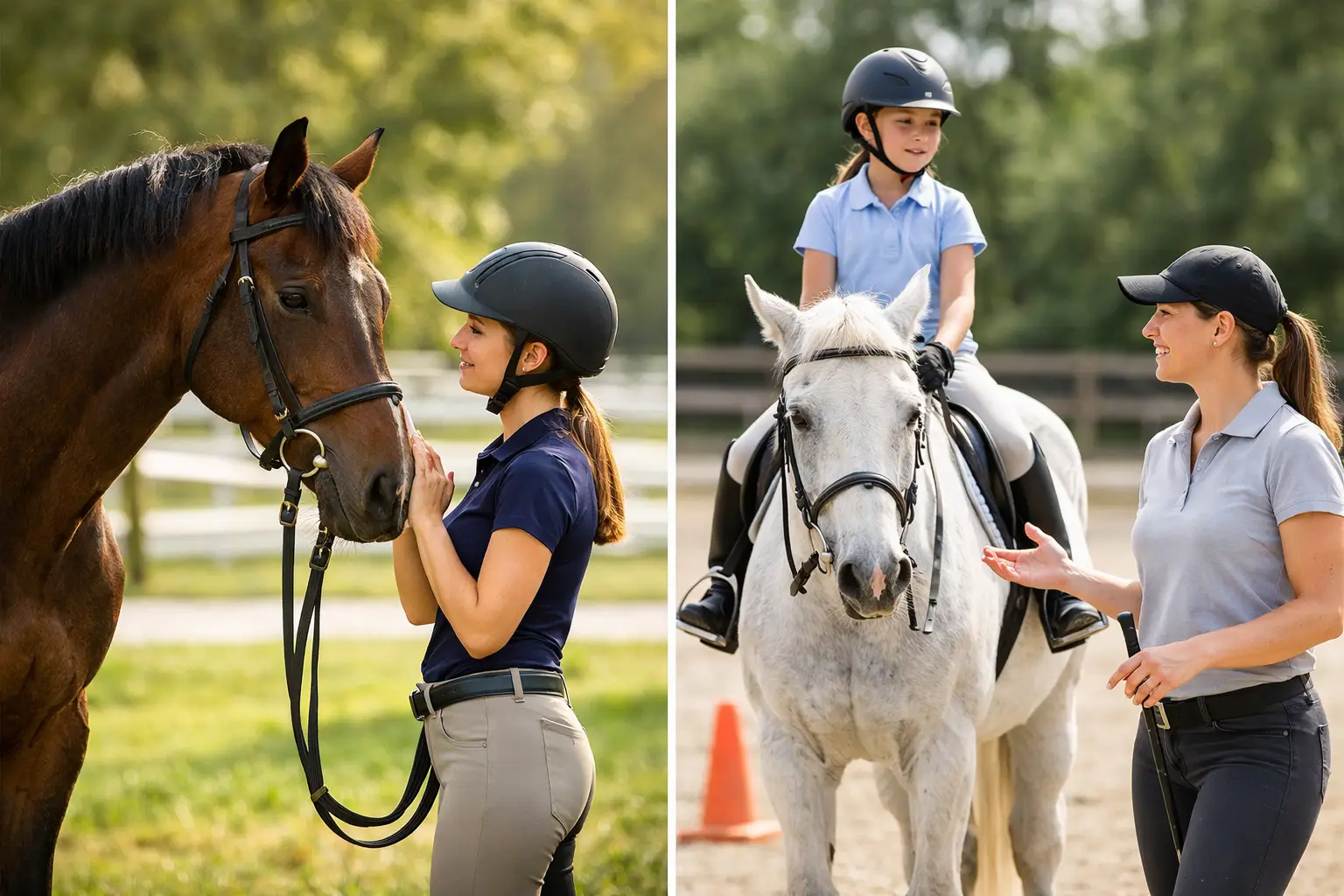
A rider who eagerly asks to groom, tack up, and stay after a lesson is often ready for more time at the barn. But more time does not automatically mean a horse lease is the right next step. When families compare a horse lease vs lesson program, the best choice comes down to readiness, goals, schedule, and the level of responsibility the rider can manage with confidence.
Both options can be meaningful parts of a rider’s development. A private lesson program builds skills through consistent coaching and carefully planned progression. A lease offers a deeper relationship with a particular horse and more opportunities to practice the habits that come with horse care. Neither is inherently better. The right fit is the one that supports safe, steady progress for both rider and horse.
What a Lesson Program Gives a Developing Rider
A lesson program is structured around instruction. In private lessons, the trainer can focus on the rider’s current needs: balanced position, effective aids, steering, rhythm, transitions, confidence over fences, or the more refined communication required for dressage work. The rider arrives ready to learn, rides under professional supervision, and leaves with clear feedback to carry into the next session.
For beginners, this structure is especially valuable. Riding is not simply staying on a horse. It involves learning to read equine behavior, handle equipment correctly, understand arena etiquette, make safe decisions, and communicate in a way the horse can understand. A consistent program teaches those pieces in an order that makes sense rather than asking a rider to figure them out alone.
Private instruction also allows the horse and lesson plan to be selected thoughtfully. A young child learning to post the trot needs a different experience than a teen preparing for a jumping course or an adult returning to riding after years away. Individualized coaching helps riders advance without being rushed into a level of independence they have not yet earned.
For many families, lessons are the most practical choice because they create consistency without adding a large weekly commitment. The rider can focus on learning while the program manages the horse’s care, conditioning, and schedule. That can be a wise arrangement during busy school seasons, sports schedules, or a child’s first year in horses.
What Changes With a Horse Lease
A horse lease provides regular access to one horse, typically on designated days each week. The exact arrangement varies, but the central benefit is continuity. Instead of riding different horses based on the day’s lesson plan, the rider has time to understand one horse’s personality, movement, preferences, and individual training needs.
That relationship can be incredibly rewarding. A rider begins to notice small changes: when a horse feels more forward, when a saddle needs extra attention, when groundwork would help before mounting, or when a familiar exercise needs to be approached with more patience. These observations are part of real horsemanship.
A lease also gives riders more time to practice between formal lessons. Repetition matters in riding. Practicing transitions, maintaining a steady rhythm, grooming thoroughly, or organizing tack becomes more meaningful when the rider returns to the same horse regularly. With appropriate guidance, that consistency can strengthen confidence and responsibility.
At the same time, a lease is not simply “more riding.” It asks more of the rider and family. Lease days require transportation, scheduling, preparation, and follow-through. The rider may need to arrive with a plan, care for the horse before and after riding, and respect the horse’s conditioning schedule. A lease should always operate within clear trainer guidance so the horse’s welfare and the rider’s safety remain the priority.
Horse Lease vs Lesson Program: The Key Differences
The most useful way to compare a horse lease vs lesson program is to consider what each experience is designed to provide. Lessons prioritize education and direct coaching. A lease prioritizes additional time, partnership, and supervised independence.
In a lesson program, the trainer typically directs the full riding experience. The rider receives instruction, works toward specific skills, and benefits from immediate correction. This is ideal when a rider is still building fundamentals or has a focused performance goal that requires close coaching.
In a lease, the rider may have riding time outside of a lesson. That freedom can be productive, but only if the rider can maintain safe habits without needing every decision made for them. They should know how to groom and tack up carefully, handle the horse respectfully, warm up appropriately, recognize when something feels different, and ask for help before a small concern becomes a larger one.
Cost is another real consideration. Lessons generally offer a more predictable commitment centered on scheduled instruction. A lease often includes a larger financial investment because it provides more access to a horse and may involve additional responsibilities or required lessons. Families should ask what is included, how many rides are permitted, whether instruction is required, what happens when the horse needs rest, and how scheduling is managed.
The horse’s needs must remain at the center of the decision. A suitable lease horse needs an appropriate workload, consistent care, and riders whose skills match the horse’s training and temperament. The goal is not to give a rider access at any cost. It is to create a partnership that is fair, safe, and beneficial for everyone involved.
Signs a Rider May Be Ready to Lease
Readiness is less about age than it is about judgment and consistency. A rider may be ready to explore a lease when they can follow barn rules without frequent reminders, handle routine grooming and tacking with growing competence, and respond calmly when a ride does not go exactly as planned.
They should also welcome coaching. Leasing does not mean graduating from lessons. In fact, continuing private instruction is often what makes a lease successful. The trainer can help the rider set appropriate goals, develop exercises for independent rides, and make adjustments as the horse-and-rider relationship develops.
Emotional maturity matters, too. Horses have off days. Weather changes plans. A favorite horse may need time off for routine care, conditioning, or an unexpected issue. A rider who is ready for a lease can be disappointed without becoming discouraged or taking that disappointment out on the horse.
Parents can look for a pattern of commitment rather than a burst of enthusiasm. Has the rider attended lessons consistently? Do they take care of their equipment? Are they interested in learning stable skills, not only riding? Do they understand that a horse is a living partner, not a personal possession? Those answers often reveal more than the rider’s age or number of lessons.
When Lessons Are the Better Next Step
Choosing lessons is not a lesser choice. For many riders, it is the most effective path forward. A newer rider may need more time to develop balance and independent control before riding outside a fully directed lesson. An intermediate rider may benefit from focused coaching before adding extra saddle time. A busy family may simply need an option that fits reliably into its weekly routine.
Lessons are also the right choice when a rider wants to sample different horses and challenges. Riding several appropriate school horses can improve adaptability. One horse may teach a rider to ride forward; another may require quieter aids; another may build confidence over poles or small jumps. With a skilled instructor guiding those experiences, variety becomes a valuable educational tool.
At Eden Hills Equine, individualized instruction helps riders build the knowledge and confidence that make future lease opportunities more productive. The aim is not to rush a milestone. It is to help each rider progress in a way that respects their goals, the horse, and the foundation needed for long-term success.
A Smart Middle Ground: Lessons Plus Barn Education
Some riders are not quite ready for a lease but are ready for greater involvement. Extra supervised grooming time, learning to clean tack, observing a training session, assisting with appropriate horse-care routines, or participating in camps and horsemanship classes can deepen their education without adding the full responsibility of a lease.
This middle ground is particularly helpful for children who love horses but are still learning how much work happens beyond the saddle. It gives them a clearer view of the commitment while allowing trainers and parents to see how they respond to responsibility. A rider who takes pride in the quiet, everyday work of horse care is often building the mindset needed for a future lease.
The best next step should leave a rider challenged but supported. Whether that means a weekly private lesson, a more frequent training plan, or a carefully structured lease, the goal is the same: develop capable riders who understand that good horsemanship is built through patience, consistency, and care.