

English Riding Lessons Wimberley Parents Trust
English riding lessons Wimberley families choose should build safety, skill, and confidence through private instruction and true horsemanship.
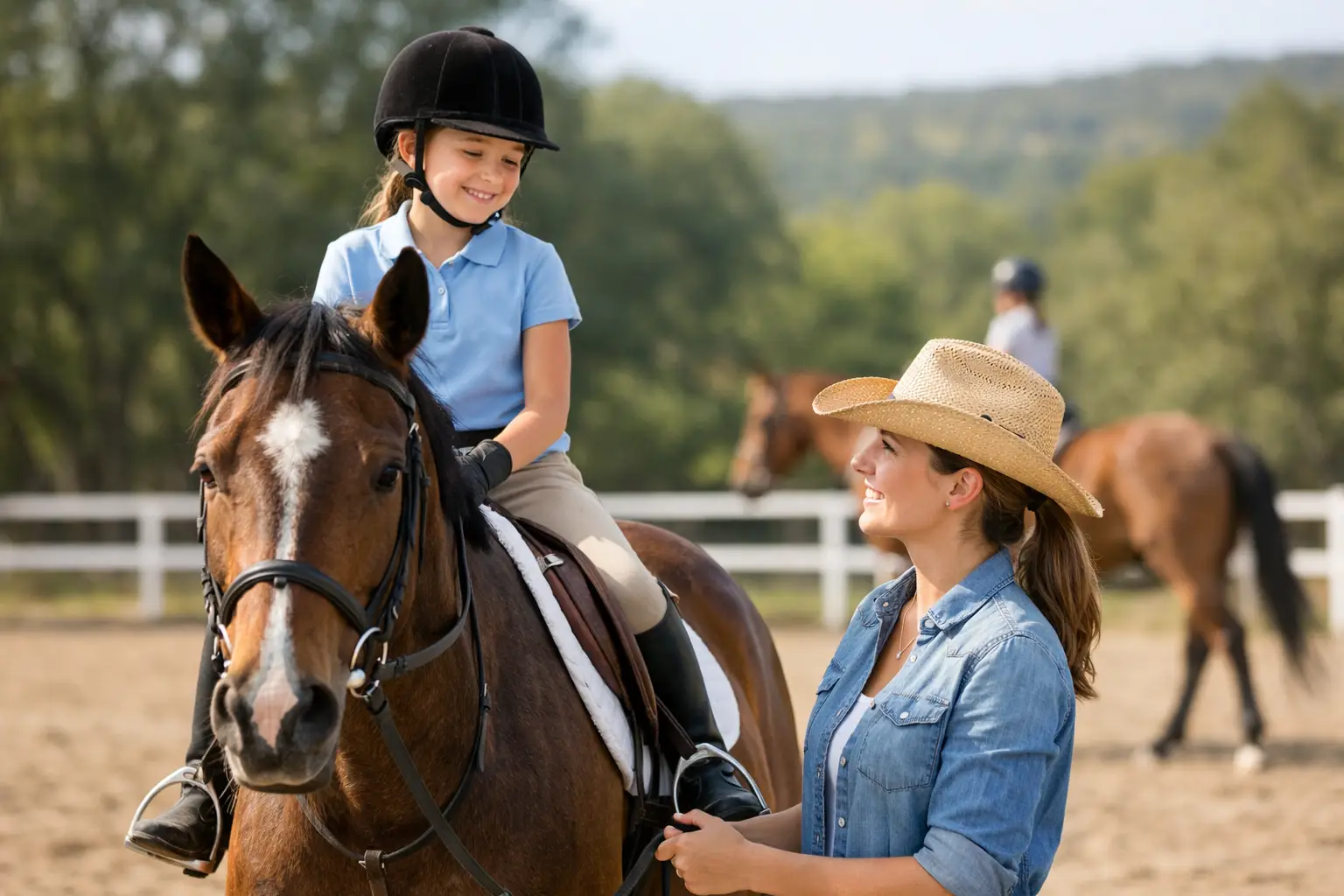
A child comes home from a first lesson talking about posting trot, how to hold the reins, and why the horse needed a few quiet minutes before work. That kind of excitement usually means the lesson did more than fill an hour. It taught something real. When families start looking for english riding lessons wimberley riders can grow with, they are often looking for more than saddle time. They want steady instruction, safe horses, and a program that treats horsemanship as part of the education.
English riding can be a wonderful fit for children, teens, and adults because it develops balance, coordination, discipline, and feel. It also asks riders to think. A good lesson is not simply about getting on and going around. It is about learning how a horse moves, why position matters, and how trust is built over time.
What makes English riding lessons in Wimberley worth your time
Not all riding instruction feels the same, and that matters more than many first-time clients realize. In a thoughtful English program, riders are not rushed through a preset routine just to say they trotted or jumped. They are taught in a way that matches their age, confidence level, and long-term goals.
For a beginner, that may mean learning how to approach a horse safely, mount correctly, and build an independent seat before adding complexity. For an intermediate rider, it may mean improving transitions, refining contact, or beginning a more structured jumping or dressage track. For an adult returning to riding after years away, it often means rebuilding confidence at a pace that feels productive rather than overwhelming.
The strongest programs also teach riders to understand the horse beneath them. That includes grooming, tack awareness, barn manners, and the basic responsibility that comes with working around animals. Parents often appreciate this piece just as much as the riding itself because it gives children a fuller education and helps them mature around the sport.
Why private instruction changes the learning curve
Private lessons make a noticeable difference, especially in English riding where position and timing matter. Small corrections can completely change how secure and effective a rider feels. When instruction is one-on-one, those corrections happen in real time and with enough detail to stick.
A private format also allows the lesson to serve the rider in front of the instructor instead of the average of a group. If a child is nervous, the session can slow down and focus on confidence. If a rider is advancing quickly, the work can become more technical without waiting for others to catch up. If a horse needs a quieter ride that day, the plan can shift accordingly.
That flexibility protects both safety and progress. Riders are less likely to develop habits that go unnoticed, and instructors have more room to build skills in the right order. In English disciplines, that order matters. Trying to jump before a rider has balance and control may feel exciting in the moment, but it often creates tension later. Solid basics are not a delay. They are what make future progress possible.
What beginners should expect from English riding lessons Wimberley families book
A first lesson should feel welcoming, organized, and calm. Riders need clear instruction from the ground up, not assumptions about what they already know. That begins with simple but important details such as where to stand, how to lead, how to approach the horse, and how to read body language.
Once mounted, beginners usually start with position, steering, stopping, and rhythm. Some riders move comfortably into trot work early. Others need several lessons before they are ready for that next step. Both are normal. Progress in riding is rarely linear, especially for children. One week may feel easy, and the next may require more patience.
This is where a measured program stands apart. Good instruction does not push riders to perform for appearances. It builds competence. A child who learns to sit quietly, follow directions, and respect the horse is laying a far stronger foundation than one who is rushed ahead too soon.
Parents should also expect communication. They should be able to understand what their rider is working on, what progress looks like, and where more time may be needed. Riding has plenty of nuance, so honest expectations are part of a quality experience.
For developing riders, progress should be specific
Once a rider is comfortable with the basics, lessons should become more intentional. Vague improvement is hard to measure. Specific improvement is much easier to see. That might mean straighter lines, steadier hands, better transitions, stronger leg position, or more thoughtful preparation before a fence.
In English riding, advanced-looking work is only valuable if it is supported by correct basics. A rider may be eager to canter more, jump higher, or move into more polished flatwork, but the right timeline depends on balance, consistency, and feel. There is always some give-and-take here. Ambition is helpful. So is patience.
For riders interested in jumping, lessons should emphasize control, rhythm, and confidence before height. For those drawn to dressage foundations, attention to position, accuracy, and communication with the horse becomes even more important. Either way, individualized coaching helps riders understand not just what to do, but why they are doing it.
Safety is more than wearing a helmet
Helmets are essential, but safety in a riding program goes much deeper. It includes how horses are matched to riders, how lessons are supervised, how the arena and barn are maintained, and how much attention each student actually receives.
A safety-first environment tends to feel calm rather than chaotic. Horses are handled thoughtfully. Expectations are clear. Riders know where to be and what to do. Instructors are attentive enough to notice tension early, whether that tension is coming from the rider or the horse.
This is especially important for families with young children and for adults who may be building confidence. A well-run lesson should stretch a rider's skills without creating unnecessary fear. There is a difference between healthy challenge and avoidable stress.
The facility matters more than people think
Families often focus on the instructor first, and that makes sense. But the facility itself shapes the quality of the lesson experience. A well-designed property supports safer handling, better schooling, and more consistent horse care.
For English riders, specialized spaces for flatwork and jumping can make training more productive. Clean, organized tack areas help reduce confusion and improve day-to-day safety. Thoughtful ranch management also matters because horses perform best when their care is consistent.
For owners, the environment matters even more. Riders who board and train in the same place benefit from continuity. Their horse's care, workload, and development stay aligned instead of being handled in isolation. That tends to produce steadier progress and fewer gaps in communication.
English riding is also horsemanship education
One of the best long-term benefits of riding is that it teaches responsibility in a way few other activities can. Horses are sensitive, powerful animals. Working with them requires attention, consistency, patience, and humility.
That is why the best lesson programs do not separate riding from horsemanship. Students should learn how to care for equipment, how to behave respectfully in the barn, and how to recognize what a horse may be communicating. These lessons shape better riders, but they also shape more thoughtful people.
For children, this often becomes part of why families stay involved year after year. Riding is active and rewarding, but it also asks kids to listen, problem-solve, and show self-control. For adults, horsemanship often deepens appreciation for the sport and makes each lesson more meaningful.
Choosing the right fit for your rider
The right program is not always the one that promises the fastest results. It is the one that offers clear instruction, appropriate pacing, strong horse care, and a setting where riders are known as individuals.
If your goal is lasting progress, look for instruction that meets the rider where they are and has a plan for where they are headed. Boutique programs such as Eden Hills Equine often appeal to families and dedicated riders because the experience is more personal. Riders receive focused attention, horses receive consistent care, and goals are developed with intention rather than guesswork.
That kind of environment tends to serve a wide range of students well, from children taking early lessons to adults returning to the saddle to riders pursuing more technical work in jumping or dressage. The common thread is simple: people learn best when they feel safe, supported, and challenged in the right measure.
If you are considering English riding for yourself or your child, choose a place that values education as much as progress. The best lessons do not just teach riders how to sit on a horse. They teach them how to think, how to communicate, and how to keep growing long after the first exciting ride.