

What Happens in a First Riding Lesson?
Wondering what happens in first riding lesson? Learn what to expect, how safety works, and how new riders build confidence from day one.
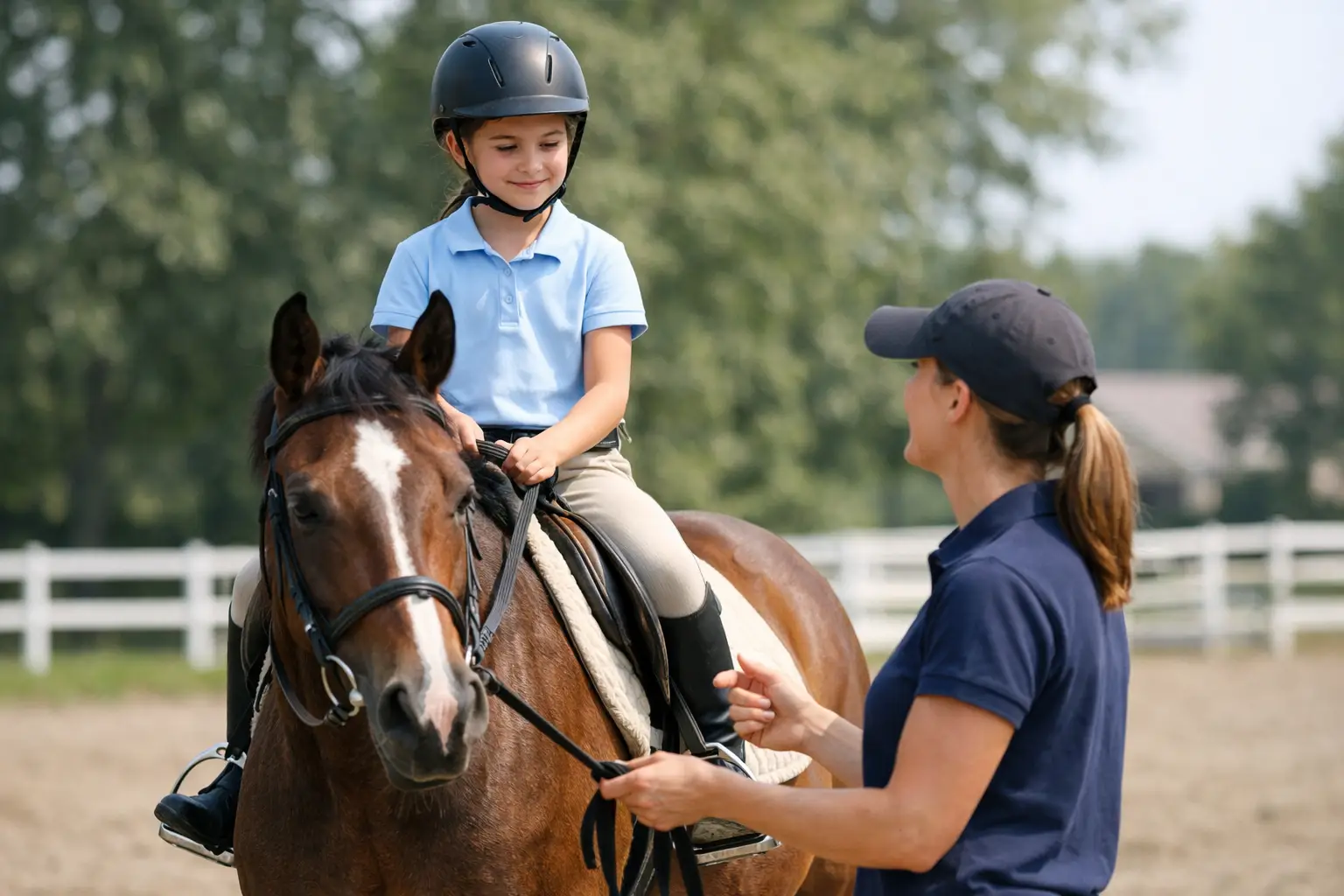
A first riding lesson usually starts before anyone puts a foot in a stirrup. If you are wondering what happens in first riding lesson, the short answer is this: your instructor is not just teaching riding. They are evaluating comfort level, explaining safety, introducing horse behavior, and building the kind of confidence that makes real progress possible.
For children, that often means easing nerves and creating structure. For teens and adults, it may mean letting go of the idea that everyone else already knows what to do. A well-run first lesson should feel organized, calm, and personal, because the goal is not to rush. The goal is to start correctly.
What happens in a first riding lesson before you ride
The first few minutes matter more than many beginners expect. In most cases, your instructor will begin with a conversation about your experience, goals, and any concerns you may have. If the rider is a child, this also helps parents understand how the lesson will be conducted and what the instructor will prioritize.
This is also when basic barn rules are usually covered. You may learn where to stand, how to move around horses safely, why sudden movements can be a problem, and how to approach a horse respectfully. That might sound simple, but it is a meaningful part of horsemanship. Riding is not only about staying balanced in the saddle. It is also about learning how to be safe and thoughtful on the ground.
In a boutique lesson setting, this stage is often more individualized. Instead of being swept into a busy group routine, the rider gets direct attention from the start. That can make a significant difference, especially for first-time riders who need a slower introduction or a little extra reassurance.
Meeting the horse
One of the most memorable parts of a first lesson is meeting the horse. Your instructor will usually choose a horse suited to a beginner's size, confidence level, and physical ability. Not every quiet horse is right for every new rider, which is why thoughtful matching matters.
You may be shown how to greet the horse, where to stand near its shoulder, and how to read a few basic body language cues. Ears, eyes, posture, and movement all tell a story. A first lesson will not turn someone into an expert horseman in an hour, but it should begin to teach that horses are responsive animals, not pieces of sports equipment.
In some programs, beginners may help with a small part of grooming or watch the tack-up process. In others, the horse may already be prepared so the rider can focus on the basics. Neither approach is automatically better. It depends on the rider's age, attention span, and comfort level. For a young child, too much information at once can feel overwhelming. For an adult beginner, understanding the setup often builds trust.
Safety comes first, and that is a good sign
A strong first lesson is usually more safety-focused than many people expect. That is not a sign that riding is being made intimidating. It is a sign that the program takes rider development seriously.
The instructor will typically check helmet fit, explain mounting procedures, and give clear directions about reins, stirrups, and hand placement. New riders are often surprised by how much there is to remember at first. That is completely normal. Riding uses the body and mind at the same time, and beginners are learning a new language as much as a new skill.
You may also hear simple reminders repeated often. Heels down. Eyes up. Hands quiet. Sit tall. These phrases become familiar over time, but in the beginning they help create a steady framework. Repetition is part of good teaching.
The first mount and first few minutes in the saddle
The actual moment of getting on can feel exciting, awkward, or both. Most first riders need a little help mounting, and many are surprised by how tall a horse feels once they are seated. This is one reason private instruction can be so valuable early on. The instructor can stay close, assess the rider's reaction, and adjust the pace immediately.
Once mounted, the lesson usually begins at a halt. The rider may practice sitting evenly, finding stirrups, holding the reins correctly, and relaxing through the leg. Those first quiet moments are important. They allow the rider to settle before asking the horse to move.
Then comes the walk. In many first lessons, the horse is led at first or kept on a very controlled track so the rider can focus on posture and balance. Some riders expect to trot right away because that looks like real riding. In truth, the walk teaches a great deal. A rider learns how the horse moves underneath the seat, how to stay centered, and how small changes in body position affect stability.
What skills are usually taught in the first lesson
Every instructor has a slightly different teaching style, but most first lessons cover a similar foundation. The rider is usually introduced to how to stop, how to ask the horse to walk on, how to steer in simple ways, and how to maintain basic position.
For some riders, especially children, the lesson may include games or exercises that improve balance and focus. For teens and adults, it may feel more technical, with more direct explanation about leg aids, rein contact, and alignment. The best version depends on the rider in front of the instructor.
A first lesson may also include posting at the trot or a brief introduction to trotting, but not always. This is where expectations should stay flexible. Advancing quickly is not the same as learning well. Some riders are ready to try more movement right away. Others need time to settle into the walk and build security first. A thoughtful instructor does not push the timeline just to make the lesson look exciting.
Why the lesson may feel harder than it looks
From the ground, riding can appear graceful and almost effortless. From the saddle, beginners quickly learn that it requires coordination, body awareness, focus, and confidence all at once. Even walking on a horse asks the rider to balance over a moving animal while listening, steering, and remembering instructions.
That is why many first riders leave feeling both proud and tired. This is normal. New muscles are working, and the brain is processing a lot of information. A productive first lesson is not one where everything feels easy. It is one where the rider feels supported while learning something new.
What happens in a first riding lesson emotionally
The emotional side of a first lesson matters just as much as the technical side. Some riders arrive thrilled. Others are nervous, quiet, or unsure whether they will like it. Children may shift between excitement and hesitation within minutes. Adults often put pressure on themselves to perform well immediately.
A good instructor notices those reactions and teaches accordingly. Confidence is built through small successes - standing in the right place, mounting calmly, steering a few steps, asking the horse to halt, sitting through a new feeling. These moments may seem minor, but they are the foundation for safe, steady progress.
For parents watching their child begin, this is often reassuring. Riding lessons should develop responsibility and discipline, but they should also help a new rider feel secure enough to keep learning. The first day sets that tone.
What beginners should wear and bring
Most first-time riders do not need a full equestrian wardrobe. Comfortable pants with some stretch and a boot or shoe with a closed toe and a small heel are usually appropriate starting points, unless the program gives more specific instructions. A properly fitted riding helmet is essential, and many facilities provide one for early lessons.
Beyond clothing, what matters most is arriving ready to listen and ask questions. Riders do not need to know all the terms or look experienced. They simply need to be teachable. That is where progress starts.
What should happen after the lesson
A strong first lesson usually ends with a brief review. The instructor may talk through what the rider did well, what will come next, and whether private lessons are the best fit going forward. This is also a chance to ask practical questions about frequency, goals, and how riding development typically works over time.
If the program emphasizes true horsemanship, the rider may also learn a little about cooling down, untacking, or thanking the horse appropriately at the end. Even simple routines help beginners understand that riding is a partnership, not just an activity.
At Eden Hills Equine, that first-lesson experience is shaped by individualized attention and a strong emphasis on safety, horsemanship, and long-term rider development. For many families and adult beginners, that quieter, more focused approach makes the first step into riding feel far more approachable.
The best thing to expect from your first riding lesson is not perfection. It is clarity, encouragement, and a solid beginning. If you leave with a better understanding of the horse, a little more confidence in yourself, and a genuine desire to come back, the lesson has done exactly what it should.