

Youth Horsemanship Classes That Build Real Skills
Youth horsemanship classes teach young riders safety, responsibility, and confident riding through focused, age-appropriate instruction and horse care.
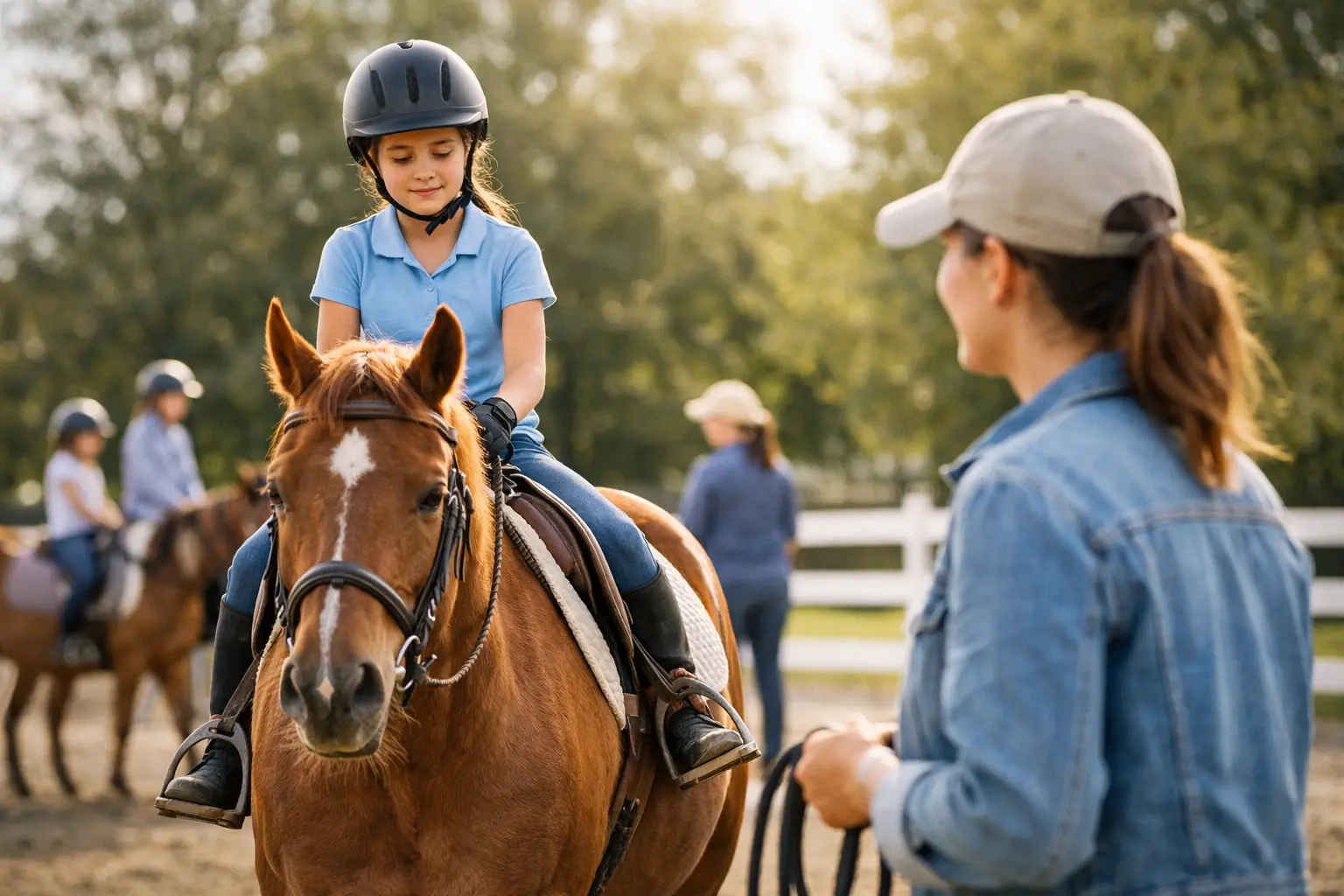
A young rider’s first confident halt, properly adjusted stirrup, or thoughtful moment of patience with a nervous horse matters far more than simply getting around the arena. Quality youth horsemanship classes give children the knowledge to understand what they are asking of a horse, the skills to ride with purpose, and the habits to stay safe around an animal much larger than they are.
For parents, this distinction is meaningful. Riding can be joyful and exciting, but it also asks children to listen, make decisions, regulate their emotions, and follow consistent routines. A well-structured program treats horsemanship as the foundation of riding, not as an extra lesson saved for a rainy day.
What Youth Horsemanship Classes Should Teach
Horsemanship is the practical understanding of horses and the responsibility that comes with being around them. It includes riding, but it reaches well beyond time in the saddle. Young riders should learn why a horse responds to pressure, how to recognize relaxed or uncomfortable body language, and how their own actions affect the horse’s confidence.
At the beginning level, this may look like learning to approach a horse safely, lead with appropriate space, tie correctly, groom thoroughly, and identify basic parts of tack. These lessons can appear simple, yet they develop awareness from the ground up. A child who understands why a horse should not be surprised from behind is better equipped to make safe choices in every part of barn life.
As riders gain experience, instruction should expand to include correct position, steering, transitions, balance, rhythm, and independent use of the aids. More advanced students may begin working on jumping or dressage skills, but the expectation of thoughtful horse care remains. A rider should know how to cool out a horse after work, recognize when equipment does not fit correctly, and communicate concerns to an instructor or parent.
The strongest programs connect these lessons instead of treating them as separate tasks. Grooming teaches observation. Leading teaches boundaries. Tack care teaches attention to detail. Riding teaches feel, timing, and accountability.
Why Individualized Instruction Matters for Young Riders
Children do not all learn at the same pace, and horses do not all require the same approach. One young rider may be physically ready to trot but need more confidence before cantering. Another may be eager to jump while still needing to strengthen a steady lower leg and quiet hands. Good instruction recognizes those differences without making a child feel rushed or left behind.
Private or closely supervised instruction allows the trainer to make immediate adjustments to both the lesson and the rider’s goals. If a student is tense, the lesson can focus on breathing, balance, and small successes. If a rider is progressing quickly, the trainer can introduce a new challenge while protecting the basics that will support long-term growth.
This personal attention is particularly valuable for beginning riders. Early habits become familiar quickly, whether they are helpful or not. A child who learns to look ahead, maintain even rein contact, and use clear leg aids has a stronger foundation than one who is simply encouraged to keep moving. Focused coaching helps riders understand the reason behind each correction, which makes skills more likely to carry into the next lesson.
Individualized teaching also respects the horse. A suitable lesson horse can teach patience, consistency, and feel, but that horse’s comfort and workload must be managed carefully. In a thoughtful program, horse selection, lesson goals, and rider readiness are considered together.
Safety Is a Skill, Not a Speech
Parents should expect a youth program to make safety visible in its daily routines. A helmet, closed-toe footwear with an appropriate heel, and well-maintained tack are essential, but equipment is only one part of safe riding. Children also need calm, repeatable procedures.
That means knowing where to stand while grooming, how to move around a horse, when to ask for help, and how to enter or leave an arena respectfully. It means learning that horses can be kind and experienced while still being animals with instincts, reactions, and changing needs. Safety-focused instruction is not meant to create fear. It gives young riders the confidence that comes from knowing what to do.
A smaller, well-managed setting can make these routines easier to reinforce. Trainers can notice whether a rider has adjusted a girth properly, whether a child is distracted while leading, or whether a student needs a reminder before a minor mistake becomes a bigger concern. Consistency builds confidence for both families and riders.
The Benefits Reach Beyond Riding
Horseback riding gives children a rare kind of responsibility: one that cannot be completed by checking a box. Horses need steady care, respectful handling, and clear communication. A child may arrive at a lesson frustrated after school, but a horse still needs a calm person at the end of the lead rope.
Over time, youth horsemanship classes can help children develop patience, resilience, focus, and empathy. Progress is often earned in small increments. A rider may spend several lessons improving a posting trot, then discover that the work has made cantering feel more balanced. That process teaches persistence without the pressure of instant perfection.
There is also a meaningful difference between confidence and bravado. Real confidence grows when a rider can say, “I am not ready for that yet,” ask a question, or try again after a difficult moment. A supportive instructor creates room for that honesty while still holding clear standards. Children learn that being coachable is a strength.
For teens, horsemanship can become an especially valuable outlet for leadership and self-management. They may take greater ownership of grooming routines, tack cleaning, conditioning plans, or the details of preparing for a lesson. The goal is not to make a young person responsible for decisions beyond their experience. It is to help them understand that trust with horses is built through reliable actions.
How Parents Can Choose the Right Program
The right fit depends on a child’s age, experience, personality, and goals. A child who is curious but cautious may thrive with private lessons that allow plenty of time on the ground before riding. A more experienced young rider may need a program with a clear path toward stronger flatwork, jumping, dressage, leasing, or competition preparation.
When evaluating youth horsemanship classes, pay attention to how the instructor speaks to children and horses. Look for clear expectations, patient corrections, and an environment where questions are welcome. Ask how students are matched with horses, how safety procedures are taught, and how parents receive updates on progress.
It is also reasonable to ask what happens when a rider has a difficult day. Horses are excellent teachers, but not every lesson will feel easy. A quality instructor knows how to simplify an exercise, rebuild confidence, and preserve the child’s motivation without lowering standards unnecessarily.
Facility care matters, too. Clean, functional spaces, organized equipment, safe footing, and attentive horse management reflect the values behind the instruction. Families should feel that rider development and horse well-being are equally respected.
Building a Long-Term Relationship With Horses
The best early riding experiences do not rush children toward a label or a ribbon. They help a young rider become observant, capable, and kind. Whether a child eventually pursues jumping, dressage, horse ownership, leasing, or simply a lifelong love of riding, true horsemanship gives that journey substance.
At Eden Hills Equine, youth instruction is built around personalized coaching, attentive horse care, and the belief that every rider deserves a safe place to learn at an appropriate pace. The goal is steady, measurable progress that supports both confidence and good judgment.
A child does not need to know every answer before beginning. They only need a willing attitude, thoughtful guidance, and the chance to learn that horses respond best to patience, consistency, and respect.