

What Horsemanship Classes for Kids Should Teach
Horsemanship classes for kids build safe, capable riders through horse care, groundwork, and thoughtful instruction tailored to each child's pace, safely.
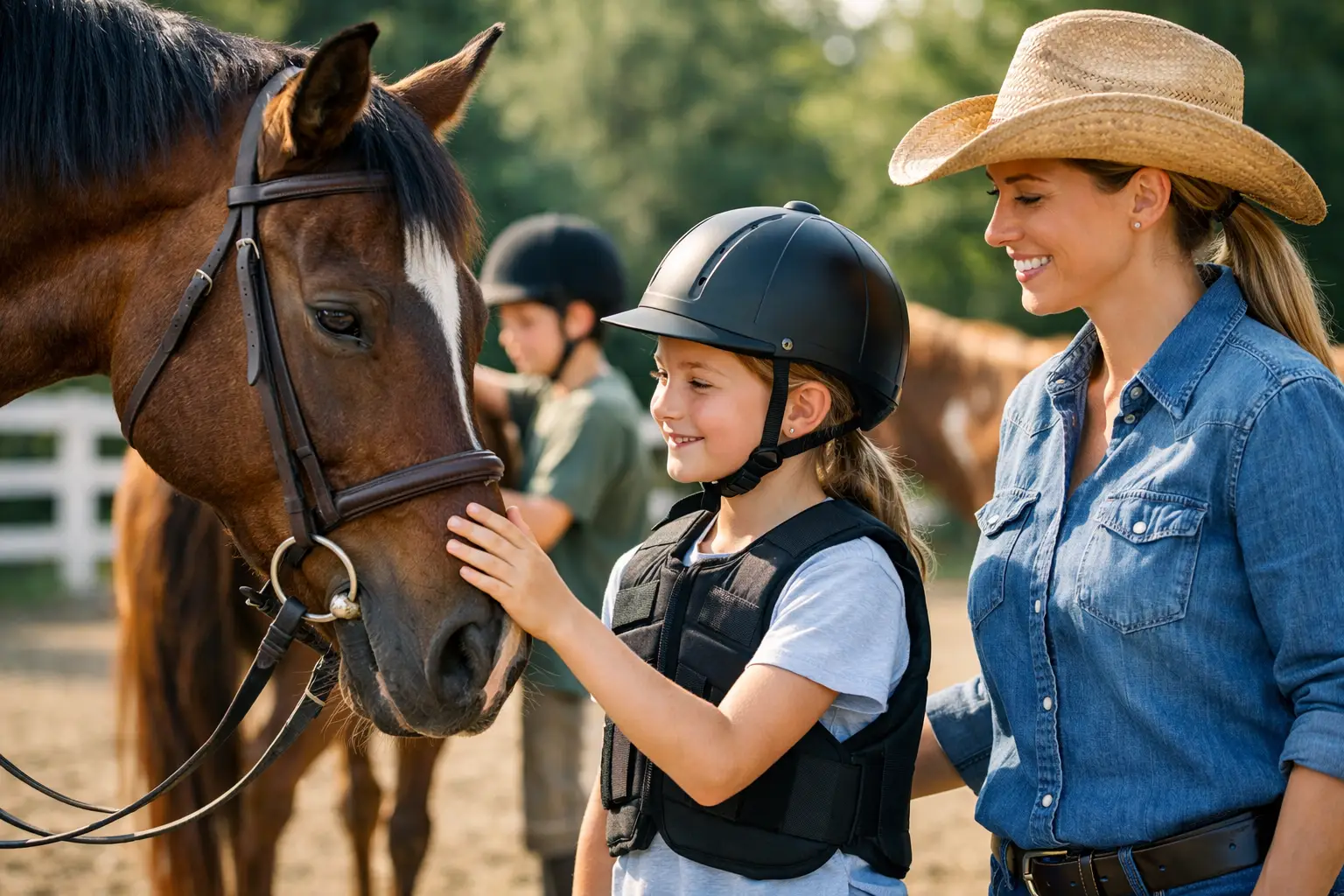
A child can learn to steer a pony in an afternoon. Learning to notice a horse’s mood, clean a hoof carefully, lead with purpose, and make safe decisions takes more time - and that is where horsemanship classes for kids make a lasting difference. A thoughtful program teaches children that riding is a partnership with a living animal, not simply an activity they do for an hour each week.
For parents, the goal is often bigger than posting trot photos or preparing for a first horse show. The right instruction helps a young rider become capable, patient, accountable, and confident around horses. Those qualities develop best in an environment where each child receives enough attention to learn correctly, ask questions, and progress at a pace that supports both safety and enjoyment.
Horsemanship Classes for Kids Start on the Ground
Riding is only one part of equestrian education. Before a child asks a horse to walk, trot, or jump, they should understand how to approach, halter, lead, groom, and respect that horse. Ground skills teach awareness in a way that cannot be replicated from the saddle.
A good class helps children recognize the difference between a relaxed horse and one that may be anxious, distracted, or uncomfortable. They learn to give horses personal space, move deliberately around the hindquarters, and avoid common unsafe habits such as standing directly in front of a horse or wrapping a lead rope around a hand.
These lessons should be age-appropriate. A young beginner may begin by identifying grooming tools and practicing how to lead with an instructor nearby. An older or more experienced rider can take on greater responsibility, such as checking tack fit, picking feet, discussing basic nutrition, or learning why a horse’s routine matters. The expectation should grow with the child’s skills, not simply with their age.
Groundwork also builds confidence. Children often feel more secure in the saddle when they understand what happens before and after the ride. They know how to prepare their horse, communicate calmly, and respond if something feels different that day. That knowledge turns uncertainty into practical readiness.
Safety Is Taught, Practiced, and Revisited
Horseback riding carries real risk, even with quiet school horses and experienced supervision. A quality youth program does not minimize that reality. It gives children clear, repeatable safety practices that become second nature over time.
Safety begins with proper attire, including a well-fitted, ASTM/SEI-certified riding helmet and boots with a defined heel. It continues with barn rules, safe mounting procedures, appropriate spacing between horses, and instruction on what to do when a horse spooks, stops, or becomes unsettled. Children should know that asking for help is a sign of good judgment, not a failure.
The setting matters as much as the rulebook. A well-designed ranch should provide organized riding areas, secure fencing, sensible traffic flow, and space for riders to work without unnecessary distraction. In a lower-volume program, an instructor can see more of what is happening - a loose girth, a nervous child, a horse that needs a break - before a small issue becomes a bigger one.
Parents should expect instructors to balance encouragement with boundaries. A child may be eager to canter or jump, but readiness is determined by consistency, balance, judgment, and the ability to follow directions. Holding a rider at an earlier stage is sometimes the most supportive choice. It protects confidence and creates a stronger foundation for the next skill.
Riding Skills Should Have a Purpose
A meaningful lesson program gives children clear riding goals, even when they are just beginning. Early skills may include correct position at the walk, steering with quiet hands, stopping with balance, and learning posting rhythm at the trot. As riders advance, instruction can develop effective aids, independent balance, transitions, poles, flatwork, and eventually jumping or dressage-specific work.
Progress is not always a straight line. One child may develop a naturally steady seat but need time to gain confidence. Another may be bold and enthusiastic but need coaching on patience and accuracy. Private instruction is especially valuable because it allows the trainer to adjust the lesson to the child, the horse, and the day’s needs.
In English riding, strong basics are never left behind. A rider working toward jumping still benefits from dressage principles such as balance, rhythm, straightness, and soft communication. A rider focused on dressage needs the same practical horse sense and secure position that supports every discipline. When children understand why an exercise is being taught, they are more likely to apply it thoughtfully rather than simply follow a pattern.
Responsibility Should Feel Meaningful, Not Overwhelming
Parents often appreciate horses because they give children a reason to look beyond themselves. Horses require consistency. They need water, feed, turnout, grooming, veterinary care, hoof care, exercise, and attentive observation. While a child should never be expected to manage those needs alone, being included in age-appropriate care teaches the value of dependable routines.
A young rider might be responsible for returning grooming supplies neatly, cleaning their horse’s tack after a lesson, or helping identify the parts of a saddle and bridle. Over time, they can learn why tack must be cleaned, how to check for obvious wear, and what signs of discomfort they should report to an adult.
This is where horsemanship becomes deeply personal. Children see that a horse cannot be rushed because someone is running late or ignored because a task feels less exciting than riding. They learn that good care often happens in the quiet moments: brushing away dried mud, noticing a rub mark, refilling a water bucket, or taking an extra minute to make sure a horse is settled.
What Parents Should Look for in a Program
The best fit depends on a child’s age, experience, goals, and temperament. A shy beginner may thrive with a calm horse and one-on-one instruction. A motivated rider who has mastered the basics may benefit from a structured training plan that introduces more technical work. Camps and homeschool classes can add valuable educational experiences, but they work best when the program still maintains clear supervision and thoughtful horse assignments.
When considering horsemanship classes for kids, parents should ask how riders are matched with horses, how instructors assess readiness to advance, and how much hands-on horse care is included. It is also helpful to understand the instructor-to-rider ratio, the facility’s safety expectations, and whether the program accommodates individual goals.
Watch a lesson if possible. Notice whether children are receiving specific feedback instead of general praise. Look for calm organization, clean equipment, horses that appear well cared for, and an instructor who is attentive to both rider confidence and equine behavior. A serious program can still be warm and fun. In fact, children usually enjoy themselves more when they feel secure and understand what they are learning.
Building Confidence That Reaches Beyond the Barn
The most valuable outcome of riding lessons is not always a ribbon, a new skill, or a faster gait. It is often the child who begins to speak clearly, recover after a mistake, and stay composed when something does not go as planned. Horses offer immediate feedback. A rider who becomes tense, distracted, or inconsistent may see that reflected in the horse’s response, then learn to reset and try again.
At Eden Hills Equine, individualized instruction supports this kind of steady development. Children are not expected to fit a one-size-fits-all timeline. They are guided toward sound habits, stronger skills, and a genuine understanding of the horse in front of them.
For families considering a first lesson, look for a program that makes room for curiosity. The right class will teach a child how to ride, but it will also teach them to pause, observe, care, and earn a horse’s trust - lessons that can stay with them long after they leave the arena.