

How to Choose a Horse Summer Camp for Kids
Choosing a horse summer camp for kids starts with safety, instruction, and fit. Learn what parents should look for before enrolling.
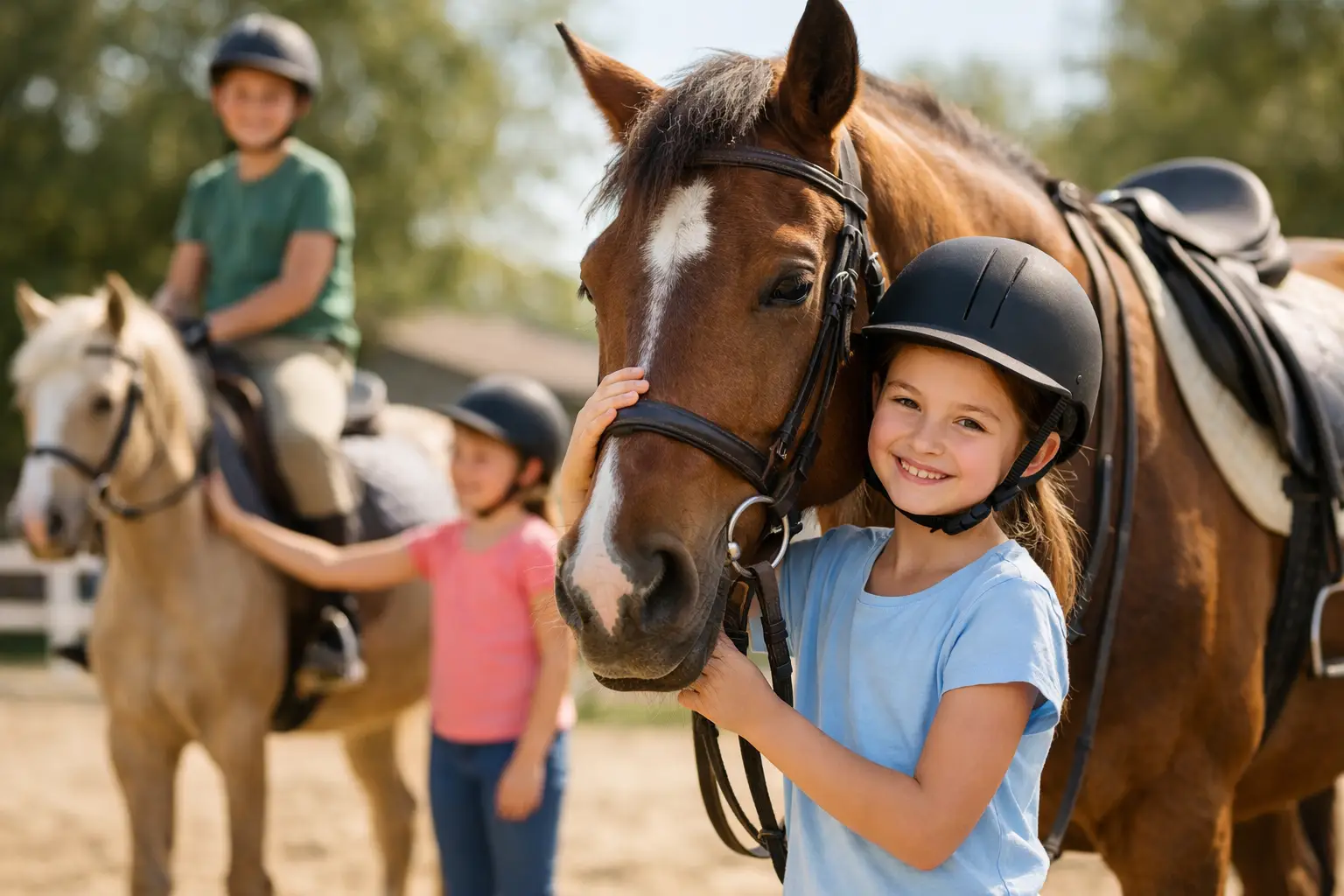
The best horse summer camp for kids does more than fill a week on the calendar. It shapes how a child learns around horses from the very beginning - how they listen, how they stay safe, and how they build confidence one skill at a time.
For many parents, camp is the first real look at whether riding is just a passing interest or the start of something more meaningful. That is why the right program matters. A well-run camp should introduce children to riding, but it should also teach horsemanship, responsibility, and calm decision-making in a setting that feels structured and supportive.
What a horse summer camp for kids should actually teach
A quality camp is not simply saddle time with a few crafts in between. Children benefit most when riding is paired with a broader understanding of horse care and barn habits. That includes learning how to approach a horse correctly, how to groom with purpose, and how to recognize basic equine behavior.
This matters for safety, but it also matters for confidence. A child who understands why a horse pins its ears, shifts its weight, or responds to body language is usually less intimidated and more prepared. Riding starts to make sense when it is connected to horsemanship.
For younger or brand-new riders, the goal is not speed or advanced technique. It is balance, body awareness, listening, and trust. For returning riders, camp can reinforce good basics while adding more polish in areas like position, steering, transitions, or groundwork. The best programs know how to meet children where they are instead of pushing every rider through the same experience.
Safety is not a sales point - it is the standard
Parents often ask about helmets, staff supervision, and rider grouping, and they should. Those are essential questions. But safety in a horse program goes deeper than equipment.
A safe camp is built around thoughtful routines. Horses should be suitable for children and matched carefully to rider experience. Instruction should be close and attentive, not stretched thin across too many campers at once. Barn flow should make sense, with clear procedures for handling, mounting, dismounting, and moving around the property.
The environment matters too. Clean, organized spaces reduce confusion. Consistent rules help children know what to expect. When instructors are hands-on and fully present, kids tend to stay calmer and learn faster.
This is one reason many families prefer a smaller, more personalized setting. A boutique program can often give each rider more direct feedback and closer supervision than a high-volume camp model. That does not automatically make one format right for every family, but if your child benefits from individual attention, a lower student-to-instructor ratio can make a real difference.
Not every camp is the right fit for every child
The phrase horse camp can mean very different things. Some programs are designed primarily for fun exposure. Others are more skills-based and structured. Neither approach is wrong, but they serve different families.
If your child is horse-crazy, detail-oriented, and eager to learn proper technique, a camp with real instruction and horsemanship education will likely feel more rewarding. If your child is hesitant, very young, or simply curious, a gentler introduction may be the better first step.
Temperament matters as much as age. Some children thrive in a social group and enjoy trying new things with peers. Others need more reassurance, slower pacing, or extra coaching to feel successful. Parents know their child best, so it helps to choose a program that respects individual learning styles instead of treating every camper the same.
A strong camp experience should leave a child feeling proud, not overwhelmed. That usually happens when expectations are clear and progress is paced well.
Questions parents should ask before enrolling
A good program should be able to answer practical questions clearly and confidently. Ask how riding groups are organized, how much mounted instruction is included, and what children do when they are not in the saddle. Ask whether horsemanship lessons are part of the day or just an add-on.
It is also wise to ask who is teaching and how closely children are supervised. In a horse setting, details matter. Parents should understand whether campers receive individualized instruction, whether horses are chosen based on rider ability, and how behavior and safety rules are managed.
You may also want to ask what a typical day looks like. Some children do well with variety and activity changes throughout the day. Others prefer a more predictable rhythm. Knowing the structure in advance helps families set expectations and helps children arrive feeling prepared.
Finally, ask what success looks like by the end of camp. The answer should be realistic. A week of camp may build confidence, improve balance, and teach foundational horse knowledge. It should not promise instant mastery. Programs that value long-term development tend to be more honest about what children can truly learn in a short time.
What children gain beyond riding
Parents often come in hoping their child will learn to ride. What they often appreciate most afterward is everything else that develops along the way.
Horses require children to slow down and pay attention. They reward consistency more than force. That creates valuable lessons in patience, emotional regulation, and personal responsibility. Even simple tasks like grooming, tacking up, or leading a horse ask a child to be present and thoughtful.
That kind of learning carries over. Children who spend time in a structured equestrian setting often grow in quiet confidence. They become more aware of their posture, their tone, and how their actions affect the animal in front of them. For some kids, that is especially powerful because horses respond honestly. There is no shortcut around focus or respect.
In the right setting, camp can also help children become comfortable with healthy challenge. Riding includes moments of uncertainty, and working through those moments with good coaching can be deeply confidence-building. The goal is not to remove all challenge. It is to offer it in a way that feels safe, manageable, and productive.
Why instructor attention makes such a difference
In youth equestrian programs, teaching quality can shape the entire experience. Children need more than encouragement. They need clear, timely instruction that helps them understand what to do with their body, hands, and attention.
When instructors have the time to coach each rider individually, progress tends to be steadier. Small corrections early on can prevent larger frustrations later. A child who learns proper basics from the start is usually more secure in the saddle and more confident around horses on the ground.
This is also where horsemanship and riding come together. A thoughtful instructor is not only watching heels, reins, and steering. They are also teaching children how to read the horse, respect the horse, and care for the horse. That full-picture education is what turns a fun week into a meaningful foundation.
At Eden Hills Equine, that commitment to individualized instruction is central to how young riders learn. Families who want more than casual exposure often appreciate a setting where safety, horsemanship, and measurable progress are treated as part of the same standard.
Horse summer camp for kids and the value of a first barn experience
A child’s first barn experience can shape how they view riding for years. If the environment feels rushed, chaotic, or unclear, even enthusiastic kids may leave uncertain. If it feels calm, well-organized, and encouraging, they are more likely to develop trust in the process and excitement about learning more.
That is why the details matter. The condition of the horses, the order of the day, the tone of the staff, and the amount of individual support all influence whether a child feels secure enough to grow.
For families in and around Wimberley, Texas, summer can be a natural time to explore riding in a more consistent way. Camp offers a practical entry point, especially for parents who want to see whether their child is ready for ongoing lessons. A good week at camp can answer that question clearly. It can reveal interest, teach expectations, and show whether a child enjoys the discipline that comes with real horsemanship.
Some children will leave camp wanting to return every week. Others may decide they prefer occasional riding opportunities. Both outcomes are useful. The point of a strong camp is not to force a path. It is to give children a genuine, well-supported experience with horses so families can make informed decisions about what comes next.
If you are choosing a horse camp this season, look past the broad promises and pay attention to the substance. The right program should help your child feel safe, capable, and eager to learn - and that is the kind of experience that can stay with them long after summer ends.