

Jumper Training Progression for Confident Riders
A jumper training progression builds confident riders and willing horses through sound foundations, clear goals, and patient coaching at every height.
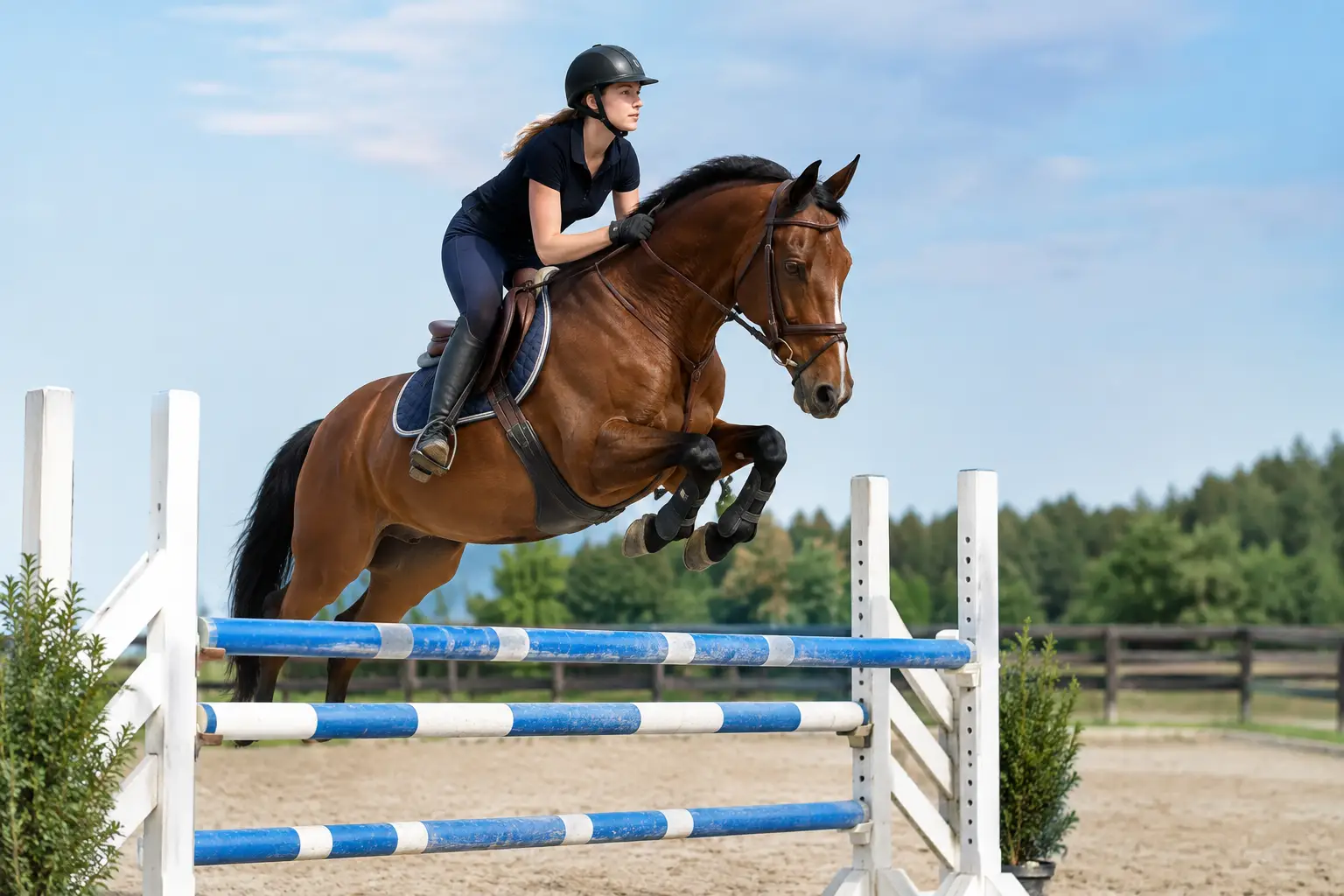
A jumper training progression is not simply a matter of raising the fences. It is a thoughtful process of building balance, judgment, confidence, and trust between horse and rider. When each stage is introduced at the right time, riders learn to make good decisions under saddle while horses develop the strength and understanding to jump willingly and safely.
For young riders, adult amateurs, and experienced competitors alike, progress should feel earned rather than rushed. A polished round begins long before a rider points toward a vertical. It begins with correct flatwork, consistent position, and a horse that understands the aids.
What a Safe Jumper Training Progression Builds
Jumping asks a great deal of both partners. The rider needs an independent, secure position and the ability to regulate pace, direction, and balance. The horse needs strength through the topline and hindquarters, confidence in the question being asked, and enough adjustability to meet a fence in a comfortable place.
A well-planned program develops these skills in layers. Riders first learn how to influence the horse without relying on the reins for balance. Horses learn that poles and small fences are understandable, manageable work, not something to rush or fear. This foundation protects confidence when exercises become more technical.
It also gives an instructor useful information. A rider who loses balance over a small crossrail does not need a higher fence. They need time to strengthen their leg, stabilize their upper body, or improve their rhythm on the approach. Addressing the real gap early prevents a frustrating habit from becoming a bigger issue later.
Start on the Flat Before Adding Height
The first stage of jumper development happens without jumps. A rider should be able to steer accurately, maintain a steady tempo, transition between gaits, and ride a balanced circle. They should also understand how their position affects the horse.
At this stage, instruction often focuses on a quiet lower leg, soft hands, eyes ahead, and an upper body that follows the motion rather than getting ahead of it. Riders practice two-point position at the walk, trot, and canter so they can support their own balance without catching the horse in the mouth.
Flatwork matters for more advanced riders, too. A horse that falls through a shoulder, speeds up in the canter, or ignores a half-halt will carry those challenges to the jumps. The solution is rarely more speed or a bigger obstacle. It is usually better communication before the fence.
The Canter Is the Jumping Gear
Many jumping concerns can be traced back to the quality of the canter. A useful jumping canter is forward but not hurried, energetic but not tense, and adjustable without losing its impulsion. Riders need to feel the difference between a canter that is merely fast and one that has enough balance to carry the horse through a line or around a turn.
This is why private instruction is especially valuable in a jumper program. One horse-and-rider pair may need help creating more forward energy, while another needs to slow the rhythm and wait. Individual coaching allows the exercise to match the rider's present needs instead of asking every student to work through the same problem at the same pace.
From Ground Poles to Small Courses
Ground poles are one of the most effective tools in a jumper training progression. They teach riders to hold a line, establish rhythm, and look ahead without the pressure of leaving the ground. A simple pole exercise can reveal whether a rider is drifting, changing pace, or losing position.
Once riders can approach poles quietly and consistently, small crossrails introduce the idea of a centered jumping effort. Crossrails naturally guide the horse toward the middle and encourage riders to focus on straightness. At this point, success should look calm and repeatable, not dramatic.
The next step may include small verticals, trot fences, placing poles, and simple lines. Trot fences help prevent rushing and allow the rider to focus on position. Placing poles help horses understand the distance and encourage a more organized takeoff. Straight lines teach riders how pace and balance affect the number of strides between fences.
A rider does not need to ride every exercise perfectly before moving on. Horses and people are both learning, and small mistakes are part of that process. The key is that the pair can recover, understand the correction, and repeat the task with improved confidence.
Adding Complexity Before Adding Height
Height is only one measure of difficulty. In many cases, a low course with turns, related distances, changes of direction, and different types of fences is more educational than a single larger jump. Riders learn to plan ahead, organize the canter, and stay aware of where they are going after the landing.
As skills develop, an instructor may introduce bending lines, simple combinations, rollbacks, and fences approached from a more challenging angle. Each exercise should have a purpose. A bending line might improve steering and adjustability. A grid can help a horse develop technique while teaching a rider to stay centered. A rollback can teach riders to look through the turn and maintain balance without pulling.
This stage requires patience. Some horses thrive on variety and quickly gain confidence with new questions. Others need repetition before a change feels comfortable. Likewise, a bold rider may need reminders to slow down and ride accurately, while a cautious rider may need smaller steps and frequent positive experiences.
When Is a Rider Ready to Move Up?
Readiness is not determined by age, how long someone has been taking lessons, or what another rider is jumping. It is determined by the consistency of the horse-and-rider pair.
A rider may be ready for a new challenge when they can maintain a balanced canter to and away from fences, ride accurate lines, recover calmly after an imperfect distance, and use basic aids without panic or overcorrection. They should also understand course etiquette, ring awareness, and the responsibility that comes with riding in a group setting or attending a show.
For the horse, readiness includes soundness, fitness, confidence, and a willingness to approach jumps without resistance. A horse that begins rushing, stopping, landing unbalanced, or becoming sour is communicating that something needs attention. That may mean the exercise is too difficult, the horse needs a break, the flatwork needs improvement, or a physical concern should be evaluated.
Moving down temporarily is not failure. Returning to poles, smaller fences, or a simpler line can restore confidence and clarify a skill. The strongest riders are often the ones willing to revisit basics without ego.
The Role of Horsemanship in Jumping Success
Good jumpers are not created only during mounted lessons. Riders benefit from understanding grooming, tack fit, warm-up routines, cooling out, turnout needs, and the signs of a tired or uncomfortable horse. This knowledge develops better judgment and teaches young riders that their partner's well-being comes first.
At Eden Hills Equine, individualized instruction supports this broader view of development. Progress over fences is paired with the horsemanship habits that help riders become capable, thoughtful horse people. For families, that creates a more meaningful riding experience than simply checking off the next fence height.
Keep Progress Personal and Purposeful
A productive training plan has goals, but it also leaves room to adapt. Weather, fitness, a change in lease horse, a growth spurt, nerves before a first show, or a horse having an off day can all affect a lesson. The right response is not to force the original plan. It is to make an informed adjustment while keeping the rider moving forward.
The most rewarding jumper training progression gives riders more than the ability to clear a course. It gives them patience, resilience, responsibility, and the quiet confidence that comes from knowing they can solve the next question one careful stride at a time.