

Do Riding Lessons Teach Horse Care and Horsemanship?
Do riding lessons teach horsecare? Learn what a thoughtful program covers, what comes with time, and how families can build safe, capable horsemanship.
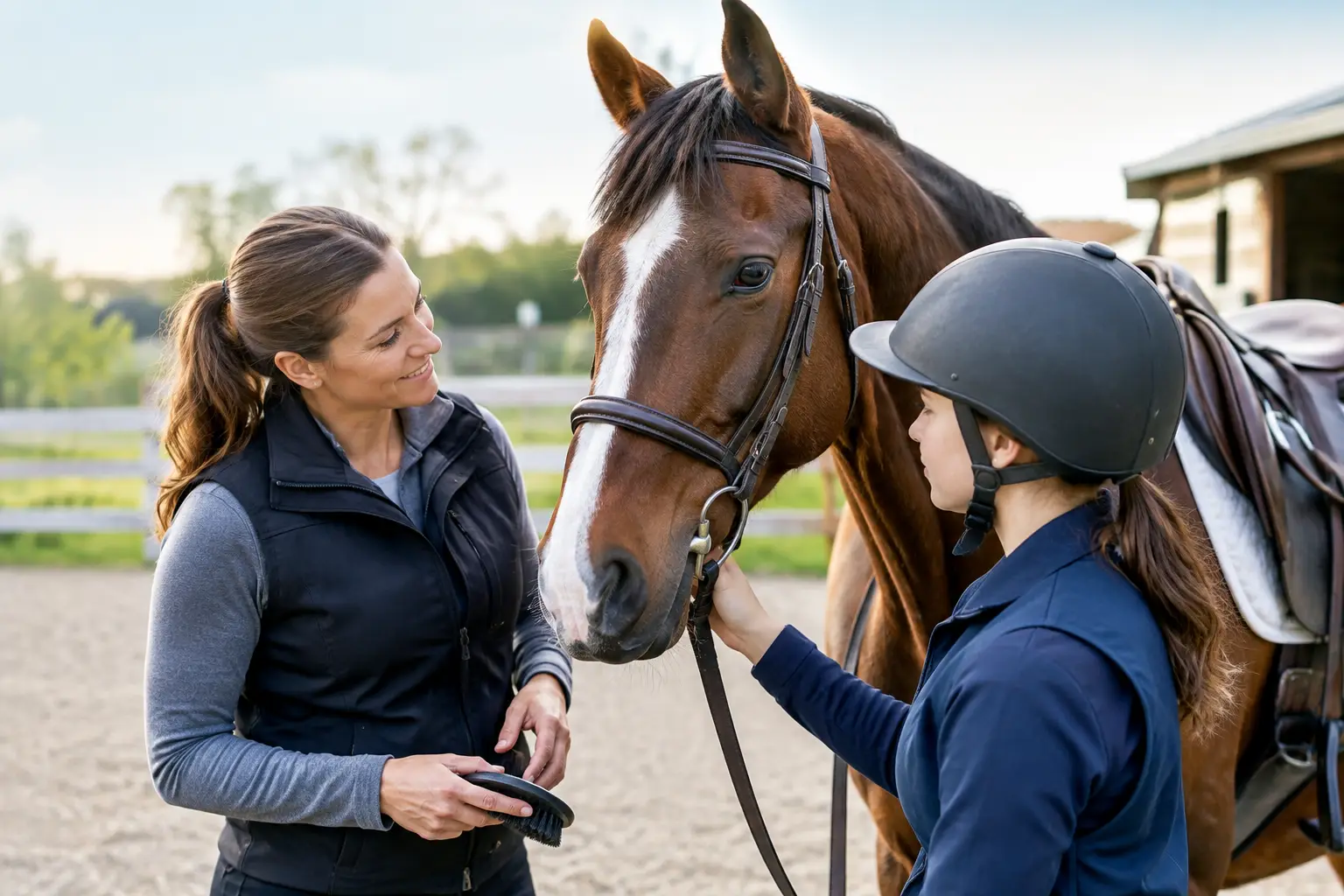
A child finishes a beautiful ride, gives the pony a quick pat, and heads to the car. It is an exciting moment, but parents often ask a larger question: do lessons teach horsecare, or are they only teaching a child how to sit, steer, and trot? The honest answer is that a quality lesson program should teach both, although the depth of horse care education depends on the rider’s age, experience, lesson format, and time at the barn.
Riding is only one part of horsemanship. A rider who understands how to approach a horse safely, recognize discomfort, care for tack, and respond calmly on the ground develops judgment that carries into every ride. That foundation matters whether a rider’s goal is a weekly lesson, a future lease, horse ownership, jumping, dressage, or simply a lifelong connection with horses.
Do Lessons Teach Horsecare? Usually, in Context
Well-structured riding lessons can introduce horse care in practical, memorable ways. Before a rider ever picks up the reins, they may learn why a horse is tied safely, how to enter a stall or grooming area with awareness, and why calm body language matters around a large animal. These are not side lessons. They are core safety skills.
Horse care is often easiest to teach in small pieces connected to the day’s ride. A beginning rider may learn how to use a curry comb, pick out hooves with supervision, identify basic parts of the saddle, or check that a girth is secure. As skills grow, the conversation can expand to cooling out after work, proper blanketing decisions, turnout routines, hoof care, feeding principles, and signs that a horse may not feel quite right.
The lesson itself still needs to prioritize safe riding instruction. A 45-minute private lesson cannot always include a complete grooming session, tack cleaning, a detailed anatomy lecture, and mounted work. That is not a shortcoming. It is a reason thoughtful instructors introduce care concepts consistently over time rather than rushing through a long checklist in one afternoon.
What Horse Care Should New Riders Learn First?
For children and new adult riders, the first horse care lessons should be useful and safety-focused. They need to understand that horses are sensitive, powerful animals with individual personalities and needs. Respect is not the same as fear. It means paying attention.
Early lessons often include safe leading, correct grooming tools, hoof-picking procedures with an instructor present, basic tack handling, and appropriate behavior around horses. Riders should learn to avoid standing directly behind a horse, wrapping lead ropes around their hands, walking beneath a horse’s neck without awareness, or leaving equipment where a horse could step on it.
They should also begin noticing what a relaxed, comfortable horse looks like. Ears, eyes, posture, breathing, movement, and appetite can all offer information. A young rider is not expected to diagnose a problem, but learning to say, “He seems quieter than usual,” or “She is moving differently today,” builds valuable observation skills.
Care education also supports better riding. A rider who understands why a horse needs a proper warm-up is more patient at the start of a lesson. A rider who has learned that tack must fit correctly is less likely to view saddling as a rushed task. When children see that their pony’s comfort comes first, responsibility becomes real rather than theoretical.
What Riding Lessons Cannot Replace
Even excellent lessons do not make someone fully prepared to manage a horse alone after a few weeks or months. Daily horse care is detailed, physical, and highly dependent on the individual horse, weather, workload, health history, and management plan.
For example, knowing how to groom does not mean a rider should make decisions about treating a wound. Learning the names of common feeds does not qualify someone to change a horse’s diet. Watching an instructor wrap a leg or administer medication is not the same as having the experience to do it independently.
This distinction is especially helpful for families considering a lease or ownership. Lessons build a strong start, but greater responsibility should be added gradually. Riders need repeated, supervised practice and clear guidance from experienced professionals. A sensible program protects both the horse and the developing rider by matching responsibility to readiness.
Why Private Instruction Creates More Room for Horsemanship
In a private lesson setting, instructors can adjust the balance between mounted work and horse care based on the rider in front of them. A child who is ready to learn can spend extra time reviewing grooming order or practicing how to bridle correctly. An experienced rider may discuss conditioning, tack fit, show preparation, or how a horse’s behavior changes when discomfort is present.
That individual attention is particularly valuable because no two riders learn at the same pace. One student may be confident in the saddle but hesitant on the ground. Another may love grooming and need more help developing independent riding skills. Personalized coaching allows both areas to progress without making a rider feel rushed or compared with others.
At Eden Hills Equine, horsemanship is treated as part of rider development, not an optional extra. The goal is not simply to create riders who can complete an exercise. It is to help riders become thoughtful partners for the horses they ride.
Horse Care Lessons Build Confidence, Not Just Chores
Parents sometimes worry that adding horse care will overwhelm a new rider or take away from riding time. When it is introduced at the right pace, the opposite is often true. Small responsibilities help a rider feel more capable and connected.
A child who learns to place a saddle pad correctly understands that preparation has a purpose. A teen who helps clean tack begins to appreciate the value of well-maintained equipment. An adult amateur who learns to recognize a sweaty horse after exercise can better understand the importance of walking, hydration, and a thoughtful cool-down.
These moments are also where discipline develops naturally. Horses need consistency, and riders begin to see that their choices affect another living creature. That lesson has value far beyond the arena.
Questions Families Should Ask About Horse Care Education
When choosing a program, families do not need to expect every lesson to look like a complete barn-management class. They should, however, ask how horsemanship is included and how instructors supervise students around horses.
Helpful questions include whether riders are taught safe grooming and tacking procedures, how staff handle a student who is nervous around a horse, when riders learn more advanced care skills, and whether there are opportunities for additional education through camps, homeschool classes, leases, or supervised barn activities. Families can also ask how the program teaches children to respect the horse’s boundaries and recognize when they need help.
The strongest answer will be specific. A quality instructor can explain what beginners learn first, what comes later, and why certain tasks remain staff-only until a rider has the knowledge and maturity to handle them safely.
How Riders Can Keep Learning Between Lessons
Horse care becomes meaningful through repetition. Families can encourage riders to arrive a few minutes early when appropriate, listen carefully during grooming and tacking, and ask one thoughtful question after each lesson. Keeping a small riding journal can also help students remember terms, note what their lesson horse liked or disliked, and record new care skills they practiced.
At home, riders can learn the basic vocabulary of horse anatomy, grooming tools, tack, and equine behavior. Still, hands-on tasks should be practiced at the barn under supervision. Horse care is not about memorizing facts alone. It is about applying them safely around real horses.
A rider does not have to own a horse to become a good horseperson. With patient instruction, steady exposure, and respect for the learning process, each lesson can build more than riding ability. It can build the kind of awareness a horse deserves from every person who handles them.