

Homeschool Horseback Riding Classes That Build Skills
Homeschool horseback riding classes give students a purposeful weekly rhythm, building confidence, responsibility, fitness, and real horsemanship outdoors.
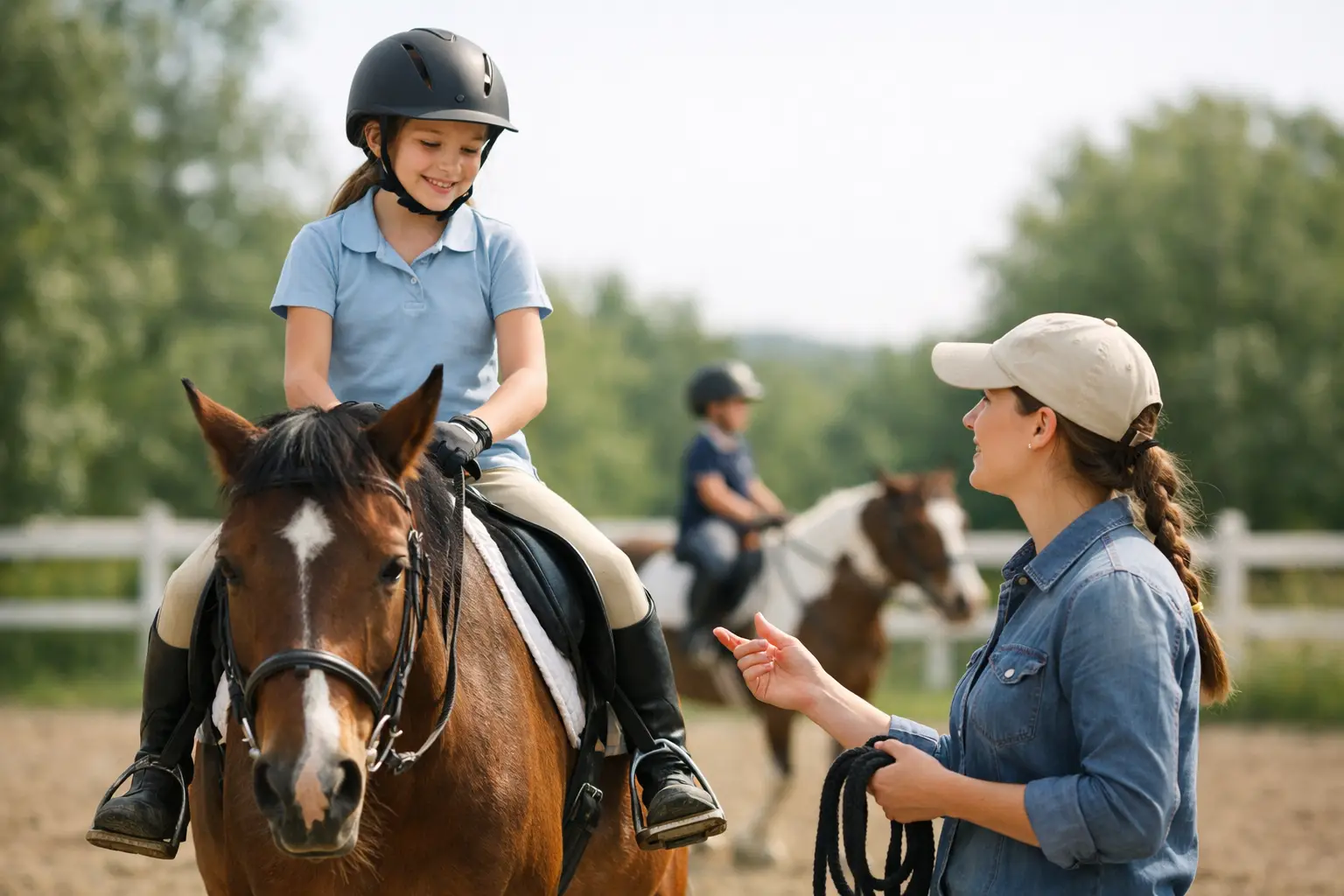
A horse does not care whether a student has finished a worksheet before arriving at the barn. It responds to calm hands, clear communication, awareness, and consistent care. That is what makes homeschool horseback riding classes such a meaningful addition to a child’s education: the learning is immediate, physical, and grounded in responsibility.
For many homeschooling families, riding offers more than an extracurricular activity. A thoughtfully structured class can create a dependable weekly rhythm while helping students develop confidence, coordination, patience, and practical problem-solving. At the same time, it gives them a reason to put down the screen, work outdoors, and become accountable to an animal whose well-being comes first.
Why horseback riding fits a homeschool education
Horseback riding naturally supports many of the goals parents already prioritize at home. Students must listen carefully, follow directions in sequence, make safe decisions, and keep working when a skill feels difficult. Progress is rarely instant, which gives riders a valuable lesson in perseverance.
The educational value extends well beyond time in the saddle. A rider learns why horses need a proper warm-up and cool-down, how grooming affects comfort and skin health, and how hoof care, nutrition, turnout, and conditioning contribute to a horse’s overall well-being. They begin to recognize body language, notice changes in behavior, and understand that good horsemanship is built on observation as much as athletic ability.
For younger children, these lessons can strengthen focus and body awareness. Teens often benefit from the responsibility, independence, and confidence that come from handling a large animal appropriately. For both age groups, riding can be a welcome counterbalance to academic work that takes place indoors and at a desk.
What quality homeschool horseback riding classes should include
A riding class should never be simply a group of children taking turns on a horse. A strong program has a clear structure, age-appropriate expectations, and an instructor who sees each student as an individual rider.
At Eden Hills Equine, individualized instruction is central to the learning experience. Even in a homeschool setting, students benefit from coaching that accounts for their confidence level, physical development, riding goals, and previous horse experience. One child may be learning how to steer independently, while another is ready to refine a balanced posting trot or understand the first principles of jumping or dressage.
A well-designed class generally includes mounted instruction, but the best programs also make room for unmounted education. Students may learn proper grooming order, tack parts and fit, leading etiquette, safe spaces around a horse, basic barn routines, and how to recognize a horse’s attention and mood. These are not side lessons. They are the foundation of safe, capable riding.
Safety is part of every lesson
Parents should expect safety to be addressed before, during, and after each ride. That includes appropriate helmets, properly fitted tack, clear mounting and dismounting procedures, safe handling rules, and a facility designed to support organized instruction.
A safety-first environment also gives students room to learn without being rushed. Horses should be selected and managed appropriately for the rider’s level, and instructors should be able to keep a close eye on both horse and student. In a boutique setting, that attention can make a meaningful difference, especially for beginners who are still building trust and balance.
There is no way to remove every risk from equestrian sport. Horses are living, responsive animals, and families should be cautious of any program that suggests otherwise. The goal is thoughtful risk management: qualified supervision, suitable horses, sound facility practices, and instruction that teaches students to make safe choices for themselves and their horses.
Riding skills develop in a sensible order
Children often arrive eager to trot, canter, or jump. Enthusiasm is valuable, but lasting confidence comes from a solid foundation. Early riding instruction should focus on balance, position, stopping, steering, rhythm, and clear communication with the horse.
As those basics become more consistent, students can progress into more technical work. In English riding, that may include developing an effective posting trot, riding correct turns and patterns, improving transitions, and learning the discipline required for dressage or jumping. The pace should depend on readiness, not on a calendar or a classmate’s progress.
This is one of the greatest benefits of personalized coaching. A student who needs extra time to gain confidence at the trot should receive it. A rider who is ready for a greater challenge should continue developing without being held back by a one-size-fits-all lesson plan.
The lessons that happen off the horse
The most memorable horse education often happens with both feet on the ground. Students learn that horses require daily care regardless of the weather, the rider’s mood, or the rest of the week’s schedule. They see that preparation matters: a poorly adjusted girth, a tangled rein, or a rushed grooming session can affect the ride and the horse’s comfort.
These experiences help children connect actions with outcomes. If a rider approaches quietly and confidently, the horse is more likely to remain settled. If the rider forgets to put equipment away correctly, the next person may not be able to find it. If a student notices a loose shoe, a scrape, or an unusual change in behavior, speaking up promptly matters.
That kind of accountability is difficult to teach through a textbook alone. It is also why horsemanship should be treated as equal to riding skill. A child who can sit a trot but does not understand how to handle, groom, and respect a horse is not yet developing the full picture of equestrian education.
Choosing the right class for your child
The right homeschool riding program depends on your child’s age, experience, temperament, and goals. A brand-new rider may need a quieter introduction with significant instructor support. A student who has already ridden may be ready for more technical coaching or a deeper study of horse care.
When evaluating a program, parents should ask how riders are grouped, how instructors adjust for different ability levels, and how much direct supervision is provided. It is also helpful to understand whether the program includes hands-on horsemanship, what safety equipment is required, and how the facility manages heat, weather, and horse welfare.
Consistency matters. Weekly participation gives children time to retain skills, build strength, and form a relationship with the process of learning. Still, families should be realistic about their schedules. Riding requires closed-toe footwear, appropriate clothing, hydration, and time for arrival, preparation, and post-ride care. The routine is part of the value, but it works best when it fits comfortably into the family’s broader homeschool plan.
Making riding part of the school week
Homeschool families have the flexibility to treat riding as a stand-alone enrichment class or connect it to other subjects. A student may keep a riding journal that records new skills, horse observations, and personal goals. Older students can explore equine anatomy, biomechanics, nutrition, weather patterns, or the history of riding disciplines.
The connection should feel natural rather than forced. The barn already presents meaningful questions: Why does a horse need different feed than a person? How does a rider’s position affect balance? What does it mean to care for an animal ethically? A curious student can find plenty to investigate.
Most importantly, allow the experience to remain joyful. Not every class needs to become an assignment. Sometimes the greatest result is a child who leaves the barn tired, proud, a little dusty, and eager to return next week.
A good riding program gives students something increasingly rare: a place where careful effort is visible, responsibility is real, and confidence is earned one thoughtful ride at a time.