

How to Teach Horse Responsibility to Kids
Learn how to teach horse responsibility to kids with safe, age-appropriate routines that build confidence, respect, and lasting daily horsemanship skills.
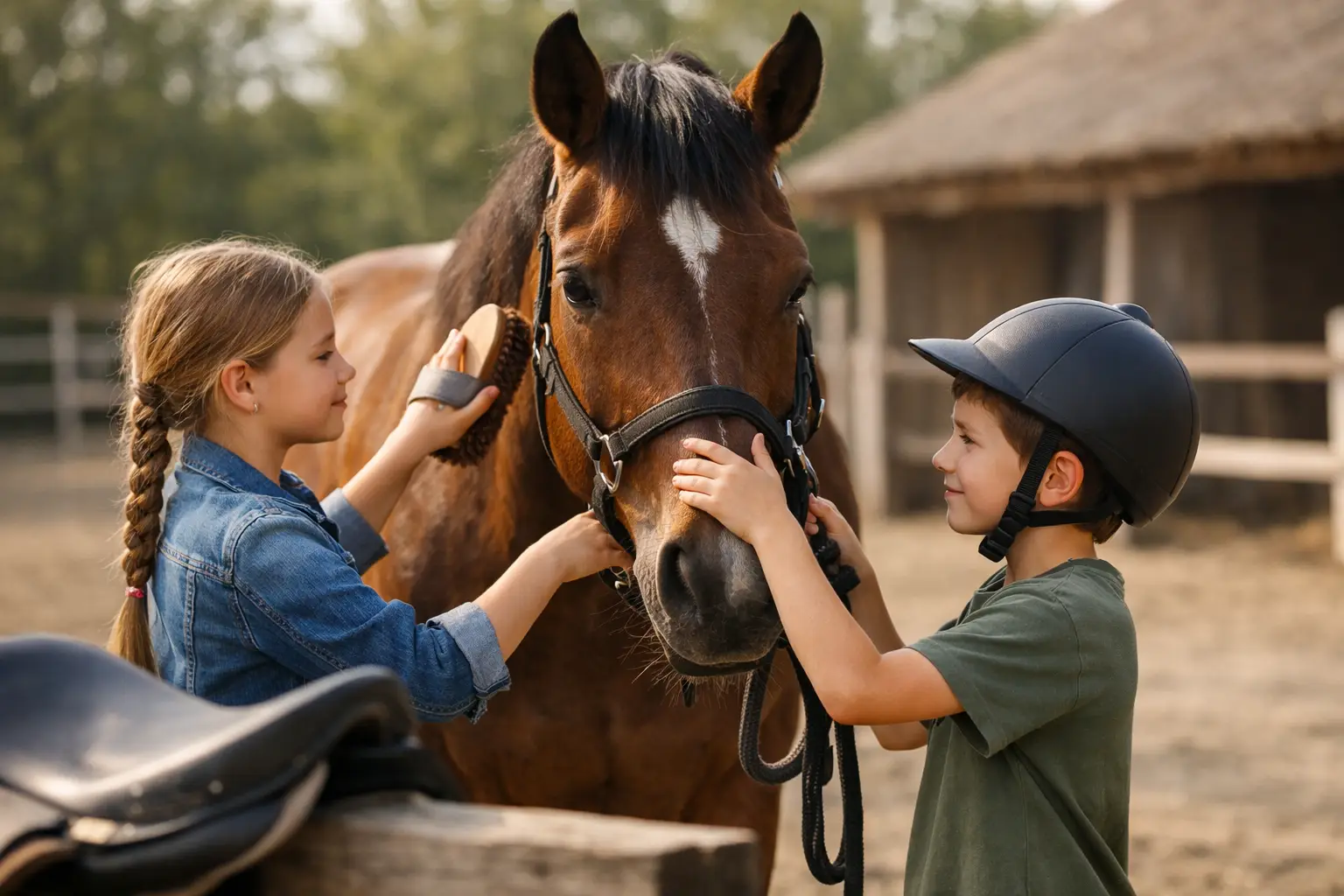
A child who can post the trot is not necessarily ready to care for a horse independently. Riding is only one part of horsemanship. When families teach horse responsibility to kids, the goal is not to hand over a long chore list. It is to help young riders understand that horses depend on thoughtful, consistent human care - before, during, and after every ride.
That lesson is powerful because it builds more than barn skills. Children learn observation, patience, follow-through, and respect for an animal with needs and opinions of its own. With clear expectations and appropriate adult guidance, responsibility becomes a source of pride rather than pressure.
Start With the Horse, Not the Chore Chart
Children often want to help because they love being near a horse. That enthusiasm is a wonderful starting point, but a horse does not experience care as a fun activity. A horse needs clean water, appropriate feed, safe handling, turnout, grooming, hoof care, and attention to changes in behavior or condition.
Frame each task around the horse's comfort and safety. Instead of saying, “Put the brush away,” explain that tools left on the ground can startle a horse or create a tripping hazard. Rather than asking a child to fill a water bucket simply because it is their job, help them notice whether the water is clean and available.
This approach teaches a valuable distinction: responsibility is not merely finishing a task when someone is watching. It is recognizing why the task matters and doing it carefully every time.
Give Kids Responsibilities They Can Truly Own
The right responsibility depends on the child, the horse, the setting, and the level of supervision available. A calm, experienced lesson horse may be appropriate for one task, while a sensitive or young horse may require an adult or trained professional to handle the same situation. Age alone is not the best measure. Maturity, attention span, physical coordination, and horse sense all matter.
For younger children, ownership may look like returning grooming tools to the correct place, helping pick out a hoof only while an instructor holds the horse, wiping down tack, or checking that a stall door is latched with an adult. These are small tasks, but they create important habits.
As riders become more capable, they can take a larger role in grooming thoroughly, inspecting tack before a ride, cleaning and conditioning leather, learning basic feeding routines, and helping prepare a horse for turnout or a lesson. Older children and teens may be ready to keep a simple care log that records riding, grooming observations, turnout, and any concerns they should report.
The key is to assign a task that has a clear beginning, standard, and ending. “Help with the horse” is vague. “Use the curry comb, brush, and hoof pick in the correct order, then ask your instructor to check your work” gives a child a practical path to success.
Teach Horse Responsibility to Kids Through Routine
Horses thrive on predictable care, and children do, too. A consistent routine turns responsibility into a habit rather than a negotiation. Before a lesson, a child might begin by checking in with an instructor, putting on required safety gear, gathering grooming supplies, and approaching the horse calmly. After the ride, the routine may include cooling out, grooming or rinsing as directed, cleaning tack, returning equipment, and making sure the horse is settled.
At first, walk through the process together. Explain each step out loud, then let the child perform it while you remain present. Over time, step back in small increments. A young rider may first be responsible for gathering supplies, then for completing the grooming sequence, and eventually for noticing what needs attention without being reminded.
Repetition is not boring in horsemanship. It is how riders develop the judgment to notice a loose girth, a missing boot, a warm leg, or a horse that seems unusually quiet. Those observations should always be brought to an instructor or parent, not handled independently, but learning to notice is a meaningful part of becoming responsible.
Keep Safety Rules Non-Negotiable
Responsibility should never be confused with unsupervised access. Children can learn a great deal while adults maintain appropriate control over handling, feeding, turnout, and emergency decisions. Clear boundaries create confidence because kids know exactly when to ask for help.
Establish a few barn rules that remain the same every visit. Wear appropriate footwear and a properly fitted riding helmet when mounted. Walk, do not run, around horses. Avoid walking directly behind a horse. Keep fingers away from ropes, gates, and hardware. Never enter a stall, paddock, or turnout area without permission and guidance.
Explain the reason behind each rule without making the barn feel frightening. Horses are large, responsive animals. They can be gentle and trustworthy while still reacting quickly to a sound, movement, or discomfort. Respecting that reality teaches children to be calm, aware, and considerate.
It also helps to teach children what they should report right away. A horse that is limping, bleeding, sweating heavily without work, refusing feed, acting unusually distressed, or showing damaged equipment needs an adult’s attention. A child’s responsibility is to recognize and communicate the concern, not diagnose or solve it alone.
Let Care Come Before Riding Sometimes
One of the strongest lessons a young rider can learn is that the horse’s needs come first. There will be days when a horse needs to be cooled out, checked by a professional, turned out quietly, or given time to rest. There will be days when weather, footing, behavior, or health means a ride changes or does not happen.
Parents can reinforce this lesson by avoiding the idea that every barn visit must end with time in the saddle. Grooming, hand-walking under supervision, cleaning tack, observing a lesson, or learning how to identify parts of the saddle can all be productive barn time. These experiences show children that a horse is not a piece of sports equipment brought out only for a child’s enjoyment.
That perspective is especially helpful for families considering a lease or eventual horse ownership. A lease can introduce a child to greater consistency and accountability without placing the full scope of ownership on the family immediately. It also gives instructors an opportunity to guide the rider toward responsibilities that fit their current level.
Praise Careful Effort, Then Raise the Standard
Positive feedback matters, particularly when a task is new. Praise specifics: “You noticed her water bucket needed cleaning,” or “You stayed patient while you checked each hoof.” Specific feedback helps children understand what good horsemanship looks like.
At the same time, responsibility should include accountability. If a child rushes grooming, leaves tack dirty, or forgets to put equipment away, treat it as a learning moment. Have them return and correct the work with guidance. Natural, timely correction is more effective than scolding, and it reinforces that care has a standard.
Avoid making horse care a punishment. Asking a disappointed child to clean tack after an unsafe choice may have a place if the connection is explained, but routine care should not become something they associate only with mistakes. The barn should remain a place where responsibility feels meaningful and earned.
Make Progress Visible to the Child
Young riders are more likely to stay engaged when they can see how their efforts add up. A simple checklist can help at first, especially for pre-ride and post-ride routines. As a child grows more confident, replace the checklist with questions: Is your horse comfortable? Is your tack clean and stored? What did you notice during grooming today?
Private instruction can be particularly valuable here because responsibility is not one-size-fits-all. A thoughtful instructor can match expectations to the rider’s experience, the horse’s temperament, and the skills being developed in the saddle. At Eden Hills Equine, horsemanship education is treated as part of rider development, giving children focused guidance as they build both confidence and sound habits.
The most meaningful sign of progress is not that a child can complete every task alone. It is that they begin to pause, look closely, ask good questions, and understand that a horse’s well-being is always part of the ride. Those habits can shape a more capable rider, a more considerate young person, and a lifelong relationship with horses built on trust.