

Jumping Lessons That Build Calm, Capable Riders
Jumping lessons build balance, confidence, and thoughtful horsemanship through private instruction tailored to each rider, horse, and goal at every stage.
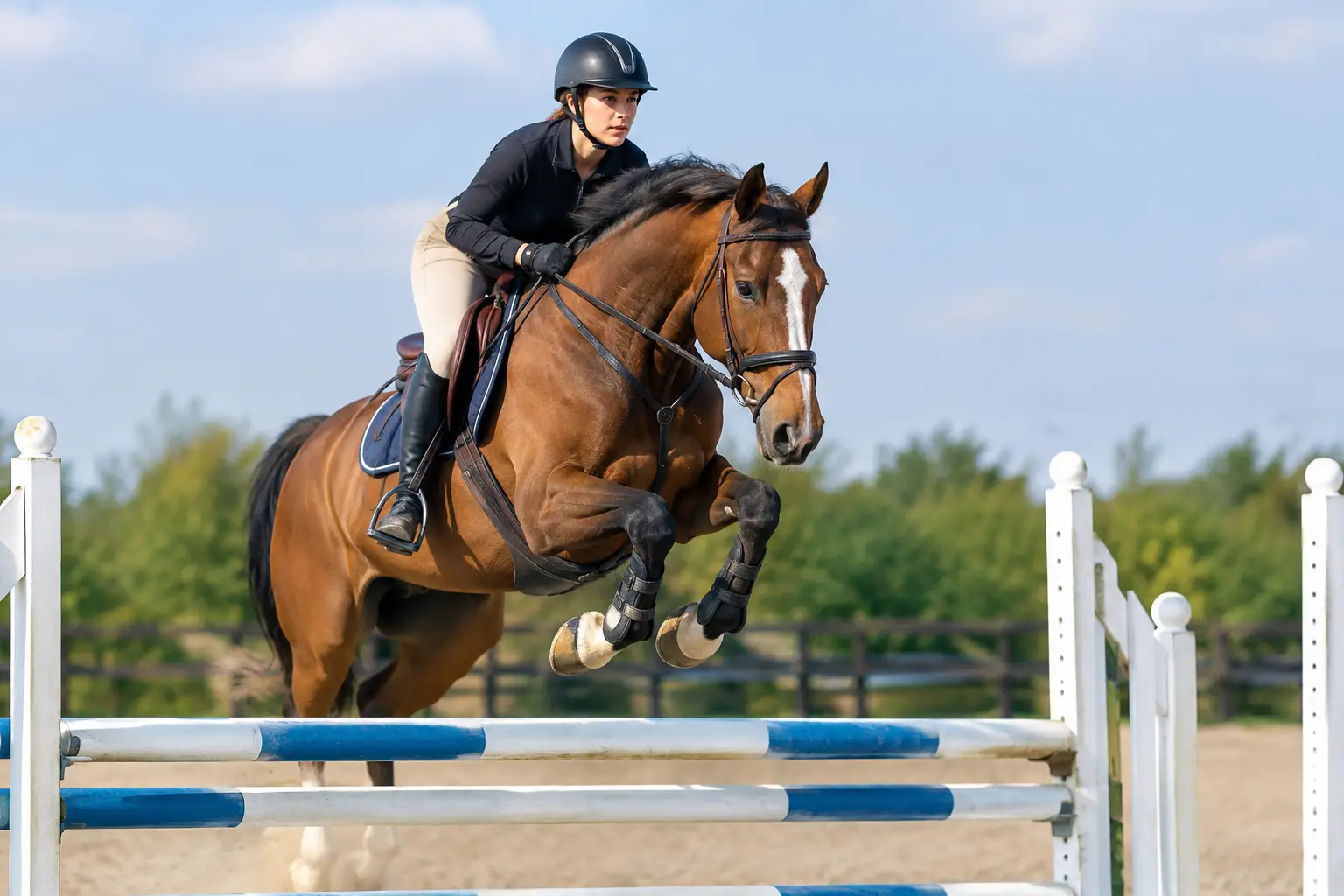
A successful jump is rarely about bravery alone. It is the result of a rider who can maintain balance, follow a rhythm, make clear decisions, and trust the preparation beneath them. Quality jumping lessons help riders develop those skills gradually, so the goal is not simply getting over a fence, but becoming a confident, considerate horseperson.
For children, teens, and adult riders alike, jumping can be exciting from the first time they see poles set in an arena. It can also reveal gaps in balance, steering, and confidence very quickly. That is why a thoughtful program begins with the fundamentals and gives each rider time to understand what their horse needs before the jumps become more demanding.
What Jumping Lessons Should Teach First
Before a rider tackles a course, they need a dependable position on the flat. A secure lower leg, soft hands, a balanced upper body, and an independent seat allow the rider to support the horse without interfering with the motion. These details may seem quiet compared with clearing a fence, but they are what help a rider stay centered when a horse changes pace or takes a larger effort.
Rhythm is equally important. Horses jump best from a steady, organized canter or trot, not from a rushed approach or a last-minute pull. Early work over ground poles, trot poles, and small crossrails teaches riders to recognize a consistent pace and keep it through the line. A rider who learns to wait, look ahead, and maintain direction will be better prepared as fences increase in height and complexity.
Good instruction also teaches riders how to read their horse. Some horses become quick when they are uncertain; others may need more encouragement to stay forward. A rider should learn that the answer is not always to use more rein or more leg. Sometimes the most helpful response is to improve the turn, rebalance earlier, soften the contact, or ride a clearer line.
Why Private Instruction Makes a Difference
Jumping is highly individual. Two riders may be working over the same crossrail while needing entirely different coaching. One may need to keep their eyes up and allow the horse to jump freely. Another may need help establishing a quieter leg or a more consistent canter. Private instruction gives the trainer room to identify the source of the issue rather than offering one general correction to a group.
This focused attention can be especially valuable for young riders. Parents often want their children to enjoy the sport while also learning discipline, responsibility, and safe habits. A private setting gives a child space to ask questions, process feedback, and build confidence without feeling pressured to keep up with a larger class.
Adult amateurs benefit from this approach as well. Many adult riders are returning to horses after years away, beginning later in life, or balancing riding goals with work and family commitments. A customized lesson can meet them where they are, whether that means rebuilding a secure two-point position, gaining confidence over small jumps, or refining their ride between fences.
At Eden Hills Equine, personalized coaching is designed to support measurable progress while keeping horsemanship at the center of the experience. The rider's goals matter, but so do the horse's comfort, fitness, and understanding.
Progress Is Not Measured Only in Fence Height
It is easy to see a higher jump as proof of advancement. Height can be part of a rider's development, but it should not be the only measure. A rider who can ride a simple line with an even rhythm, make an accurate turn, and recover calmly after an imperfect distance has made meaningful progress.
In fact, returning to small fences is often part of good training. Lower jumps allow riders to concentrate on position, rhythm, and straightness without feeling overwhelmed by the effort. As those skills become more automatic, the rider can begin to work on related distances, bending lines, transitions before and after fences, and courses with more technical questions.
A thoughtful progression may move from poles to crossrails, then to verticals and small oxers. But the pace depends on the rider and horse. A confident rider on a green horse may need to spend more time on basics. A newer rider on an experienced school horse may advance quickly in one area while still needing patient work in another. There is no benefit to moving ahead before the pair is ready.
The Horse's Education Matters Too
A horse is not a piece of equipment that simply carries a rider over jumps. Each horse brings its own experience, strengths, sensitivities, and physical needs to the arena. A good lesson program accounts for that reality.
Young or developing horses need clear, fair rides that help them understand their job. Experienced horses need riders who respect their training and do not rely on them to solve every problem. Lesson horses also deserve attentive care, appropriate workload management, and riders who are taught to recognize the difference between a horse that is having an off day and one that simply needs clearer guidance.
This is where horsemanship and jumping become inseparable. Riders should understand basic grooming, tack fit, warm-up routines, cool-down practices, and the importance of listening to a horse's behavior. These lessons build empathy and responsibility, and they make riders safer and more capable in the saddle.
What a Safe Jumping Environment Looks Like
Safety is not a single rule. It is a series of thoughtful choices that begin before a rider enters the arena. Properly fitted helmets, well-maintained tack, suitable footing, safe jump equipment, and a structured lesson plan all play a role.
Riders also need to understand arena awareness. They should know how to pass another horse safely, maintain appropriate spacing, communicate clearly, and follow the trainer's directions when jumps are being adjusted. These habits are valuable in every riding setting, from a quiet private lesson to a busy show warm-up ring.
The trainer's approach matters just as much. Confidence grows when riders are challenged without being pushed past the point where they can make good decisions. There will be moments when a rider misses a distance, loses rhythm, or needs to circle and try again. The right response is calm instruction, not embarrassment. Learning how to reset after a mistake is one of the most useful skills a rider can carry forward.
Preparing for Your First Lesson
New riders do not need expensive equipment to begin. A properly fitted riding helmet, long pants, and boots with a small heel are the essentials. As riders continue, their trainer can offer guidance on appropriate breeches, gloves, and other gear based on their needs.
It also helps to arrive ready to learn rather than expecting to jump immediately. A first lesson may focus on meeting the horse, learning basic safety rules, establishing steering and stopping, or working on the rider's position at the walk and trot. That foundation is not a delay. It is the beginning of the skills that make jumping enjoyable later.
Parents can support young riders by praising effort, preparation, and patience instead of asking only how high they jumped. Questions such as, "What did you learn about your horse today?" or "What are you working on next time?" reinforce the thoughtful habits that lead to lasting confidence.
Building a Rider for the Long Term
The most rewarding jumping programs create riders who care about more than the next fence. They develop patience when a skill takes time, resilience when a ride is not perfect, and pride in the daily work that supports a horse's well-being.
Whether the goal is a first crossrail, a polished equitation round, or a more confident partnership with a leased or owned horse, progress begins with patient instruction and a solid foundation. When riders learn to value balance, communication, and care as much as excitement, every jump becomes part of a much bigger education.