

How to Find Show Jumping Lessons Near Me
Looking for show jumping lessons near me? Learn what to look for in coaching, safety, facilities, and rider fit before you choose a program.
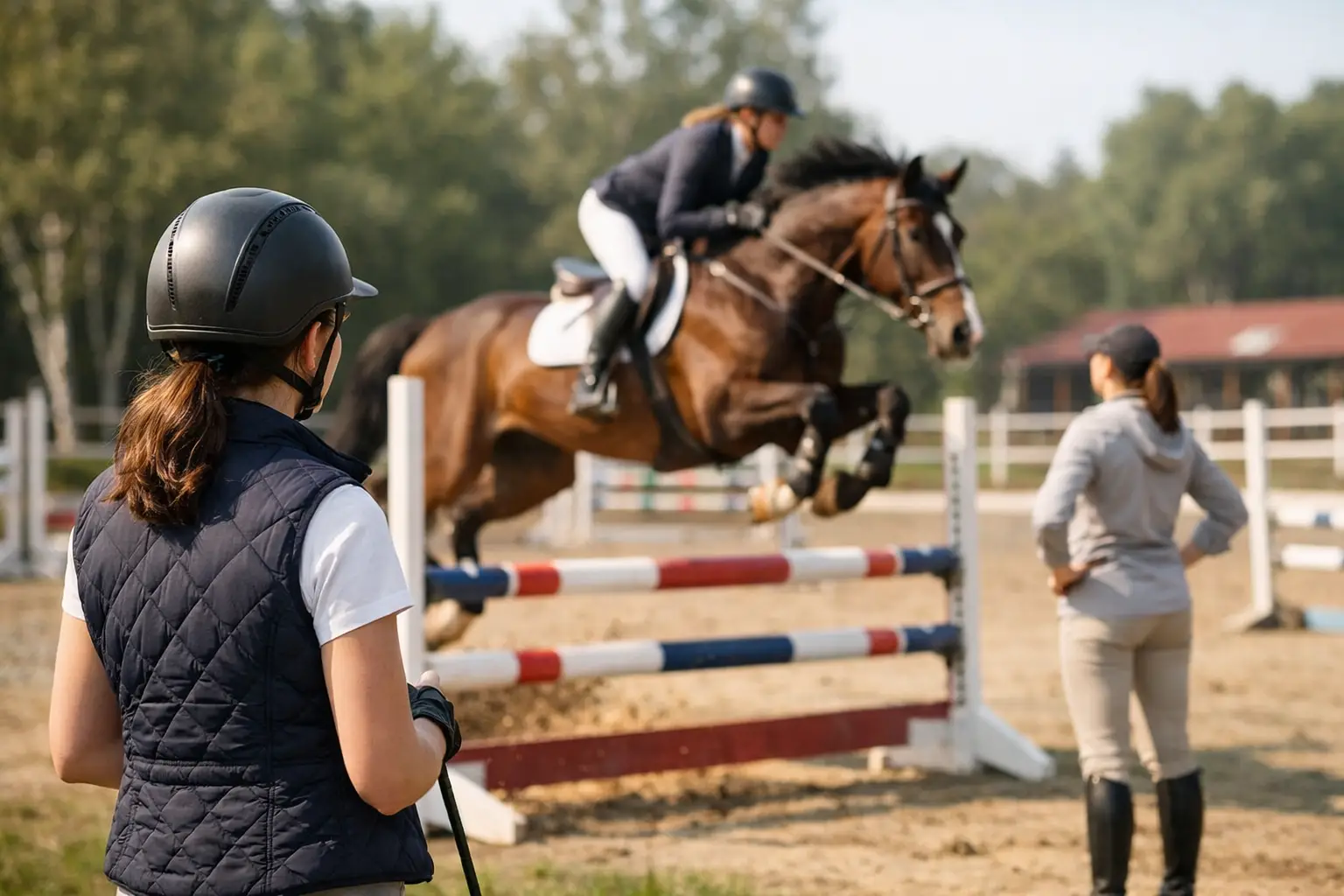
Typing show jumping lessons near me into a search bar is easy. Choosing the right program is where things get more serious, especially if you are a parent looking for safe, structured instruction or a rider ready to build real skill over fences.
Show jumping is exciting for a reason. It asks for precision, confidence, balance, timing, and trust between horse and rider. That also means the quality of instruction matters more than the excitement of the sport. A beautiful jump course means very little if the teaching is inconsistent, the horses are overfaced, or riders are moved along before they are truly ready.
What good show jumping lessons near me should actually include
The best show jumping lessons are not just about getting a rider over bigger jumps. They should be built around strong basics, thoughtful progression, and a clear respect for safety. Riders need flatwork before they need height. They need secure position before they need speed. They need to understand rhythm, track, pace, and distance before they start chasing rounds.
A quality program will usually spend plenty of time on fundamentals that do not always look dramatic from the sidelines. That may include two-point, pole work, transitions, circles, straightness, and learning how to keep a horse balanced to and away from a fence. For younger riders, this steady approach builds confidence. For more experienced riders, it creates consistency that holds up under pressure.
Private instruction can make a major difference here. In a one-on-one setting, the trainer can adjust each lesson to the rider’s current skill level, confidence, and goals. That matters because show jumping is not a one-size-fits-all discipline. One rider may need help finding a steady release. Another may need work on pace control or seeing a line. Another may simply need time to become comfortable cantering small fences without feeling rushed.
Start with safety, not height
Many riders and parents understandably ask how soon jumping begins. The better question is whether the program has a clear standard for when jumping should begin. Good instruction does not rush this stage.
A rider should first show balance at the walk, trot, and canter, along with basic steering, control, and body awareness. Even then, the first steps into jumping often begin with poles, small crossrails, and simple exercises that teach form without overwhelming the horse or rider. That slower build is not holding anyone back. It is how long-term riders are developed.
Safety also includes the environment around the lesson. Look at the arena footing, fencing, jump equipment, horse condition, and general organization of the property. Horses should appear healthy, well cared for, and appropriate for the riders they carry. The lesson space should feel calm, not chaotic. In a good program, safety is not treated like a sales point. It is simply built into the daily standard.
The right coach makes a bigger difference than the right search result
When people search for show jumping lessons near me, they often compare by distance first. Convenience matters, especially for busy families, but coaching quality should carry more weight than a short drive.
A strong instructor does more than call out directions. They teach riders why an exercise matters and what it is meant to improve. They can explain concepts clearly to children, teens, adults, and competitive riders without making anyone feel left behind. They know when to encourage, when to slow down, and when to return to basics.
This is especially important in jumping, where confidence can change from week to week. Riders need an instructor who notices the small things - tension in the hands, loss of balance in the corner, hesitation to a fence, or overuse of speed to solve a distance problem. Those details shape progress.
For parents, communication matters too. If your child is taking lessons, you should feel that the instruction is structured and purposeful. A good trainer can explain where your rider is now, what they are working on, and what the next step looks like. That kind of transparency builds trust and helps families understand the value of a well-run program.
What to look for in the lesson horse and program structure
The horse matters just as much as the lesson itself. In a thoughtful show jumping program, lesson horses are not interchangeable. They are selected based on rider level, goals, confidence, and experience.
A newer rider may need a quiet, honest horse that helps them learn balance and consistency without reacting to every mistake. A more advanced rider may benefit from a horse that can teach accuracy, adjustability, and finer technical skills. The best matches help riders progress while still feeling supported.
Program structure matters too. Ask how lessons are scheduled and how progress is tracked. Some riders do well with one lesson per week. Others improve faster with a combination of private lessons, schooling rides, or a more involved training schedule. It depends on the rider’s goals, age, budget, and available time.
If a rider is especially interested in show jumping, it is worth asking whether the instruction includes horsemanship as well as time in the saddle. Riders who learn grooming, tack care, horse behavior, and general responsibility often become more confident and effective equestrians overall. Jumping is not separate from horsemanship. It rests on it.
A boutique setting can be the right fit
Not every rider thrives in a large, busy lesson environment. Some do better in a smaller, more attentive setting where instruction is individualized and horses receive consistent care. That can be especially valuable for riders who are just starting, riders rebuilding confidence, or families who want a more personal experience.
At a boutique program like Eden Hills Equine in Wimberley, personalized instruction allows each horse-and-rider pair to receive focused attention instead of being treated like part of a high-volume schedule. For many families and dedicated riders, that translates into better communication, steadier progress, and a stronger foundation over time.
That does not mean one format is right for everyone. Some riders enjoy the energy of a larger group atmosphere. Others benefit most from private coaching and a quieter environment. The key is choosing a setting that fits the rider, not just the marketing.
Questions worth asking before you commit
Before booking a package of lessons, ask a few direct questions. How are riders evaluated before they begin jumping? Are lessons private or group, and how does that affect instruction time? What safety equipment is required? How are horses matched to riders? What does progression look like over the first few months?
You can also ask how the trainer handles nerves, setbacks, or uneven progress. That answer tells you a great deal. Show jumping has wonderful high points, but it also includes frustrating days. Riders may lose confidence after a refusal, feel stuck at a certain fence height, or need extra time to develop a steady canter. A good program sees those moments as part of training, not as a reason to pressure the rider forward.
Watch how lessons are conducted if you can. Are riders receiving clear feedback? Are corrections specific and constructive? Does the trainer stay engaged from beginning to end? Do horses seem appropriately managed between lessons? These observations are often more revealing than a polished description.
Progress in show jumping should feel earned
One of the clearest signs of a healthy program is that progress feels steady, not rushed. Riders should be challenged, but not overfaced. They should feel proud of what they are learning, not constantly anxious about keeping up.
In show jumping, a strong foundation usually looks simple from the outside. Straight approaches. Quiet hands. Balanced turns. A horse that stays rhythmic without being chased. A rider who can recover after a mistake and come back to the exercise with composure. Those skills may not look flashy, but they are the ones that support future success.
That is true for children just beginning to dream about jumping courses, for teens with competitive goals, and for adults returning to the saddle after years away. Real development takes time. The right lesson program respects that.
If you are searching for show jumping lessons near me, look past the promise of jumps and focus on the quality behind them. The best fit will give you more than saddle time. It will give you thoughtful instruction, safe progression, and the kind of horsemanship that helps confidence grow one correct ride at a time.