

Adult English Riding Instruction That Fits You
Adult English riding instruction should build confidence, safety, and real progress through private lessons tailored to your goals and experience.
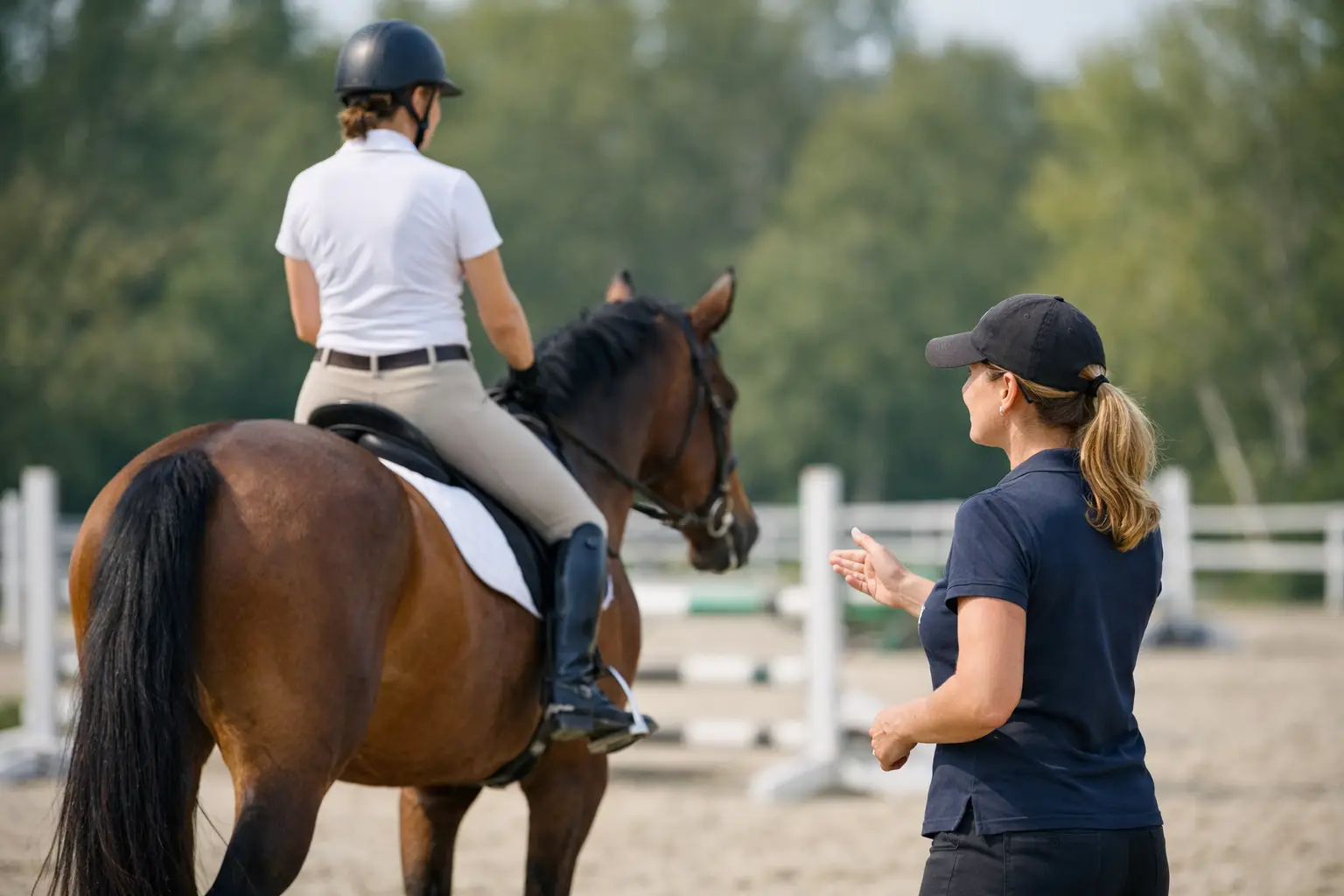
Starting riding as an adult can feel exciting and a little exposing at the same time. Many riders looking for adult English riding instruction are not just learning posting trot or correct rein contact - they are also working through nerves, busy schedules, body awareness, and the very real desire to do things properly from the beginning.
That is why adult lessons should never feel like an afterthought. Adults learn differently than children do. They usually want clear explanations, a logical progression, and instruction that respects both their goals and their limitations. Whether you are returning to the saddle after years away or stepping into a lesson program for the first time, the right instruction should help you feel capable, safe, and steadily more confident.
What adult English riding instruction should include
Good adult English riding instruction is more than teaching someone how to steer, stop, and trot. It should combine riding skills with horsemanship, safety habits, and an understanding of why each exercise matters. Adults tend to progress best when they know what they are working on and how it connects to the bigger picture.
In a well-structured lesson, you should expect attention to position, balance, rein and leg aids, rhythm, and horse communication. Just as important, you should learn practical horse handling skills on the ground. Grooming, tacking up, leading safely, and understanding horse behavior all support better riding and create a more complete horseperson.
For many adult amateurs, private instruction makes a significant difference. A one-on-one setting gives your trainer room to adjust each lesson to your comfort level, fitness, confidence, and learning style. If you need extra time at the mounting block, more repetition at the walk, or a focused plan for dressage basics or jumping position, that can be built into the ride instead of rushed past.
Why adults often progress differently than younger riders
Adult riders usually bring strengths that younger students do not. They are often more disciplined, more consistent in listening, and more invested in understanding technique. They may also have the patience to work on fundamentals without expecting instant results.
At the same time, adults can be harder on themselves. They may compare their progress to the way they think they should ride, or they may carry fear after a fall, time away from horses, or simply the awareness that riding involves risk. Physical factors matter too. Flexibility, core strength, prior injuries, and overall fitness can affect how quickly someone feels secure in the saddle.
A skilled instructor recognizes those realities without making them the center of the lesson. The goal is not to lower expectations. The goal is to teach in a way that supports real improvement. Sometimes that means spending longer on basics. Sometimes it means adjusting exercises so a rider can build stability before asking for more complexity.
Private lessons often make the biggest difference
For adult riders, private lessons are often the clearest path to measurable progress. In a private setting, the trainer can watch every transition, every circle, and every moment of hesitation. Small corrections happen immediately, which helps riders avoid practicing the wrong habits over and over.
This matters in English riding because details matter. A slightly tipped upper body, a hand that gets fixed, or a leg that swings back can change how the horse responds. In a group lesson, those things may go unnoticed for too long. In private instruction, they can be addressed before they become ingrained.
There is also a confidence factor. Many adults feel more comfortable asking questions in a private lesson than they do in front of a group. They are more likely to admit what feels difficult, whether that is cantering, learning diagonals, riding a more forward horse, or managing anxiety. That honesty helps the trainer build a plan that actually fits the rider.
At Eden Hills Equine, that individualized approach is especially valuable because adult riders are rarely all working toward the same outcome. One rider may want polished flatwork and better position. Another may be preparing to jump courses. Another may simply want to feel secure and knowledgeable around horses. Serious instruction should leave room for all three.
The right program depends on your goals
Not every adult rider wants the same experience, and that is a good thing. Some riders are pursuing a lifelong goal of learning English riding from the ground up. Others rode as children and want to rebuild skill and confidence after a long break. More experienced adults may be looking for focused development in dressage or jumping with a trainer who can refine details rather than just supervise ring time.
The best lesson programs begin by identifying where you are now and where you want to go. If you are brand new, your early lessons may center on balance, steering, rhythm, and horse handling. If you are returning after time away, you may need a period of rebuilding before advancing. If you already have a foundation, your training may become more technical, with greater focus on straightness, consistency, transitions, course work, or connection.
It also depends on how often you ride. One lesson a week can absolutely build skill, especially with thoughtful instruction. More frequent riding usually brings faster progress, but only if the program stays organized and intentional. Quality matters more than rushing.
Safety and horse quality matter more than many adults realize
Adults often focus on finding a trainer they like, which is important, but the larger lesson environment matters just as much. Safe adult English riding instruction depends on suitable lesson horses, thoughtful horse-and-rider pairing, clear barn procedures, and an arena setup that supports learning.
A good lesson horse should be educated, appropriate for the rider's level, and managed in a way that protects both horse and rider. A nervous beginner does not need a horse that feels unpredictable or overwhelming. A more advanced rider does not benefit from a horse that cannot respond correctly to educated aids. Matching matters.
The facility itself matters too. Clean, functional spaces, organized routines, and trainer oversight all contribute to a rider's confidence. Adults tend to notice when an environment feels calm and professionally managed, and that feeling is not superficial. It affects how well they can focus, ask questions, and learn.
What progress really looks like for adult riders
Progress in riding is rarely a straight line. One week you may feel steady and effective, and the next week an old habit shows up again. That does not mean the lesson program is failing. It usually means you are building a complex skill that involves timing, balance, feel, communication, and trust.
For adults, progress often shows up first in quieter ways. You mount with less tension. You understand how to organize your reins without thinking about it. You notice when your horse falls in on a circle and know how to correct it. You recover from a mistake without losing focus. Those are meaningful milestones.
Visible riding goals matter too, of course. Learning to post correctly, canter with confidence, ride a balanced transition, hold a softer contact, or begin jumping small fences are all exciting markers. But the strongest programs do not chase milestones at the expense of fundamentals. Riders who build a solid foundation tend to stay safer, ride more effectively, and enjoy the sport longer.
Choosing an adult English riding instruction program
If you are evaluating lesson options, look for a program that treats adult riders with seriousness and care. You want an instructor who can explain clearly, teach progressively, and adapt without losing standards. You also want a barn culture that values horsemanship, not just time in the saddle.
Ask how lessons are structured, whether private instruction is available, and how rider goals are assessed over time. Pay attention to whether the environment feels attentive rather than rushed. In a smaller, well-managed program, adults often receive the kind of detailed coaching that leads to real change.
Most of all, choose a place where learning is respected. Adult riders do not need to be talked down to, and they do not need to be pushed past their readiness. They need thoughtful instruction, suitable horses, and a trainer who sees the long game.
The right lesson should leave you a little stronger, a little clearer, and more eager to come back next week.