

Are Horse Leases Worth It for Growing Riders?
Are horse leases worth it? See how a carefully matched lease can build riding skills, responsibility, and confidence before buying a horse of your own.
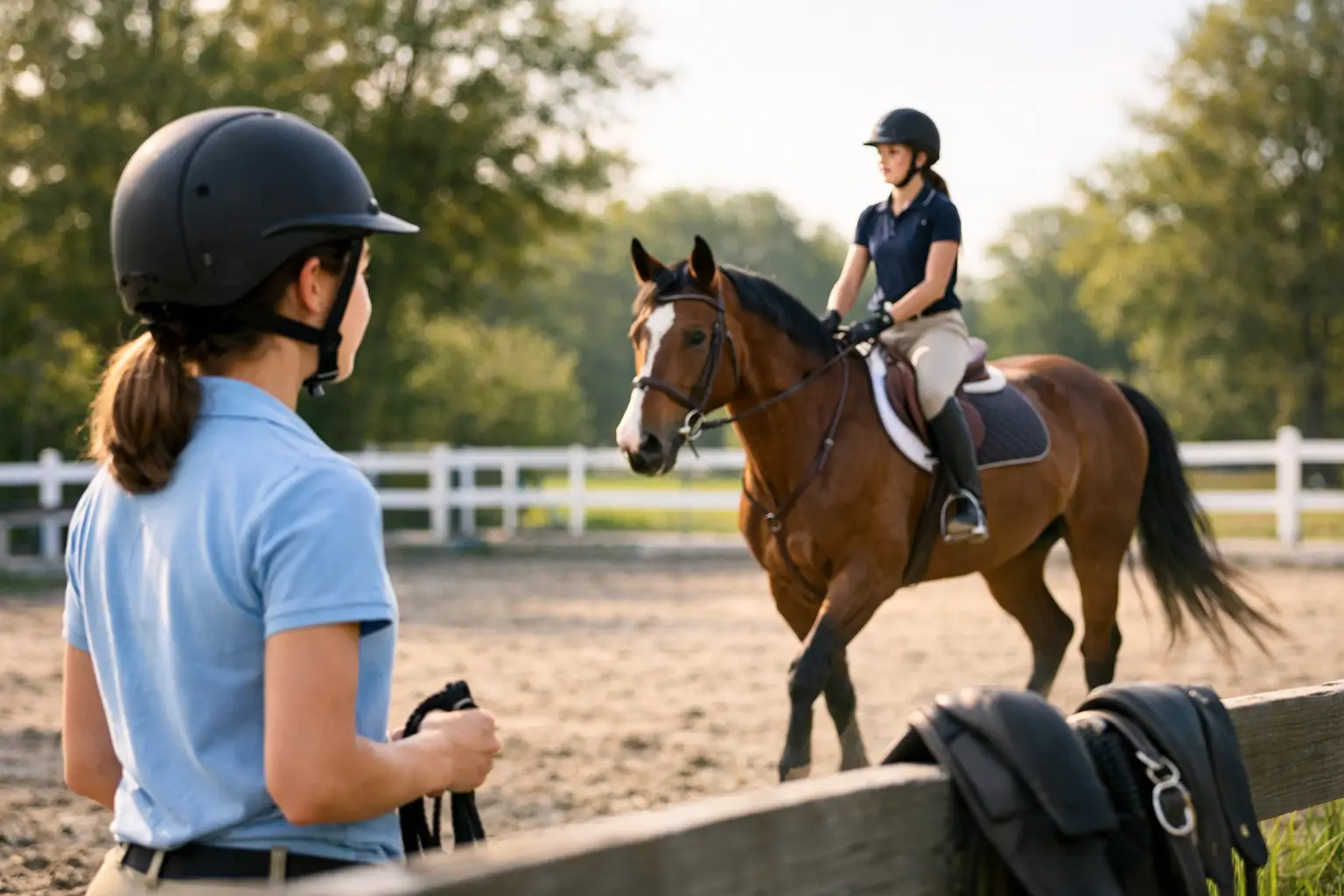
A rider can be ready for more than one lesson a week long before a family is ready to purchase a horse. That gap is where a thoughtful lease can be especially valuable. So, are horse leases worth it? For many developing riders, yes - provided the horse, schedule, expectations, and supervision are the right fit. A lease can offer meaningful consistency in the saddle without asking a family to take on every financial and daily responsibility of ownership at once.
A horse lease is not simply extra riding time. Done well, it is a structured opportunity to build partnership, responsibility, and independent horsemanship while a trainer remains closely involved in the rider's development.
What a Horse Lease Really Provides
In a lease arrangement, a rider has scheduled access to a specific horse for riding, grooming, and appropriate care activities. The details vary. Some riders lease for one or two rides each week, while others may have a more extensive schedule. The lease may include lessons, show opportunities, or specific training expectations, depending on the program and the rider's goals.
The greatest benefit is consistency. In regular lessons, a rider may work with more than one school horse. That has real educational value, because every horse teaches different skills. But riding the same horse repeatedly allows a rider to learn how that individual moves, thinks, responds to aids, and progresses over time.
That continuity makes the lessons clearer. A rider begins to recognize when a horse is stiff, energetic, distracted, or especially responsive. They see how thoughtful flatwork supports better jumping, how correct preparation improves transitions, and how their own position affects the horse every ride. Those observations are the beginning of true horsemanship.
Are Horse Leases Worth It Before Buying a Horse?
For families considering ownership, a lease can be one of the most useful steps to take first. Buying a horse is a significant commitment that includes more than the purchase price. Monthly care, veterinary needs, farrier services, insurance, equipment, training, and unexpected expenses all deserve careful consideration. Just as important, a horse needs dependable time, knowledgeable management, and a plan for its continued training.
A lease lets a family experience a portion of that commitment in a supported setting. It reveals whether the rider enjoys the routine beyond the excitement of riding: arriving prepared, grooming thoroughly, caring for tack, cooling down correctly, and following barn procedures. It also helps parents see whether a regular riding commitment fits the family calendar and budget over several months, not just during a particularly enthusiastic season.
For a young rider, this trial period can be very grounding. They learn that progress is built through quiet repetition and attention to detail. Some riders become even more committed after leasing. Others realize they prefer weekly lessons without the added obligation. Both outcomes are useful, and neither is a failure.
A Lease Is Not the Same as Ownership
A lease can feel wonderfully close to having a horse, but it is important to keep the distinction clear. The horse's care plan, training program, turnout, feeding, and medical decisions remain under the direction of the owner and barn professionals. That structure protects the horse and gives the rider a healthy framework for learning.
For many families, this is exactly the advantage. The rider gains more access and responsibility while experienced adults oversee the decisions that require deeper equine knowledge. A good lease should expand a rider's confidence without placing adult-level management decisions on a child or inexperienced rider.
When Leasing Is a Strong Fit
Leasing tends to work best when a rider is already comfortable with the basics of safely catching, grooming, tacking up, and riding under instruction. They do not need to be advanced, but they should be ready to follow routines carefully and communicate honestly about what they need.
It is also an excellent fit for riders with a clear goal. Perhaps a child wants more practice between private lessons, a teen is preparing for a new level of jumping, or an adult amateur wants the consistency to develop a stronger dressage foundation. A lease creates more opportunities to practice the skills taught in instruction, rather than attempting to figure out new skills alone.
The horse must suit the rider's current abilities and goals. A rider who needs confidence may benefit from a patient, educated partner. A more experienced rider may need a horse that can help refine timing, balance, and technical skills. The best match is not necessarily the flashiest horse or the most challenging one. It is the horse that allows the rider to progress safely and constructively.
The Costs That Matter Beyond the Lease Fee
Families often begin by comparing a lease fee to the cost of horse ownership, and that is sensible. A lease is generally a more predictable way to access a horse than owning one outright. Still, it should be evaluated as a full commitment rather than a single monthly number.
Ask what the agreement includes. Does the lease include scheduled rides, private lessons, training rides, show participation, use of tack, or special clinics? Are there additional expenses for care products, competition entries, transportation, or other activities? Clear answers prevent surprises and help everyone focus on the rider's experience.
Time is another important cost. A productive lease requires consistency. If a rider can only make it to the barn occasionally, they may not receive enough benefit to justify the arrangement. A realistic schedule is better than an ambitious one that creates pressure for the rider, family, and horse.
What Parents Should Look for in a Lease Program
The quality of supervision matters as much as the amount of saddle time. Especially for children and teens, a lease should be part of an organized program with clear safety standards, appropriate horse matches, and defined expectations for when a rider may work independently.
Parents should feel comfortable asking how the horse is selected, who supervises rides, and how progress is assessed. It is helpful to understand what happens if the horse has a training need, becomes unavailable, or proves to be less suitable than expected. A professional program will be direct about the horse's needs and the rider's readiness.
At Eden Hills Equine, individualized instruction is central to this process. A lease should reinforce what a rider is learning in private lessons, not rush them past the foundations that keep both horse and rider safe. The goal is steady development: better habits, better communication, and a rider who understands why each detail matters.
Questions to Discuss Before You Commit
Before signing an agreement, have an open conversation about the rider's goals, experience, schedule, and budget. Make sure the rider understands which days they may ride, whether a lesson is required, what activities are permitted, and how to report concerns about the horse.
It is equally valuable to ask what success would look like after three or six months. For one rider, success may mean confidently preparing a horse for a private lesson. For another, it may mean improving rhythm over fences, developing a more independent seat, or learning to care for tack correctly. Specific goals make the lease feel purposeful rather than simply more barn time.
When a Lease May Not Be Worth It Yet
A lease is not the right next step for every rider. A beginner who is still learning basic safety habits may benefit more from consistent private instruction first. Likewise, a rider who has limited availability, is uncertain about their interest, or feels overwhelmed by the added responsibility may be better served by lessons and occasional barn programs for now.
There is no prize for moving quickly. Horseback riding rewards patience, and a carefully timed lease is far more valuable than one started before the rider is ready. The same is true when a rider's goals change. If school, sports, family schedules, or finances make regular barn time difficult, it is wise to reassess rather than force a commitment that no longer fits.
A good lease should make a rider feel more capable, not more anxious. With the right horse, a clear agreement, and attentive instruction, it can be a meaningful bridge between lessons and ownership - or simply a rewarding way to deepen a rider's connection with the sport. The best next step is a conversation with a trusted trainer who knows the rider well enough to recommend the pace that will help them grow.