

Beginner Horse Riding Lesson Guide
A beginner horse riding lesson guide for parents and new riders, with what to wear, what to expect, safety basics, and how progress really happens.
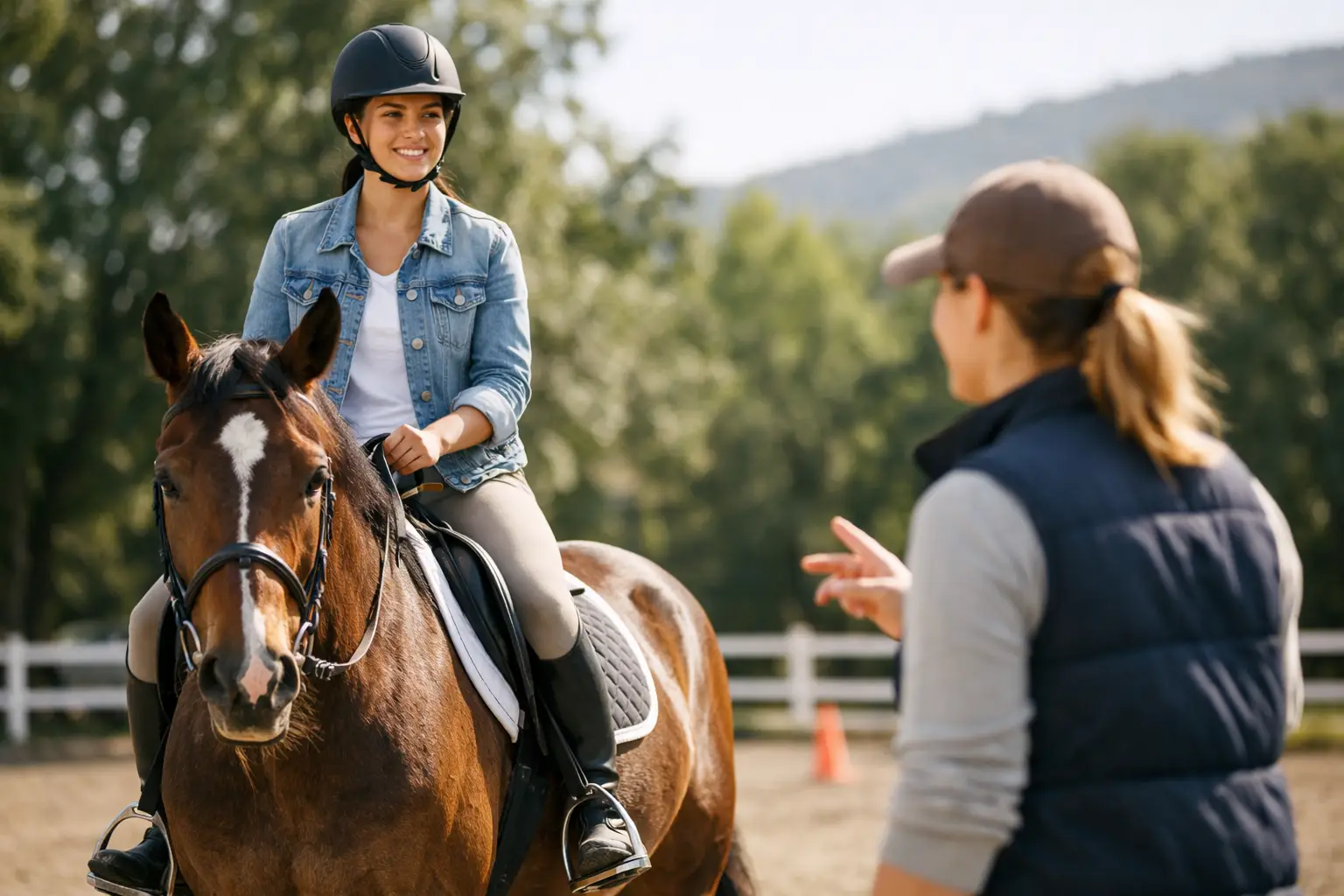
The first riding lesson usually starts long before anyone puts a foot in the stirrup. For most beginners, the biggest questions are simple and completely reasonable: What should I wear? Will the horse be too big? What if I feel nervous? A good beginner horse riding lesson guide should answer those questions clearly, because confidence starts with knowing what to expect.
At its best, a first lesson is not about looking polished or doing everything right. It is about building trust, learning safe habits, and starting a relationship with the horse and instructor that can grow over time. For children, teens, and adults alike, the strongest foundation comes from private instruction that teaches both riding skills and horsemanship in a calm, structured way.
What a first riding lesson is really for
Many new riders imagine a first lesson as a quick path to trotting around the arena. Sometimes that happens. Sometimes it does not. The better goal is much more useful: learning how to be safe, balanced, and attentive around a horse.
A horse is a living partner, not a piece of sports equipment. That means early lessons often include grooming, leading, tacking, or learning how to stand, walk, and speak around the horse correctly. Some beginners are surprised by that, but it matters. Riders who understand the horse on the ground usually become steadier and more thoughtful in the saddle.
This is especially true for young riders. Parents often want to know whether a lesson program teaches more than just riding circles in an arena. A quality program should help students develop responsibility, patience, and awareness while giving them clear riding instruction they can build on.
Beginner horse riding lesson guide: what to wear and bring
The right clothing helps a new rider feel secure and comfortable without overcomplicating the first day. Start with long pants or fitted leggings that allow movement and protect the legs from rubbing. Shoes should have a closed toe and a small heel. That heel matters because it helps prevent the foot from sliding too far through the stirrup.
A properly fitted riding helmet is essential. Some barns provide helmets for first-time students, but it is always smart to ask ahead of time so there are no surprises when you arrive. Loose jewelry, oversized sweatshirts, and very baggy clothing are usually best left at home because they can catch or shift while riding.
Bring water, arrive a little early, and expect the first visit to include a few extra minutes for introductions and questions. If the rider has any medical concerns, prior injuries, or significant anxiety, that should be shared with the instructor before the lesson starts. Good coaching is always more effective when the instructor knows how to support the individual rider.
What happens during the first lesson
Most first lessons follow a straightforward rhythm. The instructor introduces the horse, explains a few safety rules, and shows the rider how to approach and handle the horse correctly. Even this early part teaches valuable habits. Beginners learn where to stand, how to move calmly, and how to pay attention to the horse's body language.
Once mounted, the first focus is usually position. Riders learn how to sit in the saddle, where to place their hands, how to hold the reins, and how to keep a steady leg. This can feel like a lot at once, and that is normal. Riding uses balance, coordination, and body awareness in ways most people are not used to.
Many first lessons stay at the walk, and that is not a sign of slow progress. Walking gives the rider time to feel the horse's motion and practice basic skills without rushing. Depending on age, confidence, and coordination, some riders may also be introduced to steering, stopping, circles, or a few steps of posting at the trot. It depends on the rider, the horse, and the instructor's judgment.
Safety basics every beginner should learn
A safe riding program does not treat safety as a speech given once at the beginning. It should be part of everything. Beginners need to learn how to walk behind a horse with space, how to avoid sudden movements, how to listen promptly, and how to stay calm if they feel uncertain.
In the saddle, safety starts with position and attention. Riders should keep their eyes up, heels gently down, and hands quiet. They also need to understand that gripping tightly, leaning forward, or looking at the horse's neck often makes balance worse, not better.
For parents, this is one reason private lessons can be especially valuable for beginners. One-on-one instruction allows the coach to correct small issues before they become habits and to adjust the pace to the individual rider rather than pushing a group forward together. That kind of focused attention often leads to better confidence and steadier progress.
Beginner horse riding lesson guide: how progress really happens
One of the most helpful things a beginner can understand is that riding progress is not perfectly linear. Some lessons feel easy. Others feel awkward, even after a good week. That does not mean the rider is doing poorly. It means they are learning a skill that depends on timing, feel, strength, and consistency.
In the early months, progress often looks less dramatic than people expect from the outside. A rider may spend several lessons refining how to halt straight, keep their hands even, or maintain balance at the walk and trot. Those details matter. They create the base for later work in jumping, dressage, or more independent riding.
This is where individualized instruction becomes so important. A rider who is naturally brave may need more help with softness and patience. A cautious rider may need time and repetition before trying something new. Neither approach is wrong. Strong teaching meets the rider where they are and builds from there.
Common nerves and how to handle them
Nervousness is common for children and adults, even when they are excited. Some beginners worry about falling. Others worry about not understanding directions or disappointing the instructor. The best response is not to pretend those feelings do not exist. It is to work in an environment where those concerns are handled calmly and professionally.
A good instructor will set clear expectations, explain each step, and give the rider manageable goals. For a child, that may mean learning to steer confidently at the walk. For an adult amateur, it may mean relaxing through the hips and breathing instead of tensing up. Small wins matter because they create trust.
Parents can help by keeping expectations realistic. A first lesson does not need to produce dramatic results to be successful. If a child comes away safer, more comfortable, and eager to return, that is meaningful progress.
How often should beginners take lessons?
For most new riders, one consistent lesson per week is a strong place to start. That schedule gives enough repetition to build familiarity without overwhelming the rider. Younger children or especially enthusiastic beginners may eventually add more, but frequency should support confidence, not rush it.
Consistency matters more than intensity in the beginning. Riders improve when they repeat correct habits often enough for them to become natural. Large gaps between lessons can slow that process, especially for riders who are still developing balance and body control.
If a family is deciding whether riding is a good long-term fit, a short run of regular lessons usually gives a better answer than one isolated experience. By the third or fourth lesson, the rider has moved past the brand-new stage and starts to show how they respond to instruction, routine, and the horse itself.
Choosing the right program for a new rider
Not every lesson setup serves a true beginner equally well. New riders often benefit from a quieter environment, a suitable lesson horse, and an instructor who values horsemanship as much as mounted skills. Clean facilities, organized routines, and clear communication also matter more than many people realize, especially for families new to the horse world.
It is worth asking how lessons are structured, how safety is handled, and whether instruction is adapted to the individual student. For some riders, especially those who are young, cautious, or highly motivated, private lessons offer the clearest path to confidence because the teaching stays centered on that one rider's needs.
At a boutique program such as Eden Hills Equine, that personalized approach can make the first riding experience feel less intimidating and more purposeful. Instead of trying to keep up, the rider gets space to learn well.
Riding is one of those rare activities that asks for physical skill, emotional control, and genuine respect for another living creature all at once. That is part of what makes it so rewarding. The best first lesson does not just teach a beginner how to sit on a horse. It gives them a solid, thoughtful start that can carry them much farther than they expected.