

The 7 Best First Goals for Riding Students
The best first goals for riding students build safety, confidence, and real horsemanship through steady, personalized progress in each lesson with care.
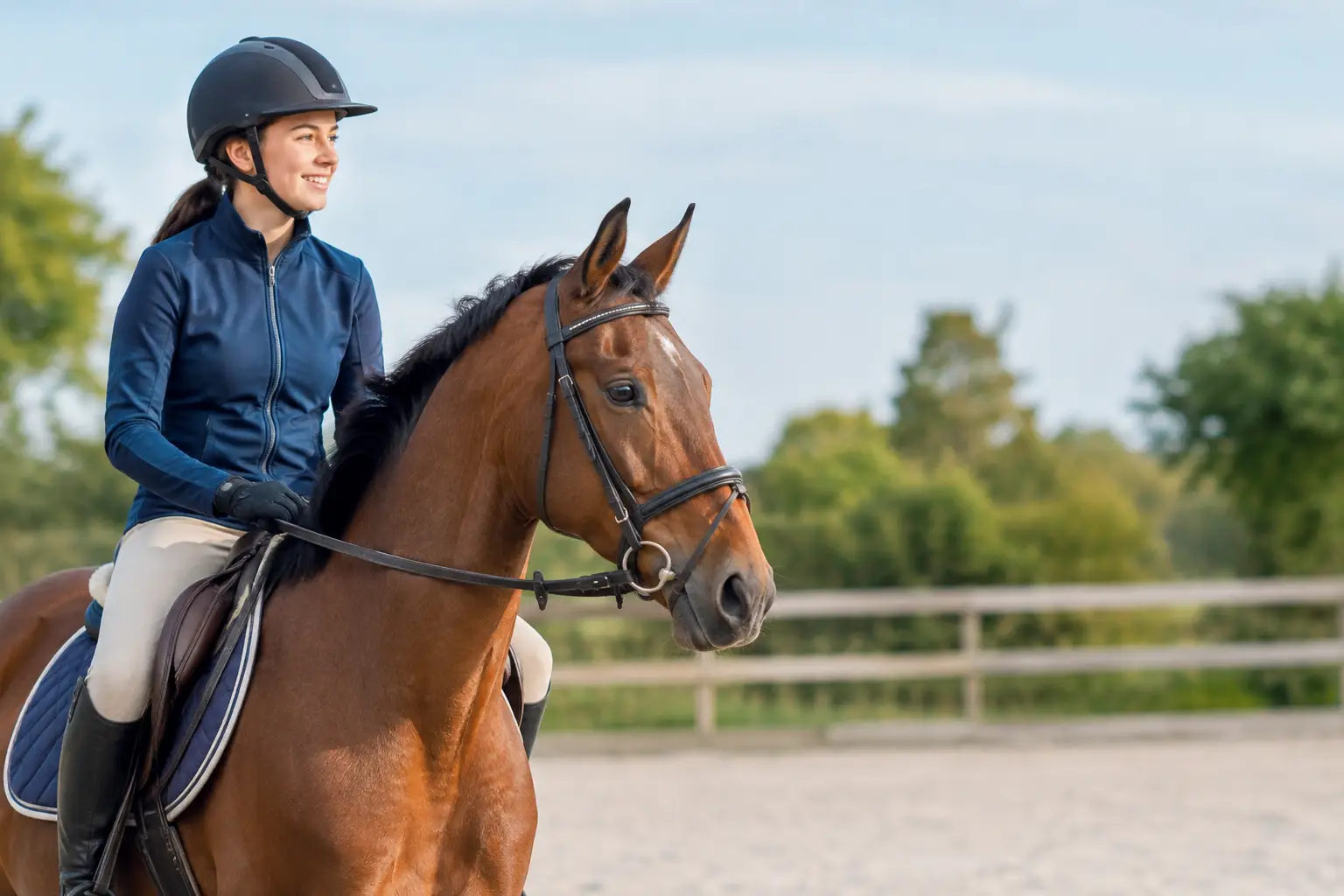
A rider’s first proud moment is not always a perfect trot or a blue ribbon. Often, it is the quiet moment when they tighten a girth correctly, recognize that a horse needs more room at the gate, or steer a steady line without being reminded. The best first goals for riding students create those moments. They give new riders a clear sense of direction while building the safety, confidence, and horsemanship that make long-term progress possible.
For children, teens, and adult beginners alike, early riding goals should be achievable without being superficial. Riding is a partnership with a living, responsive animal. A thoughtful program teaches riders to be capable around the horse before asking them to perform on the horse.
Why Early Riding Goals Matter
It is tempting to measure progress by visible milestones: cantering, jumping, or riding independently. Those milestones can be wonderful, but they are most successful when the fundamentals are already in place. A rider who is rushed into the next gait without balance, awareness, or reliable communication may feel discouraged when riding becomes harder.
The right first goals do something more valuable. They help a student understand what safe, effective riding feels like. They also give instructors and families practical markers of progress beyond whether a rider has moved up to the next activity.
At Eden Hills Equine, individualized instruction allows goals to reflect the rider in front of us. A confident adult returning to the saddle may move quickly through basic steering, while a thoughtful young child may need additional time to develop body awareness and comfort around the horse. Neither path is better. Consistent foundations are what matter.
The 7 Best First Goals for Riding Students
1. Learn safe habits on the ground
Every riding student should begin by understanding that safety starts before mounting. This includes approaching a horse calmly, staying aware of where they stand, leading with an appropriate amount of space, and avoiding common unsafe areas directly behind the horse.
Students should also learn how to carry a helmet properly, open and close gates with care, and move through the barn without sudden running or shouting. These habits may seem basic, yet they teach something essential: horses notice their environment, and riders have a responsibility to be calm, observant, and respectful.
For younger riders, this goal should be taught in small, repeatable pieces. A child does not need to memorize every rule in one lesson. They do need to practice safe choices until those choices become natural.
2. Participate in grooming and tacking up
A rider who can identify a curry comb, hoof pick, saddle pad, saddle, girth, and bridle is beginning to understand the horse as more than a vehicle for riding. Grooming teaches observation. Is the horse relaxed? Is there a rub, swelling, or sensitivity that should be mentioned to the instructor? Is the tack clean and fitted correctly?
Early students do not need to tack up entirely on their own. In fact, supervision is appropriate and necessary. The first goal is participation: handing over the correct brush, learning the order of grooming, checking that the girth is secure, and understanding why the bridle is adjusted carefully.
This work also builds patience. A horse’s comfort comes before getting into the arena, and that lesson carries forward into every discipline.
3. Mount, dismount, and sit with balance
Mounting and dismounting are often treated as brief transitions, but they reveal a great deal about a rider’s body control and attention. A beginning rider should learn to wait for instruction, mount quietly, settle their position before moving off, and dismount without pulling on the horse’s mouth or rushing away.
Once mounted, the early objective is not to look perfectly polished. It is to find a balanced, functional position: eyes up, shoulders relaxed, heels resting down naturally, hands carried quietly, and weight centered over the horse. Riders often need time to build the core strength and coordination this requires.
Good position is not about forcing a rigid shape. It is about helping the rider stay secure enough that their aids can become clearer and kinder.
4. Steer with purpose at the walk
Walking may look simple from outside the arena, but it is where riders begin to understand direction, rhythm, and communication. A useful first goal is for the student to guide the horse around the arena with intention rather than simply following wherever the horse chooses to go.
This means looking where they want to travel, using the reins with gentle consistency, supporting the turn with their leg, and planning enough space before a corner. Students can practice large circles, changes of direction, and stopping at a chosen point.
A horse that knows its job may help a new rider generously, but the rider should still learn that steering is a conversation. Pulling harder is rarely the answer. Balanced turns come from correct preparation, not from trying to overpower the horse.
5. Develop reliable stop-and-go communication
Before a rider worries about speed, they should be able to start, stop, and maintain a steady walk with clear aids. This goal includes understanding how the seat, leg, and rein work together. It also includes learning to release pressure when the horse responds.
That release is a key part of good horsemanship. Horses learn from timing. If a rider keeps squeezing after the horse has moved forward or continues pulling after the horse has halted, the message becomes confusing.
Some students gain this feel quickly; others need repetition. A calm school horse and private, focused coaching can make a meaningful difference, because the rider has room to ask questions and practice without feeling hurried.
6. Build confidence at the trot without rushing it
The trot is often a rider’s first experience with a more active, bouncy gait. It can be exciting, and it can also feel intimidating. A strong first trot goal is not necessarily trotting an entire arena. It may be maintaining balance for a few strides, learning to post with the rhythm, or returning to the walk calmly when asked.
Students benefit from short, successful trot exercises that gradually increase as their strength and confidence improve. For one rider, that may mean practicing a few steps of sitting trot on a lead line. For another, it may mean posting independently around a large circle.
The trade-off is straightforward: moving too slowly can frustrate a rider who is ready for more, but moving too quickly can create tension and poor habits. The instructor’s role is to recognize readiness, not simply follow a fixed timeline.
7. Practice responsibility and reflection
The most lasting goal may happen after the lesson. Riders should learn to thank their horse, help with appropriate untacking tasks, return equipment neatly, and reflect on one thing that went well and one thing they want to practice next time.
This does not need to feel formal. A simple question such as, “What helped your horse turn that corner well?” encourages a student to think beyond whether the lesson was fun. Enjoyment matters, especially for new riders, but reflection turns experience into learning.
For families, this goal offers a better way to recognize progress. Instead of asking only, “Did you get to trot today?” try asking what the rider noticed about their horse or what they are working on next. Those conversations reinforce responsibility, attention, and pride in the process.
How Goals Change as a Rider Grows
Early goals should not become a checklist that every student completes at the same pace. Age, confidence, athletic background, lesson frequency, and prior horse exposure all affect development. A rider who comes once a week may need more time to build physical consistency than someone participating in a more frequent training program.
Goals also shift when a rider begins to focus on dressage or jumping. Before poles, patterns, and courses, the rider needs an independent seat, steady steering, and control of rhythm. Before more technical dressage work, the rider needs to understand straightness, transitions, and the effect of their position. Foundational skills do not disappear as riders advance. They become more refined.
What Families Should Look For in Early Progress
Real progress can be quiet. A student may become more comfortable leading a horse, remember to check their girth, recover more smoothly after losing a stirrup, or explain why they gave the horse a break. These changes show developing confidence and judgment.
A quality lesson experience should make room for that growth. Students need enough individual attention to receive corrections they can understand, along with encouragement that feels specific and earned. The goal is not to make every lesson easy. It is to make each challenge manageable and meaningful.
The first months of riding set the tone for years of horsemanship. When students learn to be safe, thoughtful, balanced, and kind from the beginning, every future goal has a stronger place to start.