

Best Questions for Boarding Barns to Ask
Use the best questions for boarding barns to evaluate horse care, safety, training access, and the daily standards behind a confident move for your horse.
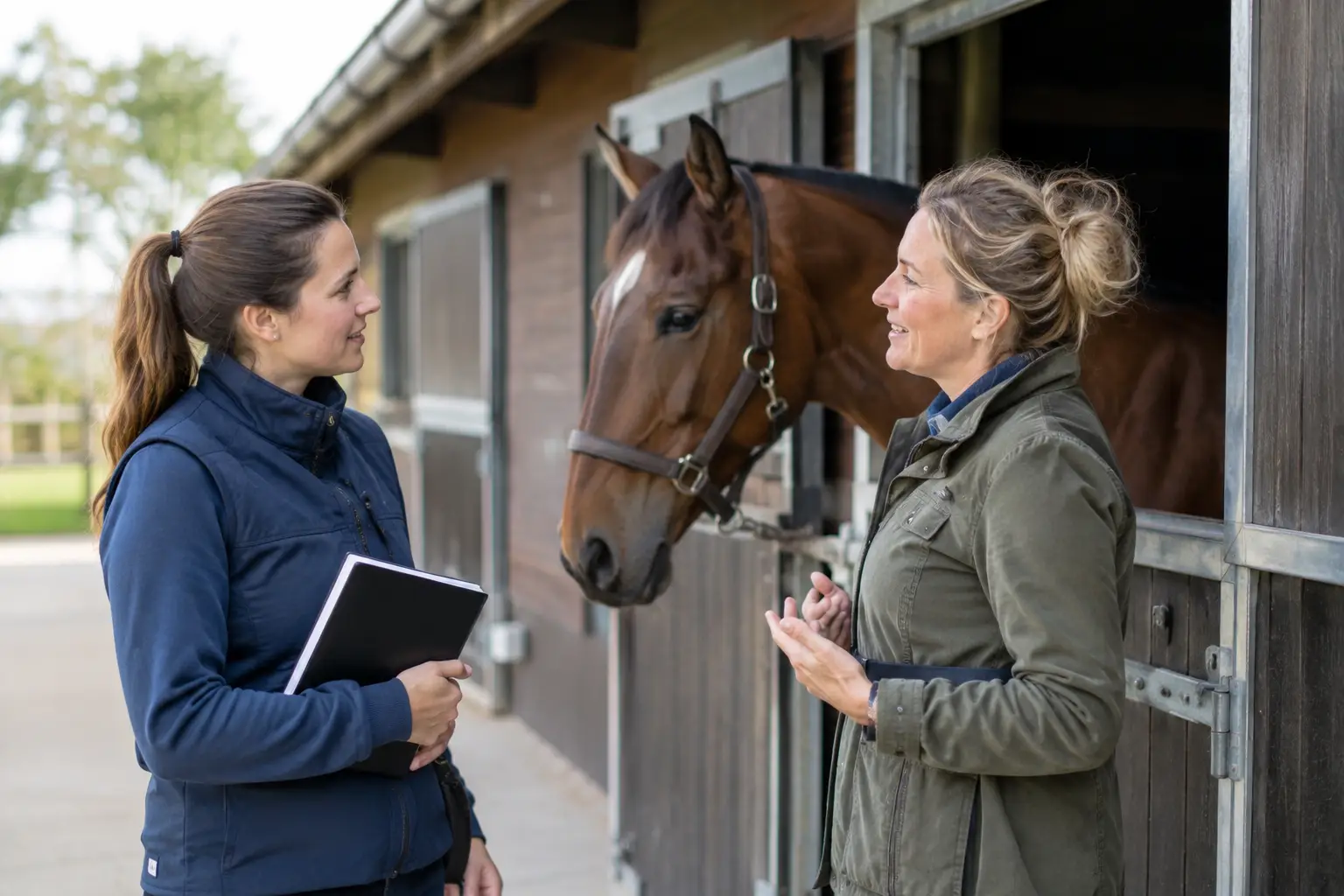
A boarding visit can feel reassuring when the aisle is tidy and the horses look content. Those details matter, but they are only the beginning. The best questions for boarding barns reveal what happens before breakfast, after the last lesson, during a storm, and when your horse needs more than a routine day. For horse owners and parents considering a program for a young rider, clear answers are a sign of thoughtful management.
A quality boarding decision is not simply about stall size or proximity to home. It is about whether the barn's care standards, communication style, training philosophy, and daily rhythm fit the needs of your horse and your family. Ask questions early, listen for specific answers, and give yourself permission to take your time.
Best Questions for Boarding Barns About Daily Care
Start with the routines that shape your horse's health every day. Ask how many times horses are fed, what forage is provided, whether hay is available consistently, and how the program handles individual supplements or medication. There is no single feeding schedule that suits every horse, but a well-managed barn should be able to explain its system clearly and discuss how it adjusts for an easy keeper, a hard keeper, a senior horse, or a horse in regular work.
Ask how often stalls are cleaned and what bedding is used. You may also want to know how turnout is organized: Are horses turned out individually, in compatible groups, or according to a customized plan? How long are they outside, and what happens during severe weather or extreme heat? In Texas, shade, clean water, fly management, and sensible turnout decisions deserve especially close attention.
It is equally useful to ask who notices changes in a horse's appetite, manure, movement, or behavior. Horses are skilled at hiding discomfort. Consistent, knowledgeable eyes on each horse can make a meaningful difference when something begins to look off.
Ask How Health and Emergencies Are Managed
A boarding barn should have practical protocols, not vague assurances. Ask which veterinarian and farrier the facility commonly works with, whether owners may use their preferred professionals, and how appointments are coordinated. Find out how the barn tracks vaccinations, Coggins tests, dental care, deworming plans, and farrier schedules.
Then ask the question owners sometimes avoid: What happens in an emergency? A good answer should cover who contacts the owner, what steps are taken if the owner cannot be reached, and whether the facility has an established relationship with an emergency veterinary practice. Ask whether staff are trained to recognize colic, lameness, choke, wounds, heat stress, and other urgent concerns.
Also ask about isolation procedures for a sick or newly arriving horse. A barn cannot eliminate every health risk, especially when horses travel or attend shows, but it should have a sensible plan for protecting the broader herd. Clear quarantine and biosecurity practices reflect respect for every horse on the property.
Look Beyond the Arena for Safety Standards
Riding amenities are exciting, particularly for riders pursuing jumping or dressage, but safety begins outside the ring. Ask about fencing, gate security, footing maintenance, lighting, fire procedures, and access to the property. If children will be spending time at the barn, ask how the facility manages supervision, barn rules, helmet expectations, and safe behavior around horses.
Pay attention during your visit. Are cross-ties, tack rooms, wash areas, and aisles organized? Are horses handled calmly? Is equipment stored safely rather than left in walkways? A polished appearance alone does not guarantee good care, but orderly spaces often support safer habits.
Ask about the arena footing and how it is maintained. The right footing depends on the discipline and the horse, yet every program should monitor it for consistency, drainage, dust, and wear. A horse training regularly on poor or neglected footing may face avoidable strain over time.
Understand the Training and Riding Environment
For many owners, boarding is connected to goals in the saddle. Ask whether training rides, private lessons, and full training programs are available, and how those services are tailored to a horse-and-rider pair. A serious program should be willing to discuss your goals honestly, whether they involve building confidence, improving flatwork, preparing for shows, or helping a young horse develop good basics.
Ask who is permitted to ride your horse and under what circumstances. If a trainer will school your horse, clarify how often, what is included, and how progress is communicated. If your child is learning, ask how lessons are structured and how instructors balance encouragement with clear safety expectations.
Trainer access matters, especially for owners who value individual guidance. In a lower-volume, personalized setting, riders can receive feedback that connects one lesson to the next instead of starting over each week. That attention is particularly valuable for new riders who are developing foundational habits and for experienced riders who need a specific plan.
Clarify Communication Before You Sign
Good boarding relationships depend on communication that is both warm and dependable. Ask who your primary point of contact will be and how the team communicates routine updates, concerns, schedule changes, or facility notices. Some owners prefer a text for an immediate issue; others appreciate regular training notes or scheduled check-ins. The right approach depends on your needs, but expectations should be clear from the start.
Review the boarding agreement carefully. Ask what is included in the monthly rate and what may create additional charges. Common areas to clarify include blanketing, holding for the farrier or veterinarian, medication administration, trailer parking, grooming, grain changes, training rides, and emergency care coordination.
You should also ask about notice requirements if you decide to leave. A transparent contract protects both the owner and the facility. If an answer feels unclear, ask for it in writing rather than assuming everyone shares the same understanding.
Questions to Ask Yourself After the Visit
The barn may meet every practical requirement and still not be the right fit. After your tour, consider four things: Did the staff speak about horses with patience and respect? Did you feel comfortable asking questions? Could you picture your horse settling into the daily routine? And, if your child will ride there, did the environment feel structured, positive, and appropriately supervised?
Trust your observations, but distinguish between a busy barn day and a true concern. Horses may be turned out, lessons may be underway, or staff may be managing a scheduled task when you arrive. What matters is whether the team can explain the routine, address concerns directly, and demonstrate consistent standards over time.
At Eden Hills Equine, personalized care begins with learning what each horse and rider needs to thrive. The best boarding relationship should give you more than a stall and a place to ride. It should give your horse attentive daily care and give you confidence that thoughtful people are invested in their well-being.