

Boarding Care Standards Checklist for Horse Owners
Use this boarding care standards checklist to assess daily horse care, safety, nutrition, turnout, communication, and training support with confidence now.
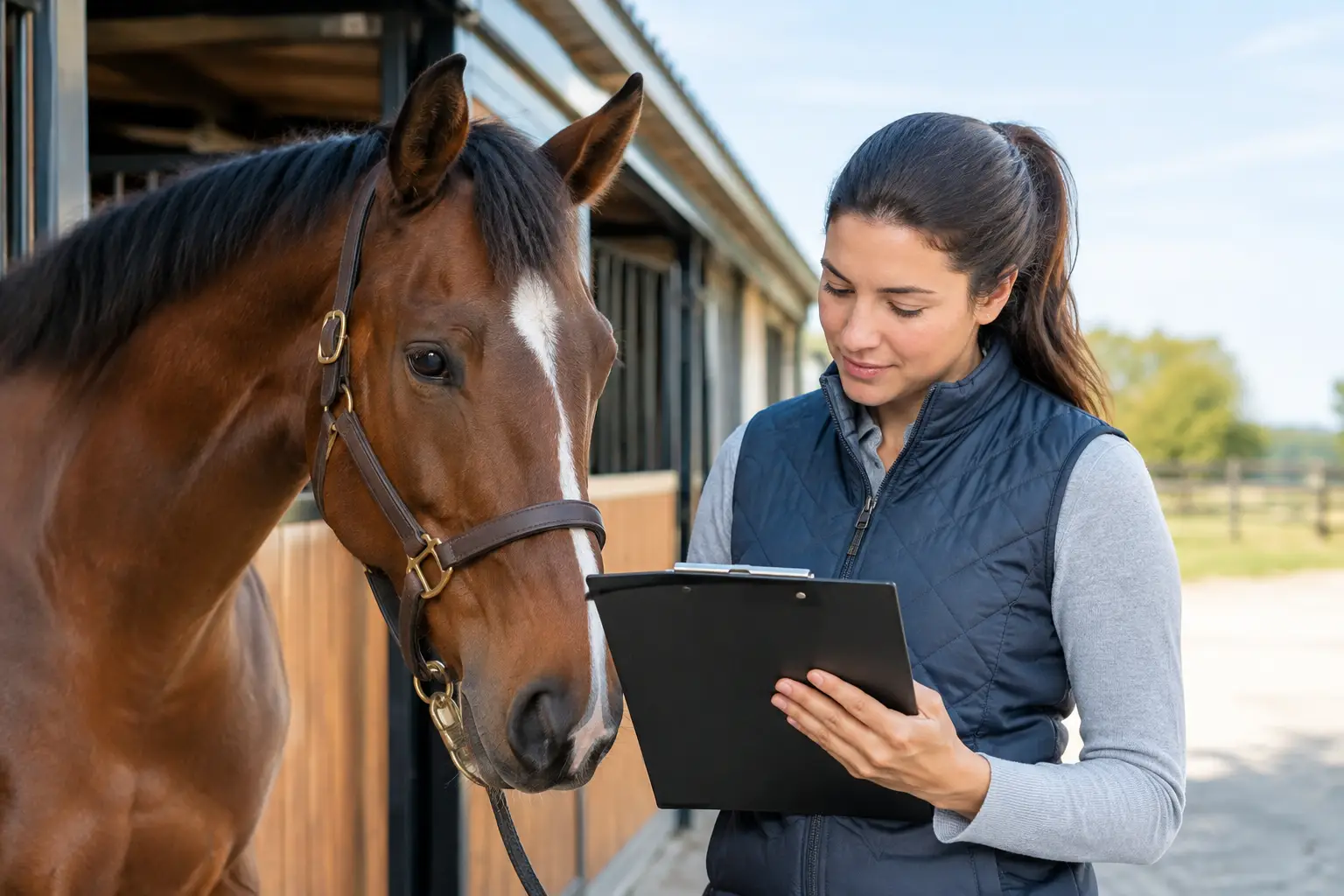
A boarding barn can look polished at first glance, yet the details that protect a horse’s health happen long before a rider arrives for a lesson. A thoughtful boarding care standards checklist helps owners look beyond tidy aisles and attractive arenas to understand how horses are fed, observed, handled, and supported every day.
For families choosing a first boarding program and experienced owners moving a performance horse, the goal is the same: find care that is consistent, safe, and appropriate for the individual horse. Premium boarding is not simply a list of amenities. It is a dependable management system, supported by knowledgeable people who notice changes and communicate clearly.
Start With Daily Horse Care Standards
The foundation of any boarding program is the daily routine. Ask how often horses are fed, what type of forage is provided, how water is checked, and who is responsible for each task. Horses benefit from predictability, but a good routine should also allow for individual needs such as a special diet, slow-feeding plan, medication, senior feed, or a veterinarian-directed supplement.
Forage should be a central part of the conversation. Horses are designed to eat small amounts frequently, so owners should understand how hay or pasture access is managed between grain meals. The right approach depends on the horse’s age, workload, body condition, medical needs, and turnout schedule. A young sport horse in regular training may need a different nutritional plan than an easy-keeping pony or a retired senior.
Fresh water deserves equal attention, especially in Central Texas heat. Ask how troughs and buckets are cleaned, how water is checked during hot weather, and what procedures are in place during freezes or severe weather. A horse can appear comfortable one day and become dehydrated quickly after a change in temperature, turnout, or appetite.
Daily care standards should also include regular visual checks. Staff should be attentive to changes in appetite, manure, movement, behavior, skin condition, and injury. No barn can prevent every scrape or insect bite, but timely observation and a clear response plan make a meaningful difference.
Boarding Care Standards Checklist: Safety and Facility
A safe facility supports horse well-being as well as rider confidence. When touring a property, look at the areas horses use rather than only the spaces clients see most often. Gates should latch securely, fencing should be maintained, and walkways should be reasonably clear of hazards. Stalls, paddocks, and turnout areas should be sized and managed with the horses using them in mind.
Use this checklist to guide your questions:
- Are stalls, runs, paddocks, and common areas cleaned and maintained on a consistent schedule?
- Is fencing visible, secure, and appropriate for the horses turned out within it?
- Are feed rooms, tack areas, and medications stored securely and kept separate from horse traffic when appropriate?
- Is there a clear plan for storms, extreme heat, fire, loose horses, injuries, and veterinary emergencies?
- Are arenas and riding spaces maintained for safe footing and organized use?
- Does the property have sensible traffic flow for horses, riders, trailers, and visitors?
Safe footing is especially relevant for horses in jumping, dressage, or regular schooling programs. Arena maintenance affects more than appearance. Consistent footing can help horses work more comfortably and gives riders a more reliable place to develop balance, rhythm, and confidence. Still, no footing is maintenance-free. Ask how often arenas are dragged, watered, inspected, and adjusted for seasonal conditions.
For parents, supervision is another practical consideration. A family-friendly barn should have clear expectations around helmets, mounting, leading horses, arena etiquette, and youth participation. Structure is not restrictive when it is well explained. It gives children room to learn responsibility in an environment designed to protect both people and horses.
Understand Turnout, Handling, and Routine
Turnout is not one-size-fits-all. Some horses thrive with longer pasture time and compatible companions, while others need individual turnout, restricted grass, controlled exercise, or a quieter schedule. The key question is whether the barn evaluates turnout decisions thoughtfully rather than applying the same plan to every horse.
Ask how horses are grouped, how introductions are handled, and whether staff monitor for herd conflict. Ask what happens if a horse comes in with a cut, loses a shoe, seems unusually quiet, or refuses a meal. Clear answers suggest that routines are established and that employees know when to escalate a concern.
Handling standards matter just as much. Horses should be brought in and turned out calmly, tied safely when needed, and handled by people who understand basic horse behavior. A boutique program has an advantage when staff and trainers know the horses as individuals. Familiarity makes it easier to recognize when a normally eager horse is not himself or when a new behavior deserves attention.
Evaluate Health Care Coordination
Boarding staff are not a substitute for a veterinarian, farrier, dentist, or qualified equine bodyworker. Their role is to support the owner’s professional care team, maintain records and routines as agreed, and communicate concerns promptly. That distinction is healthy and professional.
Before signing a boarding agreement, ask how appointments are scheduled and handled. Find out whether the facility can hold a horse for the farrier or veterinarian, how medication administration is documented, and what happens if an owner cannot be reached during an urgent situation. Review emergency contact information and make sure it stays current.
A strong health-care process commonly addresses vaccination requirements, deworming expectations, quarantine or isolation practices for new or ill horses, and notification procedures for contagious conditions. Exact policies may vary based on the property, season, and local disease concerns. What matters is that the policy is clear, consistently applied, and focused on protecting the whole herd.
Owners should also be realistic about the level of care they need. Full-care boarding often covers daily feed, forage, water, stall or turnout maintenance, and routine observation, but it may not include blanketing, fly protection, hand-walking, grooming, medication, rehabilitation care, or specialty feed. Ask for specifics in writing so there is no uncertainty later.
Look for Clear Communication and Accountability
Good boarding relationships are built on communication before there is a problem. You should know who to contact for routine questions, urgent concerns, billing, scheduling, and training decisions. A smaller, attentive program can be especially valuable for owners who appreciate direct access to the people involved in their horse’s daily management.
Notice how staff answer questions during a visit. Do they explain their systems clearly? Are policies presented as thoughtful horse-care standards rather than vague promises? Professional communication does not mean a barn must be formal at every moment. It means expectations, changes, and concerns are addressed respectfully and in a timely manner.
It is also reasonable to ask about attendance and access policies. Owners need appropriate opportunities to see their horses, while the facility needs rules that protect instruction time, quiet hours, safety, and the daily care schedule. The best arrangements respect both needs.
Consider Training Support as Part of Care
For a horse in work, boarding and training are closely connected. An inconsistent exercise schedule, unclear goals, or poor coordination between owner and trainer can affect progress just as much as a missed lesson. If your horse is enrolled in a training program, ask how rides are planned, how progress is communicated, and how the program adapts when the horse needs lighter work, more conditioning, or time to recover.
Riders should also consider whether the facility can support their goals. A child learning to steer and post needs patient, closely supervised instruction. An adult amateur preparing for dressage or jumping needs a plan that builds skills without rushing confidence. At Eden Hills Equine, individualized attention is central because meaningful progress comes from understanding the horse-and-rider pair, not from placing every rider in the same program.
Training support is not only about competitive results. It can include teaching owners how to recognize soundness concerns, understand tack fit, maintain safe ground manners, and make informed decisions about their horse’s routine. Those skills create more capable horse owners and more secure riders.
Read the Agreement Before You Commit
A boarding contract should make the practical details easy to understand. Review payment terms, notice requirements, included services, add-on charges, emergency authorization, liability language, vaccination requirements, and rules for outside professionals. If something is unclear, ask before moving in rather than assuming it will be handled informally.
Price should be evaluated in context. Lower monthly costs may come with fewer services, less individualized oversight, or responsibilities that fall back on the owner. Higher-end full care may include more attention and coordination, but owners should still confirm exactly what is included. The right choice is the arrangement that matches your horse’s needs, your schedule, and the level of support you expect.
A well-run boarding program gives owners more than a place to keep a horse. It provides the steady routines, watchful care, and respectful partnership that allow a horse to settle in and a rider to focus on what comes next.