

Full Care Boarding vs Pasture Boarding
Full care boarding vs pasture boarding comes down to time, budget, and your horse’s needs. Learn the trade-offs before you choose.
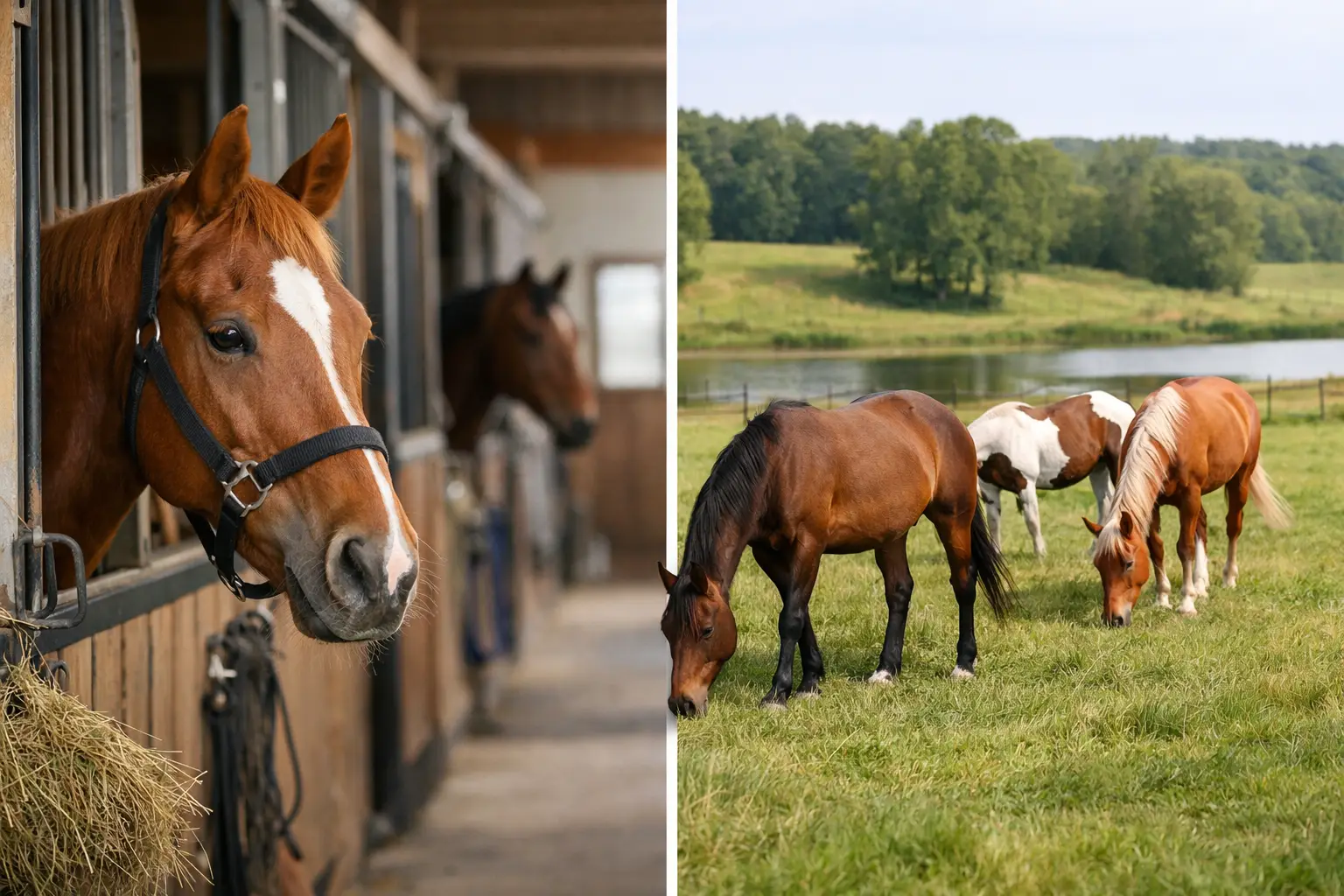
When owners compare full care boarding vs pasture boarding, the real question usually is not which option is cheaper. It is which setup helps the horse stay healthy, keeps the owner realistic about time, and supports the kind of riding or training they actually want to do. A lower monthly rate can look appealing at first, but the day-to-day demands behind that price matter just as much.
For some horses, pasture boarding is a sensible, comfortable fit. For others, especially horses in regular work, horses with special feeding needs, or owners with limited time, full care can make life much more consistent. The right choice depends on your schedule, your budget, your horse’s management needs, and how involved you want to be in daily care.
Full care boarding vs pasture boarding: what is the difference?
Full care boarding typically means your horse’s basic daily needs are handled for you. That often includes feeding, turnout management, stall cleaning if the horse is stalled, water checks, and general oversight. In many programs, there is also a higher level of day-to-day observation, which can make a meaningful difference when something feels off before it becomes a bigger issue.
Pasture boarding usually means the horse lives outside full-time or most of the time, often with shelter access and a group turnout arrangement. Care may still include essentials like hay, water, and fencing maintenance, but it usually comes with fewer hands-on services. Depending on the setup, owners may be more responsible for things like blanketing, fly care, holding for the farrier or veterinarian, feeding supplements, or checking the horse regularly.
That is why full care boarding vs pasture boarding is not simply a question of stall versus field. It is really a question of service level, supervision, and who is responsible for the details.
The biggest factor is your horse’s individual needs
Some horses thrive in a pasture-based lifestyle. Easy keepers, retired horses, and horses that do well in a herd can often be very happy with more turnout and a simpler routine. Movement, social interaction, and time outside can support both physical and mental well-being.
But pasture life is not automatically the best answer for every horse. Horses in regular training may need more controlled feeding, more predictable handling, and cleaner presentation for work. Horses with medical needs, injury history, hoof concerns, or body condition challenges often benefit from closer management. If your horse needs grain at specific times, individual supplements, monitored weight changes, or protection from weather extremes, the lower-maintenance model may stop being low-maintenance very quickly.
This is especially true in Texas, where heat, insects, sudden weather swings, and seasonal grass changes can affect comfort and condition. A horse that does well outside in one season may need more support in another.
What full care often gives owners that they do not see on paper
The value of full care is not just that someone feeds your horse. It is that your horse has a more structured system around daily life. That consistency matters.
When horses are seen up close every day, changes in appetite, hydration, soundness, manure, attitude, or minor injuries are easier to catch early. That kind of oversight can save owners stress, time, and sometimes significant veterinary expense. It also helps horses in work stay on a more reliable program.
For busy families, adult amateurs, and owners balancing careers, children, or school schedules, full care also removes the pressure of feeling like horse ownership is only manageable if you can be at the barn constantly. You can still be deeply involved without carrying every routine task yourself.
There is also a quality-of-life factor that many owners underestimate. If every ride begins with catching a muddy horse in a large pasture, managing feed details, or handling several chores before you can tack up, riding can start to feel rushed. A more supported care model often makes ownership more enjoyable and more sustainable over time.
Why pasture boarding appeals to many owners
Pasture boarding has real advantages when it is well matched to the horse and owner. Horses generally have more freedom to move, which can support joint health, digestion, and mental relaxation. Many owners also appreciate the more natural herd lifestyle and the lower monthly cost.
For owners who enjoy being hands-on, pasture boarding can feel rewarding. If you want to manage much of your horse’s day yourself and you have a schedule that allows for regular visits, it may fit your priorities well. Some horses stay quieter and happier with constant turnout than they do with more stalled time.
The trade-off is that a lower price usually reflects fewer included services. That is not a problem if you genuinely have the time, knowledge, and consistency to fill those gaps. It becomes a problem when the owner expects a bargain but still needs full-service support.
The hidden costs in full care boarding vs pasture boarding
Monthly board is only one part of the equation. Owners sometimes compare rates without comparing what they will spend in time, gas, scheduling, and added services.
With pasture boarding, extra costs can show up in small ways. You may need to pay additional fees for blanketing, holding your horse for appointments, administering supplements, or bringing your horse in during bad weather. If your horse loses condition, gets minor scrapes from herd dynamics, or is hard to catch when you are short on time, the savings can feel less clear.
With full care, the bill is higher up front, but more is generally built into the program. That can make budgeting simpler and outcomes more predictable. For many owners, especially those with performance goals or limited time, predictability is worth paying for.
Boarding choice affects your riding goals
This is the part many new owners miss. Your boarding setup shapes your riding experience.
If your goal is occasional pleasure riding and your horse is easy to manage, pasture boarding may be perfectly appropriate. But if you want regular lessons, measurable progress, or a horse that is kept ready for consistent work, a more managed environment often supports that better.
A horse in a full-care setting may be easier to keep on a steady feeding routine, body condition plan, and training schedule. That matters for young riders building confidence, adult riders trying to ride efficiently around a full calendar, and owners who want their horse presented in a way that supports dressage or jumping work.
At a boutique program such as Eden Hills Equine, that individualized attention is part of the point. Horse care and rider development work best when they support each other, not when one is constantly compensating for the other.
Questions to ask yourself before choosing
Before you decide, be honest about your real life rather than your ideal life. How many days each week can you reliably come out? Are you comfortable managing changes in weather, feeding, and routine care? Does your horse need close monitoring, or is he straightforward and hardy?
It also helps to think about your stage of ownership. First-time horse owners often assume they will enjoy doing every detail themselves, then discover that the learning curve is steeper than expected. Experienced owners sometimes choose fuller care not because they know less, but because they know exactly how much consistency matters.
If your child is the rider but the adults are the ones coordinating the schedule, ask what level of support keeps the experience positive for the whole family. Horse ownership should build responsibility, but it should not depend on constant scrambling.
There is no universally better option
In the full care boarding vs pasture boarding decision, one is not morally better or more serious than the other. The better choice is the one that suits the horse in front of you and the owner you really are.
Pasture boarding can be an excellent fit for the right horse-owner combination. Full care can be the smarter, more efficient choice for owners who value close oversight, convenience, training consistency, and a higher level of daily management. Problems usually happen when people choose based only on price and not on the practical demands that come with each model.
If you are unsure, start by listing your horse’s non-negotiables, your schedule, and your riding goals. From there, the right answer usually becomes much clearer. The best boarding choice is the one that gives your horse steady care and gives you the support to enjoy ownership with confidence.