

10 Best Rider Confidence Building Exercises to Try
Build calm, capable riding habits with the best rider confidence building exercises for balance, control, trust, and thoughtful progress in the saddle.
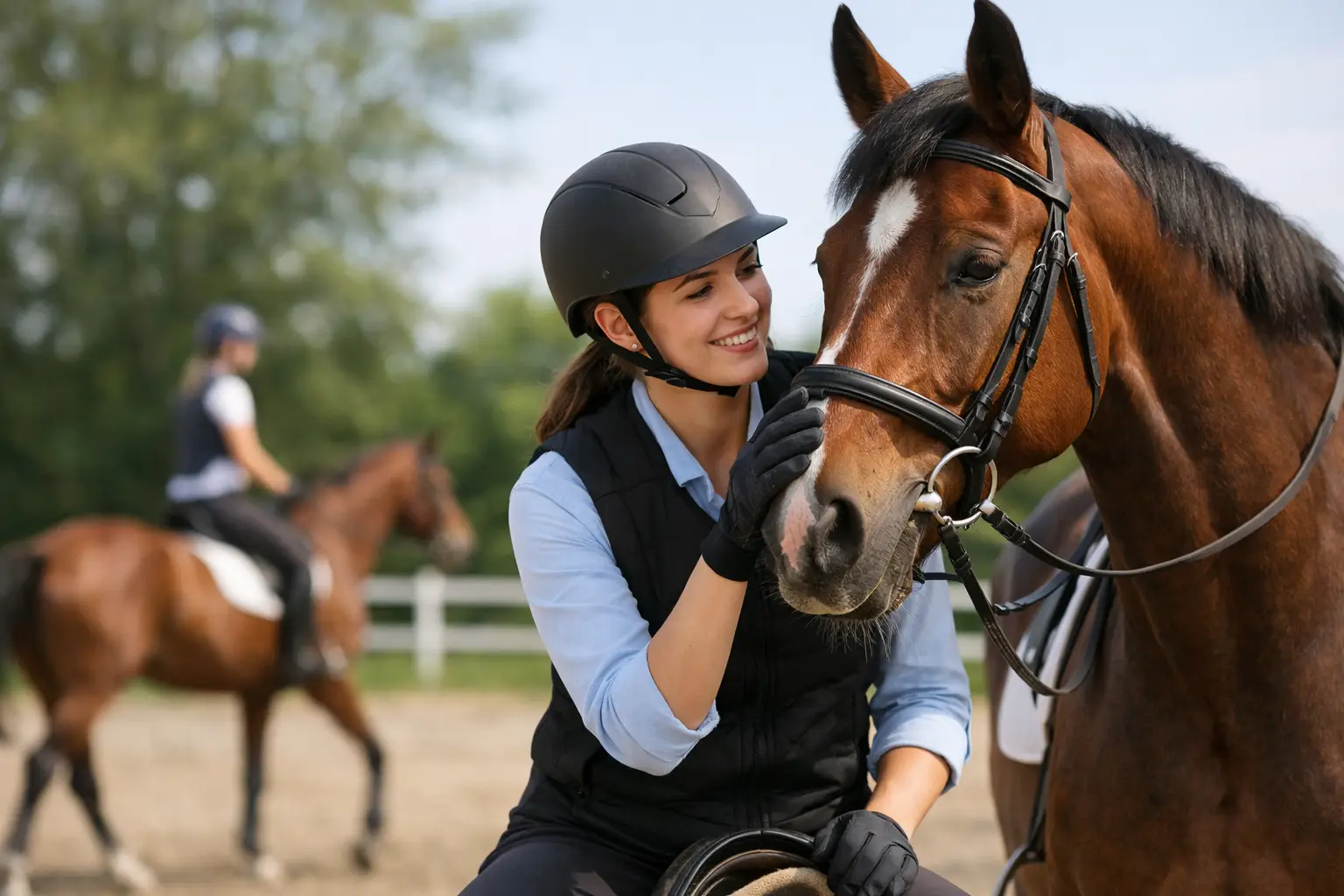
A rider who feels nervous before a transition, an unfamiliar pattern, or a small fence does not need to be pushed through the moment. They need a clear, repeatable way to feel organized in the saddle. The best rider confidence building exercises create that structure by improving balance, decision-making, communication, and trust between horse and rider.
Confidence is not the absence of nerves. It is the ability to recognize a challenge, use dependable skills, and make good choices even when something feels new. For young riders, adult beginners, and experienced riders returning after time away, progress is strongest when exercises are matched to the individual horse-and-rider pair.
Start With a Safe Definition of Progress
It can be tempting to measure confidence by how quickly a rider trots independently, canters, rides without holding the mane, or jumps a higher course. Those milestones can be meaningful, but they are not the whole picture. A rider may be ready for a new skill one day and benefit from consolidating a familiar one the next.
At a well-managed lesson program, confidence grows through consistent routines. Riders learn how to approach a horse safely, check equipment, mount with intention, and prepare their body before asking anything of the horse. This foundation matters because a rider who understands what is happening is less likely to feel overwhelmed when a lesson becomes more challenging.
The exercises below should always be adjusted for the rider's experience, the horse's training, and the setting. A quiet school horse and an enclosed arena create the right environment for learning, but direct instruction is still essential, particularly for children and riders developing independent skills.
Best Rider Confidence Building Exercises for Control
1. Practice the neutral position at the halt
Before working on speed or steering, practice stillness. At the halt, ask the rider to notice whether both stirrups feel even, whether their shoulders are balanced over their hips, and whether their hands can rest quietly above the horse's withers. Take a full breath in, then soften the exhale without collapsing through the middle.
This sounds simple, but it gives riders a reliable reset button. When tension appears later in the ride, they can return to the same physical checkpoints: eyes up, breathing steady, heels weighted, hands quiet. For a nervous rider, knowing exactly what to do with their body can replace uncertainty with purpose.
2. Ride purposeful walk figures
The walk is where riders can develop control without feeling rushed. Begin with large circles, changes of rein, and shallow loops. The goal is not to make tiny, perfect shapes. It is to help the rider look ahead, plan the track, and use quiet aids early enough that the horse has time to respond.
A useful progression is to ride a 20-meter circle, leave the circle on a straight line, then return to it at the same point. Riders quickly learn that accuracy comes from preparation rather than pulling at the last second. For children especially, this turns steering into a clear task instead of a vague instruction to just turn.
3. Use transitions as a conversation, not a test
Walk-halt-walk transitions teach riders that they can influence pace without becoming tense. Ask for a deliberate walk, prepare for the halt with an exhale and a tall upper body, then soften immediately when the horse stops. After a moment of quiet, ask the horse to walk forward again with a supportive leg aid.
The quality of the transition matters more than the number completed. If a rider braces, grips, or pulls, slow down and rebuild the exercise. A responsive transition teaches an important lesson: calm, correct aids are more effective than bigger aids. That knowledge carries into trot, canter, dressage work, and jumping.
4. Post to a counted rhythm
Many riders lose confidence at the trot because the gait feels quicker and less predictable than the walk. Counting the posting rhythm out loud gives the rider something constructive to focus on. Count one, two, one, two, while keeping the eyes ahead and the hands following the horse's motion.
Once the rhythm is established, add a simple task such as changing direction across the diagonal. The rider learns to maintain balance while following a plan. If counting aloud feels distracting, a trainer can provide the rhythm from the center of the arena until the rider is ready to take ownership of it.
5. Work without stirrups in brief, supported intervals
Short no-stirrup work can improve security, but it should never be treated as a punishment or a test of toughness. Begin at the halt or walk, with the rider holding a neck strap or a small amount of mane if needed. Focus on letting the leg hang long rather than forcing the heel down.
A few well-supported minutes can help riders feel their seat and discover that balance comes from alignment, not from gripping with the knee. For some riders, especially those rebuilding confidence after a fall, this exercise is best introduced later. It depends on their physical comfort and their trust in the horse. A thoughtful instructor will know when it supports progress and when another exercise is the better choice.
Exercises That Build Trust Around New Challenges
6. Create a predictable canter routine
Canter confidence is often built before the horse takes the first stride. Establish a routine: ride a balanced trot, turn onto a large circle, look where the rider wants to go, sit tall for the aid, and then return to trot after a few successful strides. Repeating the same sequence makes the gait feel less like a surprise.
The first goal may simply be a calm, organized departure and a relaxed return to trot. There is no benefit to cantering multiple laps if the rider is holding their breath or losing position. A short success, repeated over several lessons, builds far more confidence than pushing for endurance too soon.
7. Ride ground poles with a clear approach
Ground poles are valuable for riders in both jumping and dressage because they provide an obvious line and encourage the rider to look forward. At the walk and trot, ride a straight approach, keep an even rhythm, and allow the horse to step through without changing the rider's posture at the last moment.
As confidence develops, poles can be arranged on a curve or used to introduce simple adjustability between lines. The rider learns to maintain rhythm instead of chasing a distance. For a new jumper, ground poles are also a sensible bridge between flatwork and small crossrails.
8. Rehearse the course on foot first
When riders are learning patterns or preparing for a small course, walking the plan before mounting makes a real difference. Have them identify the start point, each turn, the places where they need to look up, and the line they will ride after an obstacle. This gives the rider a map before they are responsible for guiding a horse through it.
For younger riders, ask them to explain the pattern back in their own words. That small step reveals whether they understand the task and helps them feel included in their own development. A rider who knows the plan can devote more attention to pace, position, and the horse beneath them.
9. Practice an intentional reset after a mistake
Every rider makes mistakes. They may miss a turn, lose a stirrup, ask for the wrong lead, or approach a pole without enough rhythm. The confidence-building skill is not avoiding every error. It is learning how to reset safely.
After a mistake, bring the horse back to walk if appropriate, take a breath, identify one adjustment, and try a simpler version of the exercise. Avoid lengthy criticism or repeated attempts made in frustration. Riders gain resilience when they see that a mistake provides information, not proof that they cannot do the task.
Build Confidence Beyond the Saddle
10. Give riders meaningful horsemanship responsibilities
Riding confidence is closely connected to horse knowledge. Grooming, picking hooves with supervision, learning basic tack parts, and observing a horse's body language all help riders become more capable around horses. A child who understands why a horse needs personal space, a calm approach, and consistent handling is more likely to make safe choices under saddle.
These responsibilities should be age-appropriate and closely supervised, but they are not extras. They help riders develop empathy and practical judgment. At Eden Hills Equine, individualized instruction can connect these horsemanship skills directly to each rider's mounted goals, creating progress that feels both personal and measurable.
Keep the Challenge Productive
The right confidence exercise should be challenging enough to require attention but manageable enough to produce success. If a rider is shutting down, holding their breath, or becoming less balanced with each repetition, the exercise needs to be simplified. If it feels effortless every time, it may be time for a small, well-supported next step.
Parents can help by praising specific behaviors rather than only outcomes. Notice that the rider remembered to look ahead, regained their rhythm, used a quiet halt, or chose to try again after a difficult moment. Those are the habits that create lasting confidence.
A good lesson does not always end with a dramatic milestone. Sometimes the most valuable progress is a rider leaving the arena knowing they have a plan, a trusted support system, and one skill they can practice with greater calm next time.