

Do Beginners Jump? A Safe Start to Riding
Do beginners jump in riding lessons? Learn how thoughtful instruction, strong foundations, and the right horse create a safe, confident start in time.
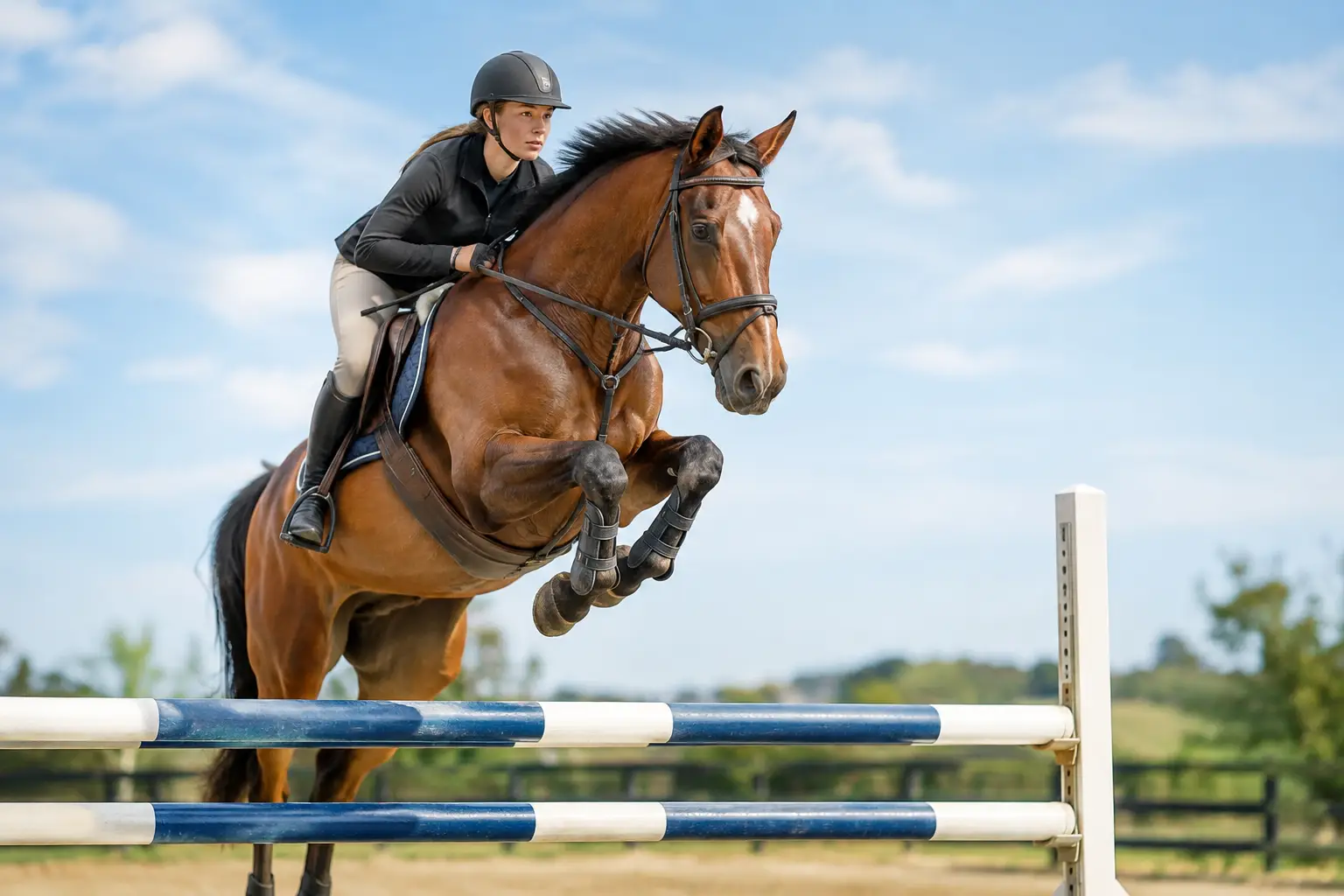
A rider’s first trip over a small jump is often less dramatic than families imagine. It may begin with walking over a single ground pole, then trotting a line of poles, then stepping over a very small crossrail on a quiet, experienced horse. So, do beginners jump? Often, yes - but only after they have developed the balance, communication, and confidence needed to make that first experience positive.
Jumping is not a starting point on day one, and it should never be treated as a shortcut to making lessons exciting. A thoughtful program introduces it as one part of a broader horsemanship education. When riders understand how to steer, stop, balance, and care for the horse beneath them, they are far more prepared to enjoy jumping safely.
Do Beginners Jump in Their First Lessons?
Usually, no. Early lessons should help a new rider become comfortable around horses and learn the habits that support safety in every discipline. That includes approaching and leading a horse correctly, understanding personal space, mounting with care, holding the reins, finding a balanced position, and practicing clear, quiet aids.
At first, progress may look simple from the rail. A rider might be learning to look where they are going, keep their heels down, guide the horse through turns, and maintain an even rhythm at the walk and trot. These skills are not separate from jumping. They are the skills that allow a rider to stay with the horse when its stride changes before, over, and after an obstacle.
For children especially, the pace should reflect more than enthusiasm. A young rider may be eager to jump because it looks fun, while still needing time to build body awareness and consistency. The goal is not to hold riders back. It is to give them a foundation that lets confidence grow for the right reasons.
What a Beginner Needs Before Jumping
There is no universal number of lessons that tells an instructor a rider is ready. Some riders develop an independent balance quickly; others need more repetition before they feel steady at the trot. The horse, the rider’s age, previous athletic experience, and the consistency of their lessons all affect the timeline.
Before introducing a jump, an instructor generally wants to see that a rider can maintain a secure position while the horse is moving forward. The rider should be able to steer a simple course, make smooth transitions, stop promptly, and recover calmly if something does not go exactly as planned. They also need to understand why rhythm matters. A horse that approaches a small obstacle in a steady, organized pace is easier for a new rider to follow than one that rushes or loses impulsion.
The rider does not need to be perfect. In fact, waiting for perfection can make learning feel overly formal. But they should have enough control and balance that the introduction feels manageable rather than startling.
The right horse matters as much as the right rider
A quiet, educated lesson horse is one of the most valuable parts of a beginner’s jumping experience. The right horse understands its job, maintains a dependable rhythm, and gives a rider time to learn without overreacting to small mistakes.
That does not mean the horse does all the work while the rider simply holds on. A good lesson horse helps make correct riding easier to understand. When a rider gives a clear aid, the horse responds. When the rider loses balance slightly, the horse remains forgiving enough for the instructor to teach through the moment.
Horse-and-rider matching should be individualized. A confident adult beginner may be ready for a different type of horse than a cautious child. At Eden Hills Equine, private instruction allows the trainer to make those decisions with focused attention on the rider’s current skills, goals, and comfort level.
How Instructors Introduce Jumps Safely
The best first jumps are often not perceived as jumps at all. Ground poles teach riders to keep their eyes up, maintain a straight line, and feel the horse adjust its feet. Cavaletti, which are raised poles, add a small change in effort while allowing the horse and rider to stay in a natural rhythm.
From there, a tiny crossrail may be introduced. Crossrails encourage the horse to jump the center of the obstacle and offer a clear visual line for the rider. The height is intentionally modest because the lesson is about position, pace, and confidence - not height.
An instructor may have the rider approach in the trot, allowing the horse to take a natural, comfortable step over the fence. The rider practices a light forward position, keeping weight in the heels and hands soft enough to follow the horse’s neck. Afterward, the rider continues straight ahead, regains rhythm, and receives specific feedback before trying again.
Each element has a purpose. The approach teaches organization. The moment over the jump teaches balance and following hands. The landing teaches recovery and direction. When these pieces are taught gradually, jumping becomes less of a leap into the unknown and more of a skill riders can understand.
Why Rushing the Process Can Create Problems
A child who is placed over fences before developing balance may grip with their legs, pull on the reins, or tip forward in an effort to feel secure. None of these reactions make a rider bad. They are normal responses to feeling unprepared. But they can confuse the horse and make future jumping lessons more difficult.
Rushing can also create a misleading idea of progress. Going over a taller fence is not necessarily advancement if the rider cannot control the approach, maintain position, or ride away in balance. True progress looks quieter: a straighter line, a calmer horse, softer hands, a rider who can explain what happened and make an adjustment on the next attempt.
For families, patience is a meaningful investment. Riders who learn correctly often develop lasting confidence, rather than needing to unlearn fearful habits later. They also gain a deeper respect for horses as athletic partners, not amusement rides.
How Parents Can Support a New Jumper
Parents do not need to become riding experts to support their child well. The most helpful approach is to celebrate the process, not just the moment of clearing an obstacle. Ask what your child practiced, what felt easier, and what they want to improve next time. Those questions reinforce learning and help riders recognize their own progress.
It also helps to let the instructor set the pace. A child may come home thrilled about another rider’s jumping lesson or ask when they can move to bigger fences. Those feelings are natural. A professional instructor can explain what the rider is building toward and choose exercises that match their readiness.
Proper attire supports safety, too. An approved riding helmet, heeled riding boots, comfortable fitted clothing, and appropriate supervision are basic expectations. As riders advance, their instructor can recommend equipment that suits their discipline and level of participation.
Jumping Is Part of a Bigger Education
A rider who learns to jump well is also learning observation, discipline, empathy, and responsibility. They begin to notice when a horse is relaxed or distracted, when a stride feels balanced, and when a small adjustment in their own body changes the horse’s response. Those lessons carry beyond the arena.
Not every beginner will choose jumping as a long-term focus. Some discover a love for dressage, trail riding, horse care, or simply the quiet connection built in regular lessons. That is perfectly appropriate. Early exposure should help riders explore their interests without pressure to fit one path.
The most rewarding first jump is not the tallest one or the fastest one. It is the one a rider approaches with preparation, rides with quiet confidence, and finishes eager to learn a little more next time.