

Dressage Lessons vs Hunter Jumper: Which Is Right?
Considering dressage lessons vs hunter jumper? Learn how each discipline builds confidence, skills, and horsemanship for Texas riders at every stage.
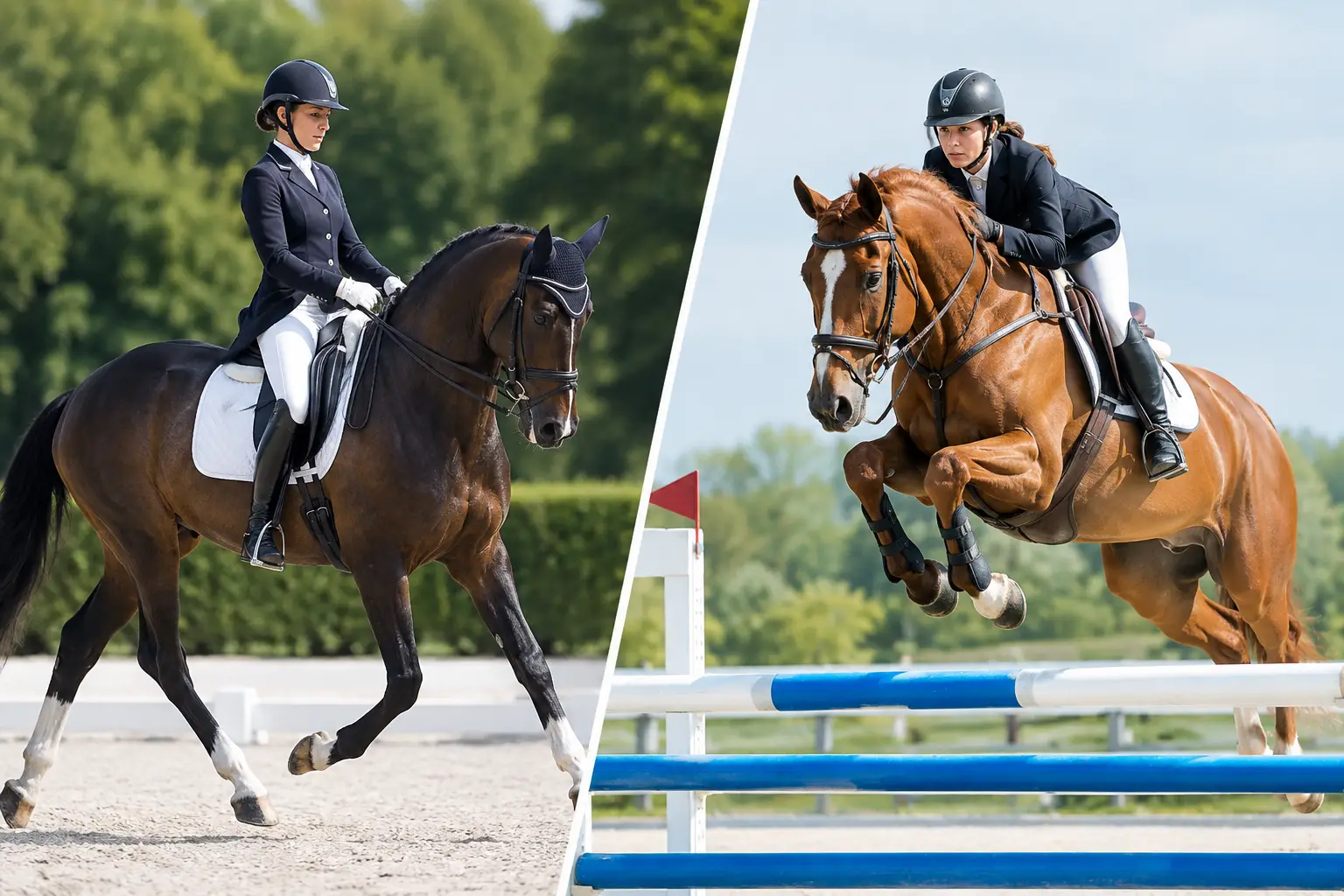
A rider can look confident over a small course and still struggle to keep a horse straight through a corner. Another may ride a beautiful circle at the trot yet feel unsure when the first jump appears. That is why the choice between dressage lessons vs hunter jumper is not simply about whether someone prefers flatwork or fences. It is about how a rider learns, what motivates them, and which skills will help them become a thoughtful, capable horseperson.
For children beginning their riding journey, adult amateurs returning to the saddle, and experienced riders refining their goals, both disciplines offer meaningful benefits. The best choice depends on the rider, the horse, and the type of progress the pair hopes to make.
Dressage Lessons vs Hunter Jumper: The Core Difference
Dressage is the study of communication, balance, rhythm, and correct movement. Riders work on how the horse responds to the aids: the quiet, precise signals given through the seat, legs, hands, and body position. A dressage lesson may focus on a steady tempo, accurate circles, transitions between gaits, straightness, bend, or helping a horse carry more weight behind.
The work can look subtle from the ground, but it is highly athletic. Horse and rider develop coordination together, one careful repetition at a time. Dressage gives riders a detailed understanding of how their position affects the horse, which makes it valuable at every level, from a first independent trot to advanced collection and lateral work.
Hunter jumper riding includes related but distinct disciplines. Hunter riders are judged largely on smoothness, rhythm, form, and the overall picture over a course. Jumper riders are focused more directly on completing a course accurately and efficiently, with faults assigned for rails, refusals, or exceeding the time allowed. Both require riders to navigate fences with balance, control, and confidence.
In a hunter jumper lesson, riders learn to find a consistent pace to a fence, maintain a straight approach, establish an effective jumping position, and ride a planned track. As riders advance, they work on combinations, related distances, tighter turns, and more technical courses.
What Dressage Teaches a Rider First
Dressage lessons are often an excellent fit for riders who enjoy precision, partnership, and measurable refinement. They are not just for riders who plan to compete in a dressage arena. The foundations of dressage support nearly every English riding goal.
A young rider may begin by learning to steer with purpose, keep their eyes up, and create a dependable trot rhythm. An adult rider may focus on rebuilding balance and confidence without feeling rushed toward fences. A more experienced rider may learn how to improve a horse's responsiveness, engagement, and suppleness.
The greatest value of dressage is that it teaches riders to notice details. Is the horse drifting through the shoulder? Is the rider leaning into a turn? Did the transition happen from a clear aid or from repeated kicking? These observations create better communication and safer riding habits.
Dressage is also particularly helpful for horses that need more balance, strength, or confidence. A horse that moves straight, responds promptly, and carries itself in rhythm is better prepared for a wide range of work, including trail riding, jumping, and competition.
Who Often Thrives in Dressage Lessons?
Dressage can be a strong choice for riders who enjoy setting small goals and seeing steady improvement. It suits detail-oriented riders, but it is also beneficial for those who want a calmer, more structured path into riding. For families, it can provide a clear framework for learning responsibility and patience alongside riding skill.
That does not mean dressage is quiet or easy. It asks riders to be present, consistent, and willing to work through the basics. For the rider who takes pride in a balanced transition or a well-ridden circle, that process is deeply rewarding.
What Hunter Jumper Lessons Teach a Rider
Hunter jumper lessons appeal to riders who light up at the sight of a jump course. The discipline blends technical riding with forward energy and a real sense of accomplishment. Clearing a fence is exciting, but good instruction makes sure that excitement is built on preparation rather than pressure.
Before riders jump larger fences or more complicated courses, they need to establish a secure position on the flat. They learn to maintain rhythm, ride accurate lines, use a light and supportive contact, and stay centered when the horse changes pace. Ground poles, cavaletti, and small crossrails give riders the opportunity to practice those skills in manageable steps.
A thoughtful jumping program also teaches riders what happens between the jumps. The approach, landing, turn, and preparation for the next fence matter as much as the moment the horse leaves the ground. When riders understand that, courses become less intimidating and more enjoyable.
Hunter jumper riding can build decisiveness and confidence. It asks riders to make a plan, commit to a line, and continue riding even when a distance does not look exactly as expected. Those skills develop gradually, especially when each lesson is matched to the rider's current ability and the horse's needs.
Who Often Thrives in Hunter Jumper Lessons?
Riders who enjoy variety, movement, and clear milestones often love hunter jumper work. Children and teens may be motivated by progressing from poles to crossrails, then to courses and show goals. Adult riders may appreciate the physical challenge and the satisfaction of riding a smooth, well-planned course.
Still, a rider does not need to be fearless to begin. In fact, the right program helps riders develop confidence through correct fundamentals, suitable horses, and carefully chosen exercises. A rider who is nervous about jumping may benefit from spending additional time on flatwork before fences become part of the lesson plan.
The Best Riders Build Both Sets of Skills
The comparison of dressage lessons vs hunter jumper can make the two disciplines sound separate, but they support each other beautifully. A jumping horse needs rhythm, straightness, balance, and responsive transitions. Those are dressage fundamentals. A dressage rider can benefit from the forward intent, adaptability, and confidence that small jumping exercises can encourage.
For this reason, many riders benefit from a program that includes both flatwork and jumping, even if they eventually specialize. A hunter jumper rider may spend an entire lesson improving canter quality before jumping only a few fences. That is productive training, not a missed opportunity. Better flatwork often leads directly to safer, more consistent jumping.
Likewise, dressage riders may use poles or small obstacles to improve a horse's attention, coordination, and willingness to go forward. The horse's individual fitness, temperament, and training level should always guide the work.
Choosing the Right Starting Point
A rider's first discipline does not have to be a permanent decision. Especially for newer riders, the most important priority is developing an independent seat, safe habits, horse awareness, and respect for the learning process. Those essentials come before a specific show ring goal.
Start with dressage-focused instruction when the rider needs more balance, wants to understand the finer points of communication, or prefers a methodical approach to progress. Start with hunter jumper instruction when the rider is drawn to fences and is ready to build the flatwork and position required to jump safely.
For parents, it is worth looking beyond the immediate question of whether a child wants to jump. A quality lesson program should teach grooming, tack awareness, arena etiquette, and how to read a horse's behavior. Riders who understand why a horse needs a balanced warm-up or a quiet rider are more likely to develop lasting confidence.
Private instruction can be especially valuable during this decision-making stage. A trainer can assess the rider's position, confidence level, coordination, and goals without asking them to keep pace with a group. The lesson can then evolve as the rider does. At Eden Hills Equine, that individualized attention helps riders build a foundation that supports both their ambitions and their horse's well-being.
Let Progress Lead the Decision
The right discipline should challenge a rider while leaving them eager to return to the barn. Some riders find satisfaction in refining a transition until it feels effortless. Others feel most alive riding a smooth line to a fence. Many discover that their strongest riding comes from learning both.
Choose the path that fits the rider in front of you, then give that path enough patient, well-supported training to become a genuine skill.