

How to Find Dressage Training Near Me
Searching for dressage training near me? Learn what to look for in a program, trainer, and facility to support safe, steady riding progress.
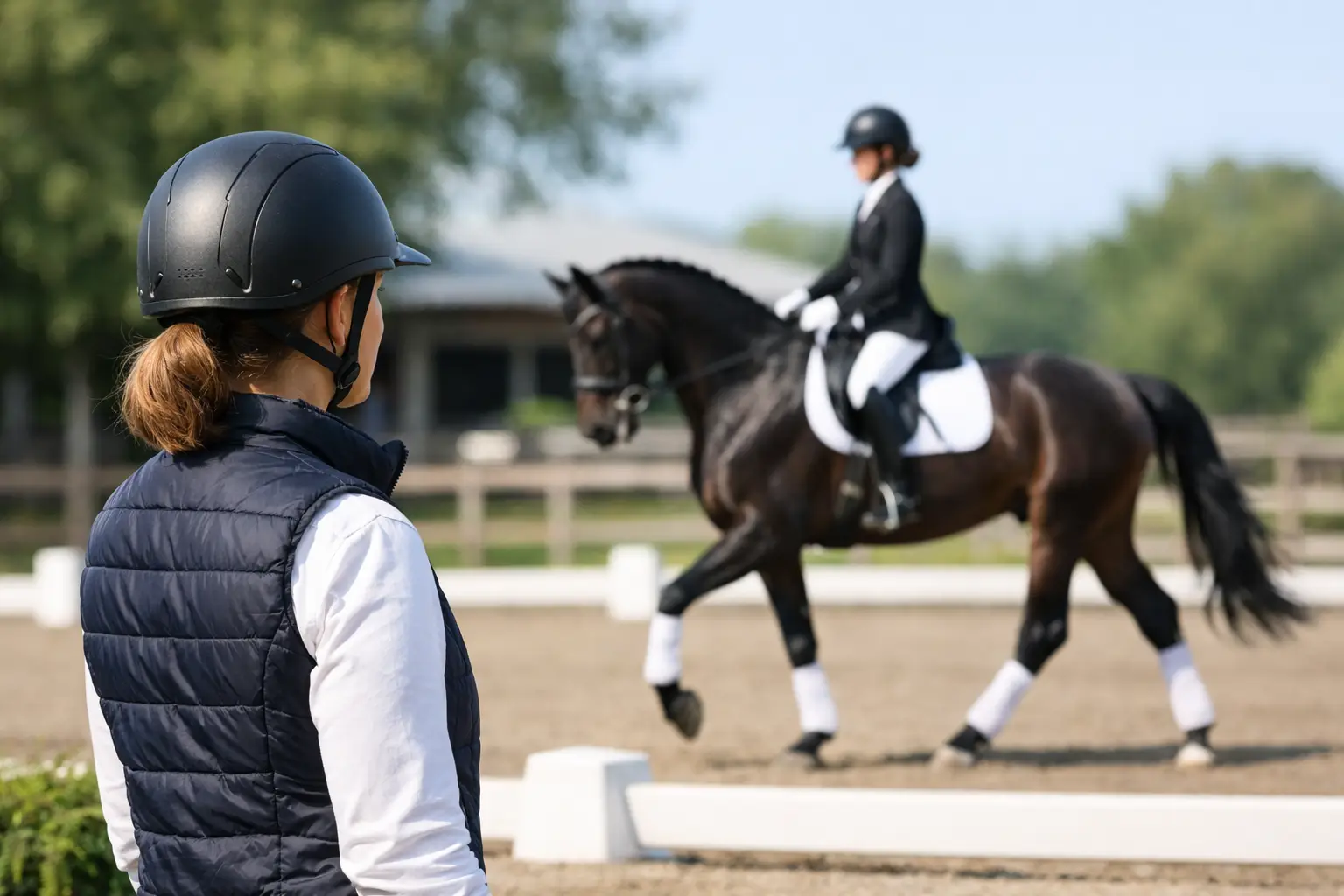
Typing dressage training near me into a search bar usually happens at a turning point. Sometimes it is a parent looking for a structured next step after basic riding lessons. Sometimes it is an adult rider ready for more precision, better communication, and a stronger foundation. And sometimes it is a horse owner who knows their horse needs educated, consistent work rather than occasional rides. Whatever brings you there, the real question is not just who teaches dressage nearby. It is which program will help horse and rider improve in a safe, thoughtful, measurable way.
Dressage has a reputation for being highly technical, and that part is true. But good dressage training should also feel clear, calm, and progressive. It should build balance, confidence, straightness, responsiveness, and better horsemanship overall. If a program feels intimidating, rushed, or vague about how progress happens, it is worth slowing down and asking more questions.
What dressage training near me should actually include
At its best, dressage training is not just about memorizing a test or riding with shorter reins. It is the steady development of a horse that moves correctly and a rider who understands how to influence that movement with accuracy and feel. That means the training program should address the whole picture - rider position, horse biomechanics, rhythm, connection, transitions, and consistency.
For beginners, that may look like learning how to sit evenly, keep a steady contact, and ride straight lines with purpose. For more experienced riders, it may involve refining lateral work, developing better adjustability, or improving the quality of transitions and collection. For horses in training, the focus may be relaxation, suppleness, strength, and a more correct way of going.
A quality dressage program should also respect the fact that progress is rarely linear. Some weeks feel smooth. Other weeks reveal a weakness that needs patient attention. That is normal. The right trainer does not hide that reality. They use it to build a stronger foundation.
The value of private instruction in dressage
Dressage is detail-oriented, which is why private lessons often make a meaningful difference. In a one-on-one setting, the instructor can watch the rider’s alignment, the horse’s way of moving, and the interaction between them moment by moment. Small corrections matter. A rider’s shoulder position, timing of the outside rein, or consistency through a turn can change the entire quality of the work.
For children and teens, private lessons create space for confidence to grow without the distraction of keeping up with a group. For adult amateurs, they offer a more efficient path to understanding the why behind each exercise. For horse owners, private coaching can make it easier to support both the horse’s education and the rider’s long-term goals.
This does not mean every rider must stay in private lessons forever. It simply means that when someone searches for dressage training near me, they should pay attention to how much individual attention is built into the program. Dressage rewards precision, and precision is easier to teach when the instruction is personalized.
How to tell whether a trainer is a good fit
Trainer fit matters as much as technical knowledge. A skilled dressage instructor should be able to explain clearly, teach progressively, and adapt to different learning styles. That is especially important in family-focused programs where riders may range from young beginners to committed adults and horse owners with performance goals.
Look for an instructor who can break complex concepts into understandable steps. Good teaching does not rely on making dressage sound mysterious. It makes the work accessible while still respecting its depth. You want someone who can explain what they are asking for, why it matters, and what improvement should feel like.
The best trainers also pay close attention to safety and horse welfare. Dressage should create a more balanced, supple horse, not a tense or overfaced one. If the training approach seems to push shortcuts, force frames, or ignore the rider’s confidence level, that is a concern. The strongest programs build correct basics first and let advancement come from consistency, not pressure.
The facility matters more than many riders expect
A dressage lesson does not happen in a vacuum. The environment shapes the experience for both horse and rider. A well-run facility supports concentration, safety, and routine. For parents, that often translates into peace of mind. For riders, it creates a setting where they can focus on learning instead of navigating unnecessary chaos.
A thoughtful setup includes safe footing, organized riding spaces, clear barn standards, and a calm atmosphere. If horses are boarded or in training on-site, overall horse care matters too. Horses that are managed well, fed appropriately, and handled consistently are far more likely to train well and stay sound in their work.
This is one reason boutique programs can be so effective. In a smaller environment, trainers and staff can often monitor details more closely. That may mean more direct oversight of each horse’s condition, more consistent communication with riders and families, and a better understanding of what each individual needs in order to progress.
What progress should look like in dressage
Dressage progress is not always flashy, but it should be visible. Early improvements often show up in basics that affect every ride. A rider may become more balanced in the saddle, more accurate with aids, and more aware of the horse’s rhythm and straightness. The horse may become steadier in the contact, more relaxed through the topline, and more responsive in transitions.
Over time, those quiet improvements lead to bigger changes. Circles become more even. Transitions become cleaner. The horse starts to carry itself with more balance. The rider develops feel instead of guessing. This is what good training should produce - not just a better ride on a good day, but a more educated partnership overall.
That said, progress depends on consistency. One lesson a week can be very helpful, especially for new riders, but horse-and-rider pairs with larger goals may need a more comprehensive plan. That can include regular private instruction, full or partial training rides, and support that continues between lessons. The right structure depends on the rider’s experience, the horse’s needs, and the goals involved.
Questions worth asking when comparing programs
When evaluating a dressage program, practical questions often reveal more than polished descriptions. Ask how lessons are structured, how rider goals are assessed, and how progress is tracked over time. If your child is learning, ask how safety is handled and how horsemanship is incorporated alongside riding instruction. If you own a horse, ask how training rides, lesson rides, and daily care work together.
It is also reasonable to ask how the trainer approaches confidence-building. Dressage should challenge riders, but it should not leave them feeling lost. A strong program knows how to stretch a student’s skills while still giving them enough clarity and support to succeed.
For many families and horse owners, communication is another deciding factor. They want to know what is being worked on, what improvement looks like, and what comes next. That is a fair expectation. Personalized instruction should come with meaningful guidance, not guesswork.
Why dressage is valuable even beyond the dressage arena
Some riders pursue dressage because they want to compete in it. Others come to it because they want to become better overall horsemen and horsewomen. Both reasons are valid. Dressage builds skills that carry into nearly every English discipline, including jumping, equitation, and general riding development.
A rider who learns balance, timing, and straightness through dressage often becomes more effective everywhere else. A horse that learns to move forward honestly, accept contact, and respond to subtle aids becomes more rideable in every setting. Even riders who never plan to ride a test often find that dressage gives structure to their training and improves the quality of their partnership.
That broader value is worth remembering when you search for a local program. The best dressage instruction is not narrow. It is foundational.
Finding the right dressage training near me for long-term growth
The strongest result from a search for dressage training near me is not simply a convenient lesson slot. It is a program where instruction, horse care, and rider development all work together. That means clear teaching, individualized attention, safe facilities, and an environment where progress is taken seriously.
In a boutique setting such as Eden Hills Equine, that kind of development can be especially meaningful because horse and rider are not treated like one more number on a busy schedule. They are coached as individuals, with room for careful feedback and steady growth. For many riders and families, that level of attention is what turns interest into confidence and lessons into lasting progress.
If you are looking for dressage training, trust your eye for quality and your instinct for fit. The right program should leave you feeling supported, informed, and excited to come back to the barn and keep building.