

English Riding Disciplines Guide for New Riders
An English riding disciplines guide for families and riders comparing dressage, hunters, jumpers, eventing, and the skills that build confidence safely, well.
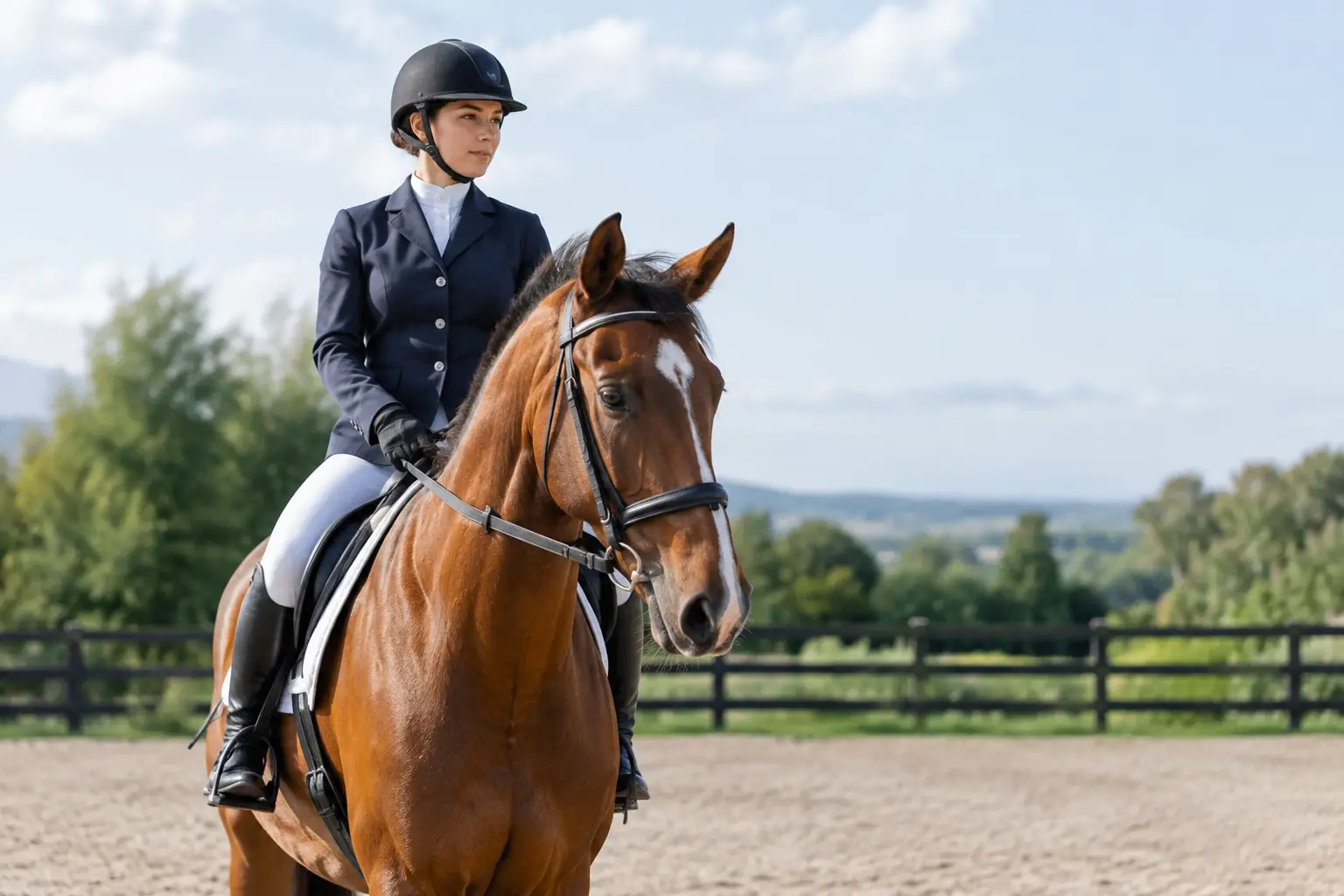
A rider may begin with the simple goal of learning to steer, stop, and trot confidently, then soon hear terms such as dressage, hunters, jumpers, and eventing. This English riding disciplines guide helps families understand what those paths involve, what they ask of horse and rider, and how to choose a starting point without rushing a young rider into a label.
English riding is built on balance, thoughtful communication, correct position, and respect for the horse. While each discipline has its own rules, attire, and competition format, the best early instruction develops skills that carry from one arena to another. A secure seat, quiet hands, clear aids, and good horsemanship are never wasted.
Start With a Strong Foundation
New riders do not need to choose a specialty on their first day at the barn. In fact, an early focus on fundamentals often leads to better choices later. Riders need time to learn how horses think, how to groom and tack up safely, why correct fit matters, and how their position affects a horse's balance and comfort.
For children especially, the right discipline is not always the one that looks most exciting from the rail. A rider who loves jumping may first need to build confidence at the walk, trot, and canter. A naturally precise rider may enjoy dressage exercises but still benefit from learning to ride small courses. Private instruction can help a trainer recognize when a rider is ready to progress and when a quieter step will build more lasting confidence.
English Riding Disciplines at a Glance
Dressage
Dressage is often described as the foundation of English riding because it develops communication, balance, rhythm, and suppleness. Riders perform a prescribed test in an arena, asking the horse to complete movements at specific letters. At introductory levels, those movements may include accurate circles, transitions between gaits, and straight lines. As riders advance, the work becomes more technical.
Dressage appeals to riders who enjoy detail and the satisfaction of small improvements. It can look calm from the outside, but it requires concentration from both partners. The goal is not to make a horse look forced or mechanical. Good dressage creates a horse that is relaxed, responsive, balanced, and willing.
It is also valuable for riders whose primary interest is jumping. A horse that can maintain rhythm, bend through a turn, and respond to subtle aids is safer and more effective over fences. For that reason, dressage principles belong in nearly every thoughtful English training program.
Hunters
Hunter classes reward an inviting, smooth, and consistent round over a course of natural-looking fences. The horse should travel with a steady rhythm, jump with good form, and make the course appear comfortable and effortless. Riders are judged less on speed than on style, pace, and the overall picture.
Hunters can be a wonderful fit for riders who enjoy a polished, measured experience. Success depends on developing an even canter, finding appropriate distances to fences, and riding with quiet, effective aids. A rider may be tempted to focus only on jumping height, but hunter progress is usually built through repetition over poles, small fences, and carefully designed exercises.
There are also equitation classes, which are closely related to hunters but judge the rider rather than the horse. Equitation helps young riders refine their position, decision-making, and ability to ride a course accurately. It offers a clear pathway for riders who enjoy structure and want their own riding skills to be evaluated.
Jumpers
Jumpers are about precision, athleticism, and time. Horse-and-rider pairs navigate a set course of colored fences, and faults may be added for rails down, refusals, or exceeding the allowed time. In many jumper classes, the fastest clear round wins.
This discipline attracts riders who enjoy problem-solving and a more competitive pace. Courses may include tight turns, related lines, rollbacks, and combinations that require riders to plan ahead. Yet successful jumper riding is not simply about going fast. It depends on rhythm, balance, adjustability, and a rider who can make clear decisions without becoming tense.
Jumpers are exciting, but they are not automatically the right next step for every rider who loves to jump. Riders should be able to maintain their position at the canter, recover calmly after an imperfect distance, and understand basic course etiquette before adding speed or technical difficulty. A careful progression protects confidence as much as it protects safety.
Eventing
Eventing combines three phases: dressage, cross-country, and stadium jumping. It asks riders to develop a versatile partnership and horses to be obedient on the flat, brave across varied terrain, and careful over show-jumping fences.
Cross-country is the phase many riders find most thrilling. It takes place over fixed obstacles in open spaces and requires a strong understanding of pace, terrain, safety equipment, and horse fitness. Because the fences do not fall down, thoughtful coaching and appropriate preparation are essential.
Eventing can be an excellent goal for a rider who enjoys variety and is committed to learning each phase well. It is also a discipline that asks for patience. The rider who develops flatwork and stadium skills first will be better prepared to ride confidently and responsibly outside the arena.
Other English Paths
English riding includes additional opportunities that may suit a rider's interests. Hunt seat classes focus on forward, balanced riding over fences or on the flat. Saddle seat is a distinct discipline featuring a more upright position and, often, gaited horses. English pleasure and breed-specific classes may emphasize manners, movement, and presentation.
Some riders also enjoy recreational trail riding, mounted games, or schooling shows without making competition the main goal. A discipline can provide direction, but it should not take away from the pleasure of learning to partner with a horse.
How to Choose the Right Direction
The best choice usually comes from observing a rider over time. Ask what they enjoy after a lesson, not only what they point to in a video. Do they like the precision of making a circle the same size each time? Are they energized by learning a course? Do they become more confident outside the arena, or do they prefer the predictability of a well-organized dressage test?
A rider's current skills matter, too. Beginners often benefit from a program that introduces both flatwork and small jumping exercises when appropriate. This broad exposure gives a trainer useful information and gives the rider a more informed choice. It also prevents early specialization from creating gaps in horsemanship.
The horse matters just as much. A safe, educated lesson horse can teach a rider how a correct transition or balanced jump feels. As riders become more experienced, the right horse-and-rider match becomes increasingly important. Temperament, training, fitness, and confidence should all be considered before setting ambitious goals.
For parents, it helps to remember that progress is not measured only by ribbons or fence height. A rider who can catch, groom, tack up, ride with attention, and care for a horse responsibly is gaining skills that transfer far beyond the arena. Consistent attendance, clear expectations, and a trainer who communicates openly all support that growth.
Training That Supports Every Discipline
At Eden Hills Equine, individualized instruction allows riders to develop at a pace that respects both their goals and their current abilities. Whether a rider leans toward dressage, hunters, or jumpers, the daily work still begins with correct basics: safe handling, balanced position, clear communication, and consideration for the horse.
A thoughtful lesson may include flatwork before fences, transitions to improve responsiveness, poles to develop rhythm, or exercises that help a rider look ahead and plan. These details may seem simple, but they create the dependable skills riders need when courses become more complex or a horse has an off day.
The most rewarding English riding path is rarely the fastest one. Give a rider room to try, learn, and occasionally change direction. With patient instruction and a strong foundation, the discipline that fits will become clear - and the rider will have the skills to enjoy it with confidence and care.