

English Riding Lessons Texas Families Can Trust
Find English riding lessons Texas families can trust, with private coaching, safe foundations, and thoughtful progress in jumping and dressage with care.
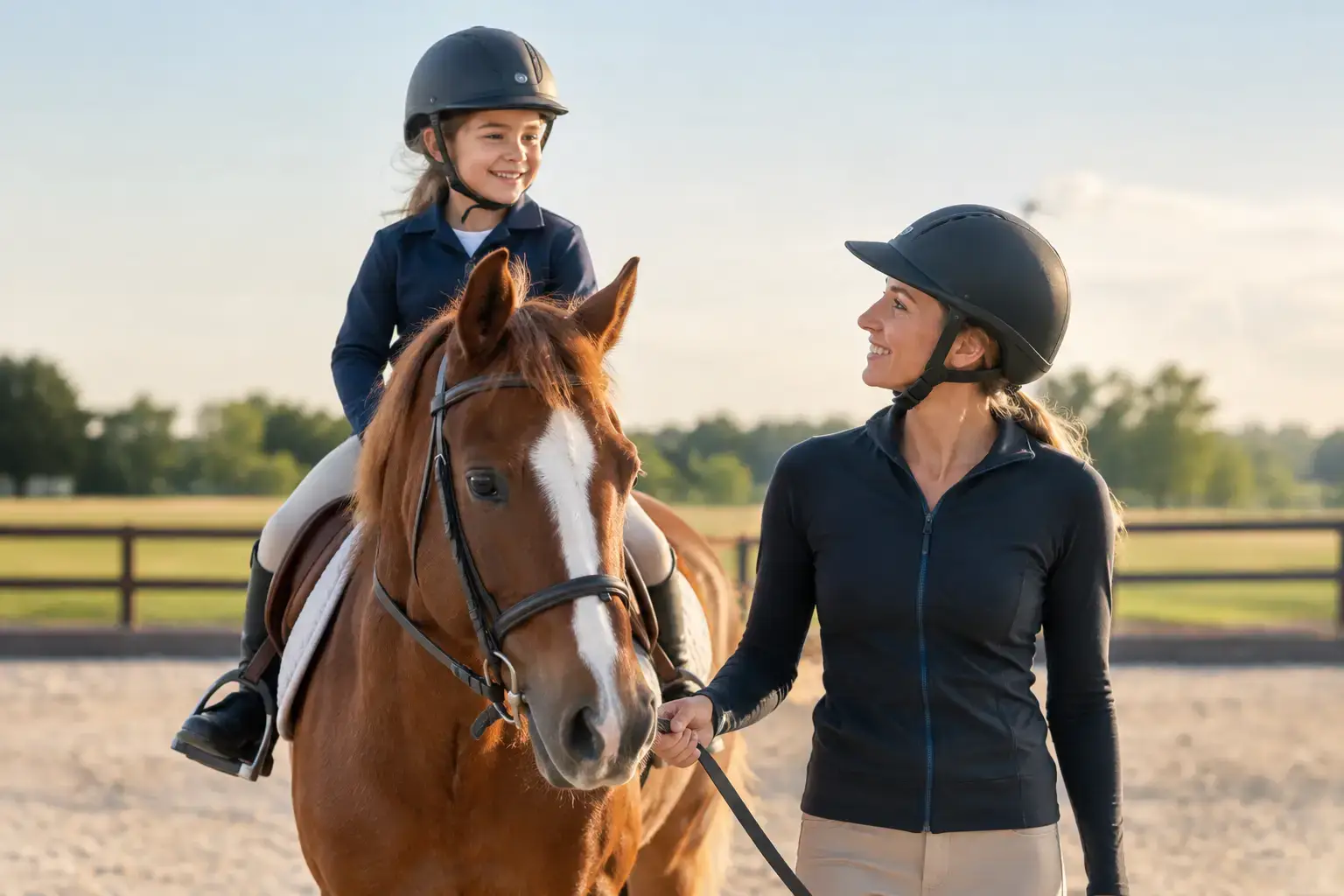
A child who loves horses may arrive wanting to trot, jump, or simply spend every possible minute at the barn. An adult rider may return after years away with very different goals: confidence, fitness, connection, or a renewed competitive focus. The best English riding lessons Texas families can choose make room for those individual reasons while giving every rider the same essential foundation: safety, correct basics, and respect for the horse.
English riding is not a one-size-fits-all activity. Riders develop at different rates, horses bring different needs to the arena, and a lesson should respond to both. A thoughtful program creates steady progress without rushing the moments that require patience, repetition, or a little more confidence.
What English Riding Lessons Should Teach First
English riding includes several disciplines, most commonly hunter-jumper and dressage, yet strong instruction begins well before a rider is asked to navigate a course or perform a polished pattern. Riders need to understand balance, position, communication, and the daily care that supports a horse’s well-being.
A beginner may start by learning how to approach a horse calmly, halter and lead safely, groom thoroughly, and recognize the purpose of each piece of tack. These are not side lessons before the “real” riding begins. They are part of becoming a capable horse person. A rider who understands why a horse is brushed, warmed up, cooled down, and handled with consistent boundaries is better prepared to ride with awareness.
In the saddle, early instruction should focus on an independent, balanced seat. Riders learn how their eyes, hands, legs, and core affect the horse. They practice steering clearly, stopping without pulling, and maintaining a reliable rhythm at the walk and trot. The canter, poles, and small fences can come next when the foundation is ready to support them.
For more experienced riders, the same principles become more refined. A dressage rider may work on straightness, transitions, suppleness, and accurate geometry. A jumping rider may develop a consistent pace to a fence, an effective two-point position, and the ability to make thoughtful adjustments between jumps. Advancement is not just about doing harder things. It is about doing the right things with greater feel, consistency, and care.
Why Private English Riding Lessons in Texas Matter
Private instruction gives a trainer the space to watch closely and teach precisely. Rather than trying to divide attention across a large group, the instructor can notice a rider’s posture, a horse’s response, and the small habits that either support or interrupt progress.
That focused attention is especially valuable for beginners. A new rider may need extra time to feel comfortable mounting, holding the reins, or asking a horse to move forward. A calm, unrushed lesson helps confidence grow honestly. It also allows the trainer to reinforce safety habits before they become overlooked details.
Private lessons are equally useful for intermediate and advanced riders. A rider preparing to move into a new division, improve a dressage test, or regain confidence after time away benefits from coaching that is built around specific goals. One lesson may concentrate on the rider’s upper body over fences; another may address a horse that loses rhythm in downward transitions. The plan can change as the horse-and-rider partnership changes.
There is a trade-off worth considering. Group lessons can offer camaraderie and opportunities to learn arena etiquette around other riders. They can be a wonderful addition when a rider has enough independence to benefit from them. But when a family wants close supervision, individualized corrections, and a clear picture of a child’s development, private instruction is often the more productive starting point.
A Safe Lesson Program Is Designed, Not Assumed
Horses are generous teachers, but they are large, sensitive animals. Safety should shape every part of a riding program, from the selection of lesson horses to the way riders move through the property.
A well-run program matches horses and riders thoughtfully. The quietest horse is not automatically the right match for every student. A horse should be suitable for the rider’s current ability, physical size, confidence level, and lesson objective. As skills improve, the rider may need a horse that asks for more accurate aids or offers a different type of movement.
Facility design matters, too. Clear riding areas, well-maintained footing, organized tack spaces, secure fencing, and practical routines all reduce avoidable distractions. In Texas, weather is another real consideration. Heat, storms, and changing ground conditions should be handled with sensible adjustments to riding schedules and horse care, rather than treated as an inconvenience to push through.
Parents should also expect clear standards around helmets, appropriate footwear, mounting procedures, and barn rules. These expectations are not meant to make the experience feel restrictive. They create the consistency that lets riders focus on learning.
What parents can look for during a first visit
A first visit should leave a family with more than a general impression that the barn is pleasant. Notice whether horses appear comfortably managed and whether the environment feels orderly without feeling tense. Listen to how the instructor speaks to riders and horses. Good coaching is direct, patient, and specific.
It is also helpful to ask how progress is evaluated. A meaningful answer will not promise that every child can jump within a certain number of lessons. Horses and riders do not develop on a fixed timeline. Instead, the program should be able to explain the skills a rider needs before moving forward and how those skills are reinforced.
Building Riders, Not Just Riding Skills
The lasting value of riding lessons often appears outside the arena. Students learn to arrive prepared, follow instructions, manage equipment, care for another living being, and keep trying when a new skill does not come easily. For children and teens, those habits can carry into school, sports, and family life.
Horsemanship also helps riders become better advocates for their horses. They learn to notice changes in behavior, understand the importance of turnout and conditioning, and appreciate that a horse’s comfort affects performance. A rider who knows how to clean tack or pick out hooves is developing practical responsibility, not simply completing a chore.
At Eden Hills Equine, that education is part of the purpose of private instruction. Riders are supported as individuals, whether they are taking their first careful steps into the sport or working toward more technical goals in jumping or dressage. The emphasis remains on measured development, thoughtful horse care, and a positive standard of accountability.
Choosing the Right Path for Your Rider
The right lesson schedule depends on goals, budget, availability, and how quickly a rider can retain and apply new information. Weekly private lessons are a dependable rhythm for many new riders. Riders with ambitious goals, a lease horse, or a desire to build fitness and consistency may benefit from more frequent riding time.
A lease can be a valuable next step for riders who are ready for more responsibility but are not prepared to own a horse. It offers additional practice and a deeper relationship with a familiar horse. Still, it works best after a rider has established safe habits and can follow a trainer’s guidance independently between lessons.
Families should resist comparing one rider’s pace to another’s. One student may feel at home in the saddle immediately but need time to develop coordination. Another may be naturally athletic yet need more repetition to build confidence around a larger horse. Progress is most durable when it is earned, understood, and supported by a horse that is cared for well.
The goal is not to hurry a rider toward the next milestone. It is to give them the knowledge, composure, and feel to meet that milestone with confidence - and to enjoy the quiet satisfaction of becoming a true horse person along the way.