

Essential Barn Safety Equipment for Riders
Essential barn safety equipment protects riders, horses, families, and staff. Learn what belongs in a prepared, well-managed equestrian facility each day.
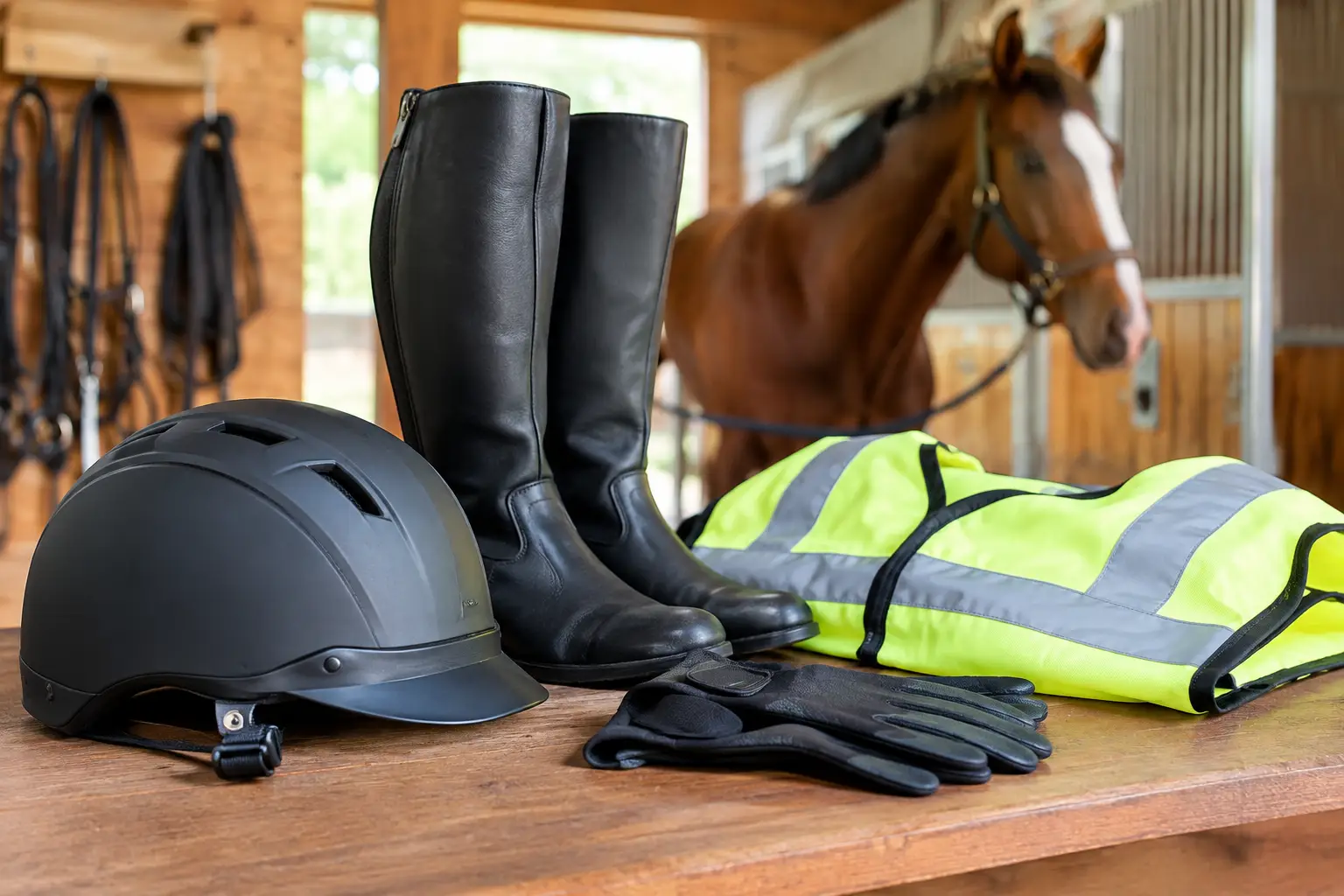
A child leading a quiet school horse, an adult rider tacking up before a lesson, and a boarder arriving after work all rely on the same thing: a facility where safety has been planned before anyone steps into the aisle. Essential barn safety equipment is not simply a collection of supplies kept for emergencies. It is part of the daily system that protects horses, riders, families, and the people responsible for their care.
At a thoughtfully managed barn, equipment works alongside good routines, attentive supervision, and clear horsemanship education. A first-aid kit cannot replace experienced judgment, and a fire extinguisher is only useful when people know where it is and how to use it. Still, the right equipment gives a team the ability to respond quickly when the unexpected happens.
Essential Barn Safety Equipment Starts With Fire Prevention
Barns combine bedding, hay, electrical systems, machinery, and animals that cannot simply be directed to leave during an emergency. Fire planning deserves visible, consistent attention.
Appropriately rated fire extinguishers should be installed in accessible locations, including the main barn aisle, tack room, feed area, and near equipment storage. They should never be blocked by trunks, hay bales, or parked carts. Extinguishers require regular inspection, and everyone who regularly works at the facility should understand their location and basic operation.
Smoke detectors and heat alarms can provide an early warning, particularly in enclosed storage areas and barn offices. Their placement depends on the building design, since dust and humidity can affect some systems. For larger facilities or barns with significant enclosed spaces, professionally designed fire detection and suppression systems may be worth considering.
A practical fire plan also includes clearly marked exits, working exterior lighting, and an accessible water source. Gates and driveways must remain open enough for emergency vehicles. This is one reason clean aisles and orderly storage matter so much: an aisle that is cluttered during an ordinary afternoon becomes a serious obstacle under pressure.
First-Aid Supplies for People and Horses
A well-stocked human first-aid kit should be easy to find, clearly labeled, and checked on a routine schedule. It should include materials for cleaning and covering minor cuts, disposable gloves, sterile dressings, cold packs, bandages, and basic tools such as scissors and tweezers. An emergency contact list should be posted nearby, with current phone numbers for local emergency services, the facility manager, parents or guardians when appropriate, and medical contacts.
Horse first-aid supplies need their own designated, clean storage area. Common essentials include a thermometer, stethoscope, wound-cleaning supplies, sterile gauze, standing wraps, leg bandages, poultice materials, hoof pick, saline, and a flashlight. A written record of each horse's normal temperature, pulse, and respiration can be especially helpful when a horse appears unwell.
The goal is not for every owner or rider to diagnose or treat a medical problem independently. Instead, organized supplies help a knowledgeable handler stabilize a situation, gather useful information, and follow the veterinarian's instructions without losing valuable time. Medications should be stored securely and administered only according to veterinary direction.
Emergency information should be visible
In an emergency, people should not have to search through a phone or a stack of paperwork. Post the facility address and clear directions for emergency access where staff, boarders, and instructors can find them. Include the contact information for the veterinarian, farrier when relevant, and poison-control resources.
For horses, a current information sheet should identify the owner, veterinary contact, feeding requirements, allergies or sensitivities, and any relevant medical history. At a full-care facility, accurate records are an extension of attentive horse management.
Rider Protection Belongs in Every Lesson Program
For young riders and adults alike, an ASTM/SEI-certified riding helmet is foundational safety equipment. Helmets should fit correctly, be secured every time a rider mounts, and be replaced after a significant impact. A helmet that has been dropped, damaged, or is past its recommended service life should be evaluated carefully rather than assumed safe.
Riding boots with a defined heel help reduce the risk of a foot slipping through the stirrup. For jumping, trail riding, or work with green horses, a properly fitted protective riding vest may be appropriate. The choice depends on the rider's discipline, experience, horse, and instructor's recommendation.
Good safety equipment should support confident learning, not create fear. In private instruction, an instructor can help each rider understand why their gear matters, check fit, and make sure the equipment matches the activity. A beginning rider working on steering and balance has different needs than an experienced rider preparing for a jumping course or dressage test.
Safe Tack and Handling Equipment
Tack is safety equipment when it fits, functions, and is maintained correctly. Leather that is dry, cracked, or weakened can fail without much warning. Stirrups, billets, girths, reins, and saddle trees should be inspected regularly, particularly on frequently used lesson tack.
Horses should be tied with a quick-release knot or a purpose-designed safety tie attached to secure hardware. Breakaway halters are often a sensible choice in crossties or designated tying areas, although the right setup depends on the horse and how it is being handled. Lead ropes should be in good condition and long enough for safe handling without trailing on the ground.
A well-equipped grooming and wash area also reduces preventable problems. Non-slip footing, hose management, adequate drainage, and secure tie points help protect both horse and handler. Tools should be returned after use, rather than left where a horse, child, or distracted adult could step on them.
Facility Equipment That Prevents Everyday Accidents
Some of the most valuable safety measures are easy to overlook because they prevent small incidents before they become memorable ones. Bright, well-maintained lighting makes evening feeding, early lessons, and routine checks safer. Non-slip surfaces in aisles, wash racks, and entryways help reduce falls. Gates should latch reliably, fencing should be inspected for damage, and pasture water sources should be kept clean and accessible.
For arena work, properly maintained footing supports both horse soundness and rider security. Jumps should use safe standards, cups, and breakaway features where appropriate. Poles, standards, and arena tools need a designated storage area so they do not create tripping hazards along the rail or in an entrance.
Equipment for heat and weather deserves special consideration in Texas. Fans, shade, fresh water, and cooling supplies can help horses and people manage hot conditions, but electrical cords and fans must be safely installed and maintained. During storms, secure storage for loose items, flashlights, backup communication options, and a plan for moving people away from open areas are just as important as the equipment itself.
The Safety Equipment That Cannot Be Hung on a Wall
A barn can have excellent supplies and still feel unsafe if people are rushed, unsupervised, or unclear about expectations. Orientation for new riders, families, boarders, and visitors should cover basic rules: wear appropriate footwear, walk rather than run, give horses space, ask before entering a stall, and keep gates closed behind them.
Staff training is equally important. Everyone should know who has authority in an emergency, how to contact help, where horses can be moved if necessary, and when a situation requires veterinary or medical care. Regular review keeps procedures familiar, especially at a facility with changing lesson schedules, camps, and new families.
At Eden Hills Equine, safety and horsemanship belong together. Riders build confidence when they learn not only how to ride, but how to recognize safe spaces, handle equipment responsibly, and make considerate choices around horses.
The best safety setup is one people can use without hesitation: a clear aisle, a helmet that fits, a stocked kit in its place, and a team that knows what to do. Those quiet preparations allow riders and horses to focus on the meaningful work ahead - learning, progressing, and enjoying time in the saddle.