

Homeschool Horse Classes That Build Real Skills
Homeschool horse classes pair focused riding instruction with horse care knowledge, confidence, and a purposeful routine for growing students and families.
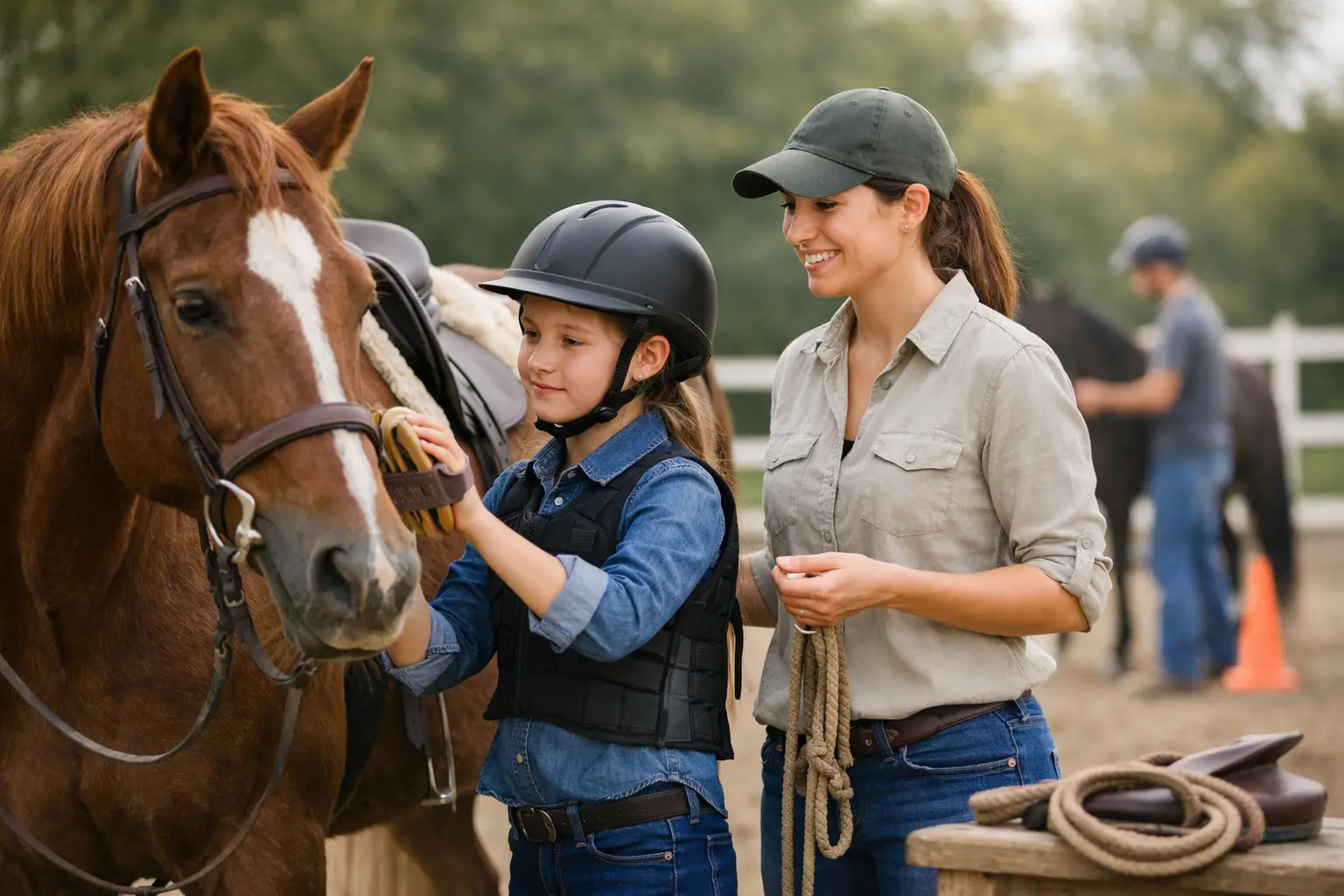
A school morning can look very different when a student begins the day by checking a horse’s legs, adjusting a helmet, and learning why a calm, balanced seat matters. Homeschool horse classes give children and teens a purposeful setting to build riding ability while practicing responsibility, communication, and thoughtful animal care.
For families who homeschool, equestrian education can become a meaningful part of the week rather than an occasional activity. The right program brings structure to the schedule, supports physical activity, and gives students hands-on lessons that cannot be replicated at a desk. Just as importantly, it should teach young riders that horses are partners requiring consistent care, patience, and respect.
What Homeschool Horse Classes Can Provide
A well-designed horse class is not simply a riding lesson scheduled during the school day. It is an opportunity for students to learn through movement, observation, problem-solving, and repetition. A child may begin by learning how to safely approach and lead a horse, then progress to grooming, tacking up, riding basic patterns, and understanding how their actions affect the horse beneath them.
That progression matters. Riding is a physical skill, but horsemanship asks students to pay attention to details. They learn to notice whether a horse seems relaxed or distracted, whether a girth is secure, and whether their own posture is helping or hindering communication. These small lessons develop awareness and accountability over time.
For many homeschool families, classes also provide a dependable rhythm outside the home. Students arrive at a set time, follow safety expectations, care for shared equipment, and work toward clear goals. The barn becomes a place where effort has immediate results. A rider who practices a balanced halt, steady steering, or correct posting trot can feel that improvement in real time.
Riding Is Only One Part of the Education
A thoughtful program balances time in the saddle with instruction on the ground. Students should understand why horses need proper warm-ups and cool-downs, how grooming supports both care and connection, and why tack must fit correctly. They can also begin learning the language of riding, from basic arena directions to terms used in jumping and dressage.
Ground education is especially valuable for new riders. Before asking a child to manage a horse from the saddle, an instructor should help them become comfortable around the horse’s size, movement, and personal space. This safety-first foundation builds confidence without rushing the process.
For experienced students, horse classes can offer more depth. They may work on riding with more independent aids, understanding the purpose of a flatwork exercise, or preparing for a jump course with correct pace and line. Their horse care knowledge should grow alongside their riding goals.
Why Individual Attention Makes a Difference
Children do not all learn at the same pace, and horses do not all respond in the same way. A student who is naturally bold may need reminders to slow down and become more precise. A cautious rider may need steady encouragement and achievable steps that make the next challenge feel manageable.
This is why individualized instruction is so valuable in homeschool horse classes. In a smaller, attentive setting, an instructor can see the details that influence progress: a rider’s hands becoming tense, a leg slipping out of position, or a student who understands the exercise but needs a different explanation. Corrections are more meaningful when they are specific, timely, and delivered with encouragement.
Personal attention also supports safety. A rider should not be pushed into a faster gait, a more complex exercise, or a new riding discipline simply because others in a group are ready. Advancement should reflect the student’s balance, understanding, confidence, and ability to follow directions consistently.
At Eden Hills Equine, this kind of focused development is central to how riders learn. Private instruction allows each horse-and-rider pairing to receive thoughtful coaching, whether the student is just learning to steer or is developing skills in jumping or dressage.
Building a Productive Barn-School Routine
Horse classes work best when families treat them as a committed part of the homeschool schedule. Students should arrive with appropriate attire, a properly fitted helmet, water, and enough time to settle in before instruction begins. Rushing through the gate at the last minute can make it harder for a child to focus, especially when horses require calm and careful handling.
Parents can extend the learning at home without turning every ride into extra homework. A younger student might draw the parts of a saddle, write a few sentences about what they practiced, or explain why a horse needs to be groomed before riding. Older students may keep a riding journal that tracks goals, challenges, exercises, and personal observations.
This reflection helps students recognize that progress is rarely linear. One week, the trot may feel easy. The next, a new horse, a windy day, or a more technical exercise may require them to regroup. Learning to stay patient through those moments is one of the lasting benefits of equestrian education.
Age, Readiness, and Goals Matter
The best class format depends on the child. Younger students often benefit from shorter, highly structured sessions with clear routines and frequent reminders. They may focus on safety, grooming, basic body position, steering, and confidence around the horse.
Older students may be ready for more responsibility, including tack care, riding theory, stable management, and independent preparation before a lesson. Teens who are committed to the sport may want a consistent program that supports long-term goals such as stronger flatwork, jumping foundations, dressage development, leasing, or eventually horse ownership.
It also depends on the student’s temperament. Not every child needs to become a competitive rider for horse classes to be worthwhile. Some thrive because the barn gives them a calm place to build confidence. Others enjoy the challenge of setting technical riding goals. Both paths can foster discipline and genuine horsemanship.
What Parents Should Look For in a Program
A polished facility is valuable, but thoughtful instruction and horse welfare should remain at the heart of any decision. Parents should feel comfortable asking how students are matched with suitable horses, how safety is managed, and what a typical class includes beyond mounted time.
It is also helpful to understand how progress is communicated. Families benefit from an instructor who can explain what a rider is working on, why that skill matters, and what reasonable next steps look like. Clear communication makes it easier to support a child without placing pressure on them to advance too quickly.
Consider whether the environment matches your child’s needs. A busy, high-volume program may suit some riders, while others learn best in a quieter setting where they can ask questions and receive more direct coaching. A smaller program can be especially beneficial for homeschool students who value a consistent relationship with their instructor and a familiar routine at the barn.
Finally, look for a program that respects the horse as much as the rider. Good horsemanship is visible in the details: properly maintained tack, safe handling standards, attentive horse care, realistic lesson expectations, and instructors who teach students to listen to the horse rather than simply ask more of it.
A Meaningful Part of a Student’s Education
Horseback riding asks students to be present. They cannot scroll through a lesson, rush past instructions, or succeed by memorizing words without practice. They must use their body, pay attention to another living being, and make adjustments with care.
That is what makes homeschool horse classes so valuable. The lesson may begin with grooming and end with putting equipment away, but the student carries away much more: patience, confidence, resilience, physical awareness, and respect for the work behind every successful ride.
For families in and around Wimberley, a well-planned equestrian program can become a steady, rewarding part of the homeschool experience. Give your student time to learn the fundamentals well, and the confidence they gain at the barn can reach far beyond the arena.