

Jumping Instruction for Teen Riders That Builds Confidence
Jumping instruction for teen riders builds safe, capable equestrians through private coaching, thoughtful goals, and horse-first horsemanship at fences.
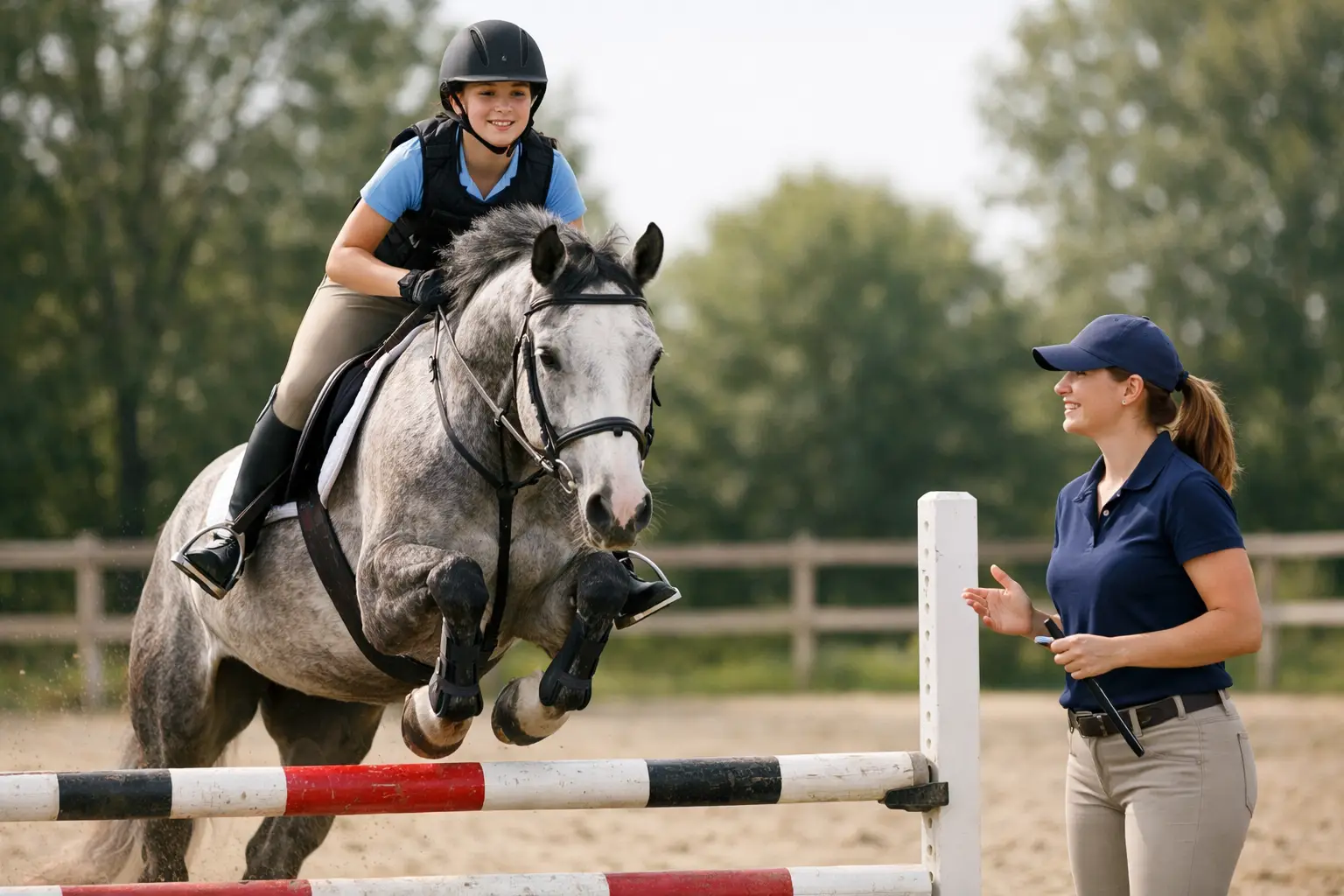
A teenager’s first confident canter to a fence is rarely about bravery alone. It is the result of a rider who can keep her eyes up, maintain a balanced position, make a clear plan, and trust the horse beneath her. Quality jumping instruction for teen riders develops those skills in the right order, so progress feels earned rather than rushed.
For families, jumping can be exciting to watch but difficult to evaluate from the rail. A rider may be eager to jump higher, while a thoughtful program is looking at the details that protect both horse and rider: position, pace, steering, preparation, judgment, and care after the ride. Those fundamentals are what allow a young rider to enjoy the sport for years.
Why Teen Riders Need Individualized Jumping Instruction
The teenage years can bring rapid changes in both confidence and coordination. A rider who felt steady six months ago may suddenly be taller, stronger, or still adjusting to a changing body. At the same time, teens often become more independent and begin forming specific goals, whether that means riding a course, leasing a horse, competing, or simply becoming a more capable horsewoman.
Private instruction gives the trainer room to respond to that individual picture. One teen may need to soften her hands and stop trying to help the horse over every fence. Another may need support finding a more secure lower leg before cantering a line. A third may have excellent position but need to learn how pace affects every jump that follows.
There is no advantage in treating these riders as though they all need the same exercise on the same day. Focused coaching makes it possible to set a clear, realistic next step for each horse-and-rider pair. That is especially valuable when a teen is building confidence after a refusal, returning from time away, or moving from small cross-rails to more technical work.
What Safe Progress Looks Like in the Jumping Arena
Good jumping instruction is not measured only by fence height. A rider can make meaningful progress while jumping small obstacles if she is learning to arrive at the center of the fence with the right rhythm, balance, and straightness. Those skills translate when the jumps become higher and the questions become more complex.
Position Comes Before Height
A secure position helps a rider stay with the horse rather than getting ahead or left behind. In early jumping lessons, teens learn to keep weight in their heels, maintain a quiet lower leg, allow with their hands, and fold from the hip rather than throwing their upper body forward.
These details are not cosmetic. A rider who loses balance over a jump can interfere with the horse’s effort or have trouble regaining control after landing. Repetition over poles, tiny cross-rails, and simple gymnastics creates muscle memory without asking either partner to take unnecessary risks.
Rhythm and Straightness Build Reliable Jumps
Horses jump best from a consistent, forward rhythm. Teen riders often discover that the canter they establish several strides before the fence matters more than what they do at takeoff. They learn to use the corners, look ahead, keep their leg supportive, and resist the urge to chase the horse to the jump.
Straightness matters just as much. A horse that drifts left or right may still clear a fence, but the effort becomes less balanced and less predictable. Simple exercises, such as placing poles on a line or riding between guide rails, help riders feel when the horse is truly in front of both legs and both reins.
Courses Teach Decision-Making
Once a teen can ride individual fences with consistency, courses introduce planning. Riders begin to count strides, recognize related distances, ride accurate turns, and think about where they want the horse to land. They also learn that a course is not a race. A smooth, organized round is more valuable than rushing from jump to jump.
This is where individualized coaching is particularly helpful. The right course depends on the rider’s experience, the horse’s training, and the lesson objective. Some days call for a quiet grid that improves position. Other days may focus on riding a bending line or maintaining balance through a turn. The lesson should have a purpose beyond simply adding more jumps.
Building Confidence Without Pushing Too Fast
Confidence is built through preparation, not pressure. Teens may feel motivated by friends, social media, or a desire to reach the next level quickly. While enthusiasm is welcome, horses do not benefit from being asked to compensate for a rider who is not yet secure, and young riders do not benefit from being placed in situations that overwhelm them.
A supportive trainer sets challenges that feel achievable with effort. That might mean cantering a single cross-rail after a successful trot exercise, riding a small course after practicing each line, or returning to poles when a rider needs to rebuild a particular skill. Stepping back is not failure. It is often the fastest route to lasting progress.
Parents can help by praising preparation as much as results. Instead of asking only, “How high did you jump?” try asking what the rider practiced, what felt better, or what she wants to improve next time. This reinforces the habits that make a knowledgeable horsewoman: reflection, patience, and respect for the horse’s experience.
Horsemanship Is Part of Every Jumping Lesson
A teen rider should understand that jumping begins well before entering the arena and continues after the last fence. Proper grooming, tack fitting, warm-up, cool-down, hydration, and awareness of a horse’s mood or soundness are all part of responsible riding.
For example, a horse that feels unusually stiff, distracted, or unwilling should not simply be pushed through a lesson. Riders need to learn how to communicate what they feel, listen to their instructor, and recognize when the plan should change. That judgment is one of the most valuable skills a young equestrian can develop.
Horse care also teaches teens accountability. Cleaning tack, checking girth placement, caring for boots, and cooling out a horse properly show respect for the animal carrying them over every fence. These routines create riders who are more observant, more prepared, and safer around horses in every setting.
Choosing the Right Horse and Lesson Environment
The best school horse for a teen is not necessarily the most talented jumper. A suitable horse is educated, kind, appropriately matched to the rider’s skill level, and able to teach without covering up every mistake. As a rider progresses, the horse may need to change as well. A more sensitive or athletic mount can be a wonderful next step when the rider has the balance and judgment to ride thoughtfully.
The lesson setting matters, too. A well-maintained arena, appropriate jumps, clear safety expectations, and close supervision allow teens to focus on learning. Riders should know where to ride when others are in the arena, how to pass safely, when to adjust equipment, and why helmets and proper footwear are nonnegotiable.
At Eden Hills Equine, private lessons allow riders to receive focused feedback while progressing at a pace that supports both confidence and correct horsemanship. For teens with busy school schedules and evolving goals, that personal attention can make each ride more productive.
Goals That Keep Teen Riders Engaged
Teen riders stay motivated when they can see a path forward. Goals should be specific enough to guide lessons but flexible enough to honor the horse and the rider’s development. One rider may work toward confidently cantering a course of cross-rails. Another may focus on keeping an even rhythm through a gymnastic line. A more experienced rider may prepare for a show, improve equitation, or develop the skills needed for a lease.
Written or spoken check-ins help riders recognize growth that can otherwise be easy to overlook. The rider who once needed a reminder before every turn may now be planning her own track. The rider who was nervous at the canter may be quietly riding a full course. Progress in jumping is often made in small, repeatable improvements.
The goal is not to make every ride perfect. It is to help a teen leave the arena with greater understanding, a safer foundation, and pride in the work she has done with her horse. When those pieces are in place, the next fence becomes an opportunity rather than a test.