

Horse Boarding Checklist for Owners Before You Commit
Use this horse boarding checklist for owners to evaluate care, safety, turnout, training support, and communication before choosing a home for your horse.
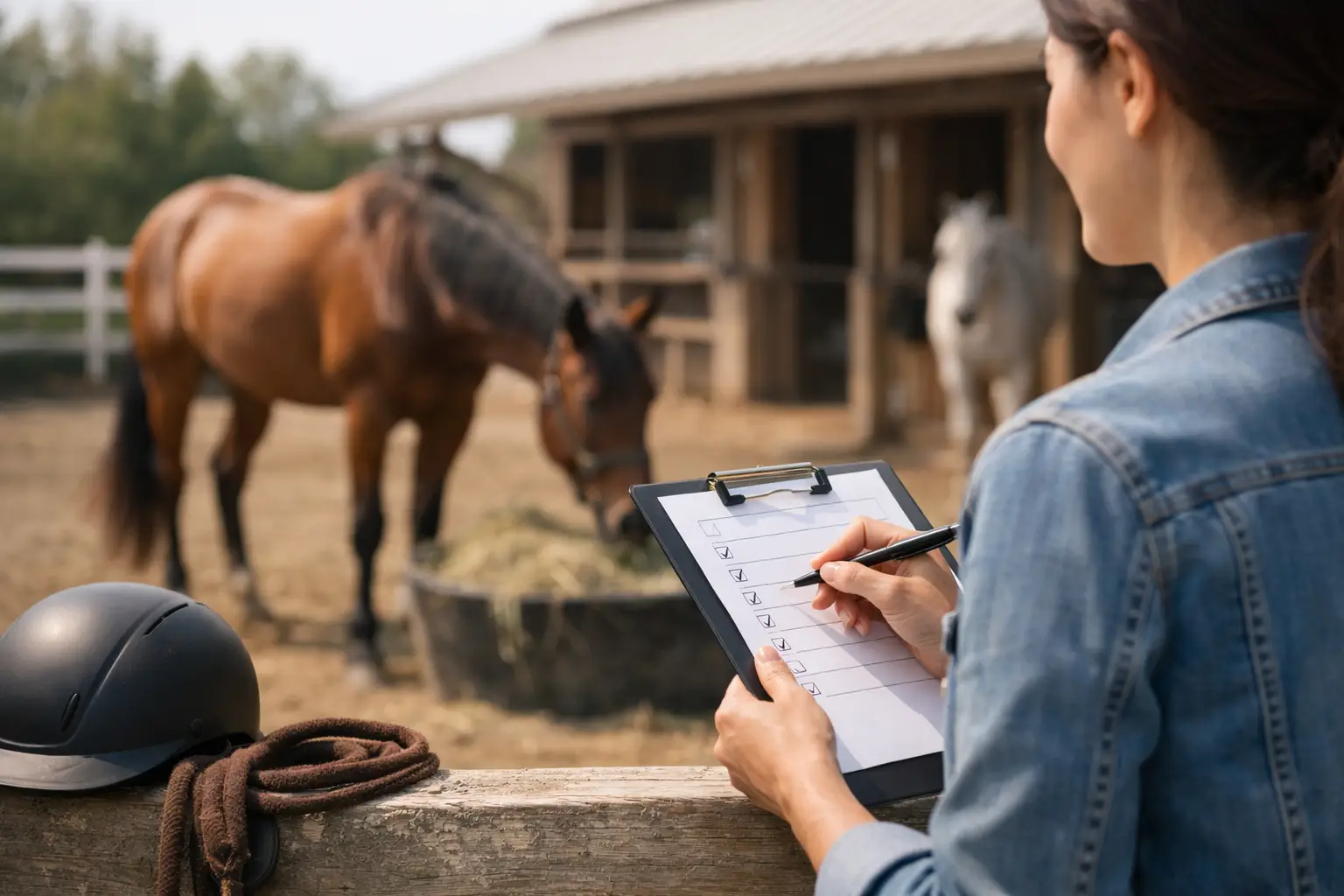
A boarding decision affects far more than where your horse sleeps. It shapes their daily routine, physical condition, training consistency, and your peace of mind. This horse boarding checklist for owners is designed to help you look beyond a tidy aisle or a friendly first visit and evaluate the details that protect your horse over time.
The right program should feel organized, calm, and transparent. You should leave a tour understanding who is responsible for your horse each day, how concerns are handled, and whether the environment supports the kind of riding and horsemanship experience you want.
Start With Your Horse's Individual Needs
Before evaluating a boarding program, be clear about what your horse needs to stay healthy and content. A quiet senior, a young horse in training, a competitive jumper, and an easykeeping pony may all require different management.
Consider your horse's feed requirements, turnout preferences, social habits, medical history, shoeing schedule, and workload. A horse with a history of ulcers, respiratory sensitivity, lameness, or anxiety may need more specific routines than a horse who thrives in nearly any setting. Share those details early and ask how the program would accommodate them.
Your own goals matter as well. If you are a parent supporting a young rider, you may prioritize close supervision, a structured lesson program, and a setting where children learn safe barn habits. If you are an adult amateur, regular trainer access and a dependable arena schedule may be higher on your list. The best arrangement supports both horse welfare and the rider's long-term development.
Horse Boarding Checklist for Owners: Daily Care
Daily care is the foundation of full-care boarding. Ask for specific answers rather than relying on broad promises such as “we take great care of every horse.” A well-managed program can explain its routines clearly and confidently.
Feeding and water
Find out what hay and grain are provided, how often horses are fed, and whether feeding plans can be adjusted when needed. Ask who monitors whether a horse is finishing meals and how staff respond to a sudden drop in appetite. Clean, accessible water should be available at all times, with troughs and buckets checked routinely, especially during hot Texas weather.
It is also wise to ask about supplements and medications. Clarify whether staff can administer them, how they are labeled and stored, and whether there is an added fee. Small details prevent confusion when care needs change.
Stall care and turnout
A clean stall is reassuring, but the schedule behind it matters more. Ask how often stalls are cleaned, how bedding is maintained, and what happens when weather creates muddy or unusually dusty conditions. Look for good ventilation, secure doors and latches, safe footing, and enough room for the horse to rest comfortably.
Turnout is not one-size-fits-all. Ask how often horses are turned out, whether they go out alone or in compatible groups, and how turnout changes in storms, high heat, or freezing conditions. Discuss fencing, pasture inspection, shade, and water access. Horses benefit from movement and turnout, but the right arrangement depends on their temperament, herd behavior, and soundness needs.
Observation and health awareness
Horses are skilled at hiding discomfort. Consistent observation is one of the most valuable services a boarding program provides. Ask who notices injuries, loose shoes, behavior changes, colic symptoms, or signs of illness. You also want to know how and when owners are contacted.
No facility can prevent every scrape or health issue. What matters is whether there is a clear response plan, timely communication, and experienced judgment when something is not right.
Evaluate Safety Beyond the Appearance of the Property
A polished facility is appealing, but safety should be visible in the way the property is designed and managed. During your visit, notice traffic flow, fencing condition, gate security, lighting, fire precautions, tack room security, and whether horses can be handled without unnecessary congestion.
Ask about emergency procedures. Is there a documented process for colic, injury, severe weather, fire, or evacuation? Is a veterinarian and farrier contact list kept current? Who is authorized to approve emergency treatment if you cannot be reached immediately? These are not uncomfortable questions. They are responsible owner questions.
Pay attention to arena footing and maintenance, particularly if your horse is in regular work. Appropriate footing helps reduce avoidable strain and allows riders to train with confidence. For riders focused on jumping or dressage, ask whether the facility's arenas, jumps, and riding spaces match the level and style of work you plan to do.
Understand Training, Lessons, and Access to Support
Boarding can be purely care-based, but many owners benefit from a program where training and instruction are available. A trainer who sees your horse regularly may notice changes in movement, attitude, or fitness before they become larger problems.
Ask how training rides are scheduled, what is included in a monthly training program, and how progress is communicated. If your child takes lessons, ask how instructors build skills over time and how they teach unmounted horsemanship alongside riding. A strong program should develop judgment, responsibility, and confidence, not simply keep riders busy.
There is a trade-off to consider. A highly structured training environment can provide valuable consistency, but it may include lesson or riding expectations that do not suit every owner. Be honest about how often you plan to visit and ride. Confirm the rules around outside trainers, guest riders, arena use, and schooling times before signing an agreement.
Review Communication and Barn Culture
Boarding works best when expectations are clear on both sides. Ask how the manager communicates routine updates, scheduling changes, weather closures, and health concerns. Some owners prefer frequent messages; others mainly want prompt contact when action is needed. Either approach can work if it is discussed from the beginning.
Barn culture deserves just as much consideration. Notice whether staff speak respectfully about horses, riders, and owners. Observe whether the atmosphere feels rushed and chaotic or attentive and orderly. For families, look for adults who model safe behavior around horses and create a welcoming environment without overlooking boundaries.
Ask what is expected of boarders. You may be responsible for keeping tack areas orderly, following arena etiquette, booking lesson times in advance, or wearing approved safety equipment. Clear rules are a good sign. They help protect horses, riders, and the shared experience of everyone at the property.
Read the Boarding Agreement Carefully
A boarding contract should explain services, fees, notice requirements, liability terms, and policies for veterinary care. Read it before moving your horse, not while standing in the aisle with a trailer waiting.
Make sure you understand what is included in the monthly rate and what may cost extra. Common examples include blanketing, holding for the farrier or veterinarian, medication administration, special feed, clipping, rehabilitation support, and training rides. Ask about late-payment policies, required vaccines, deworming expectations, Coggins documentation, and what notice is required if you decide to leave.
It is also helpful to discuss insurance. Mortality, major medical, and liability coverage can be appropriate depending on your horse, riding activities, and financial situation. The best choice depends on your individual circumstances, but the conversation should not be skipped.
Visit at Different Times if You Can
One visit offers a snapshot. A second visit, especially at a different time of day, can reveal how the operation functions when lessons are underway, horses are being fed, or weather changes the routine. Listen to the tone of communication between staff and observe whether horses appear settled, alert, and appropriately cared for.
Trust your questions. If an answer about feeding, turnout, safety, or billing remains vague, ask again. A professional boarding program should welcome thoughtful owners because clear communication is part of responsible horse care.
Your horse does not need a perfect postcard setting. They need dependable care, safe routines, thoughtful oversight, and people who take their well-being seriously. Choose the place where those standards are demonstrated every day, and you will give both your horse and your family a stronger foundation for years of riding ahead.