

What Is Full Care Boarding for Horses?
What is full care boarding? Learn what it typically includes, what to ask, and how to tell if it fits your horse, schedule, and goals.
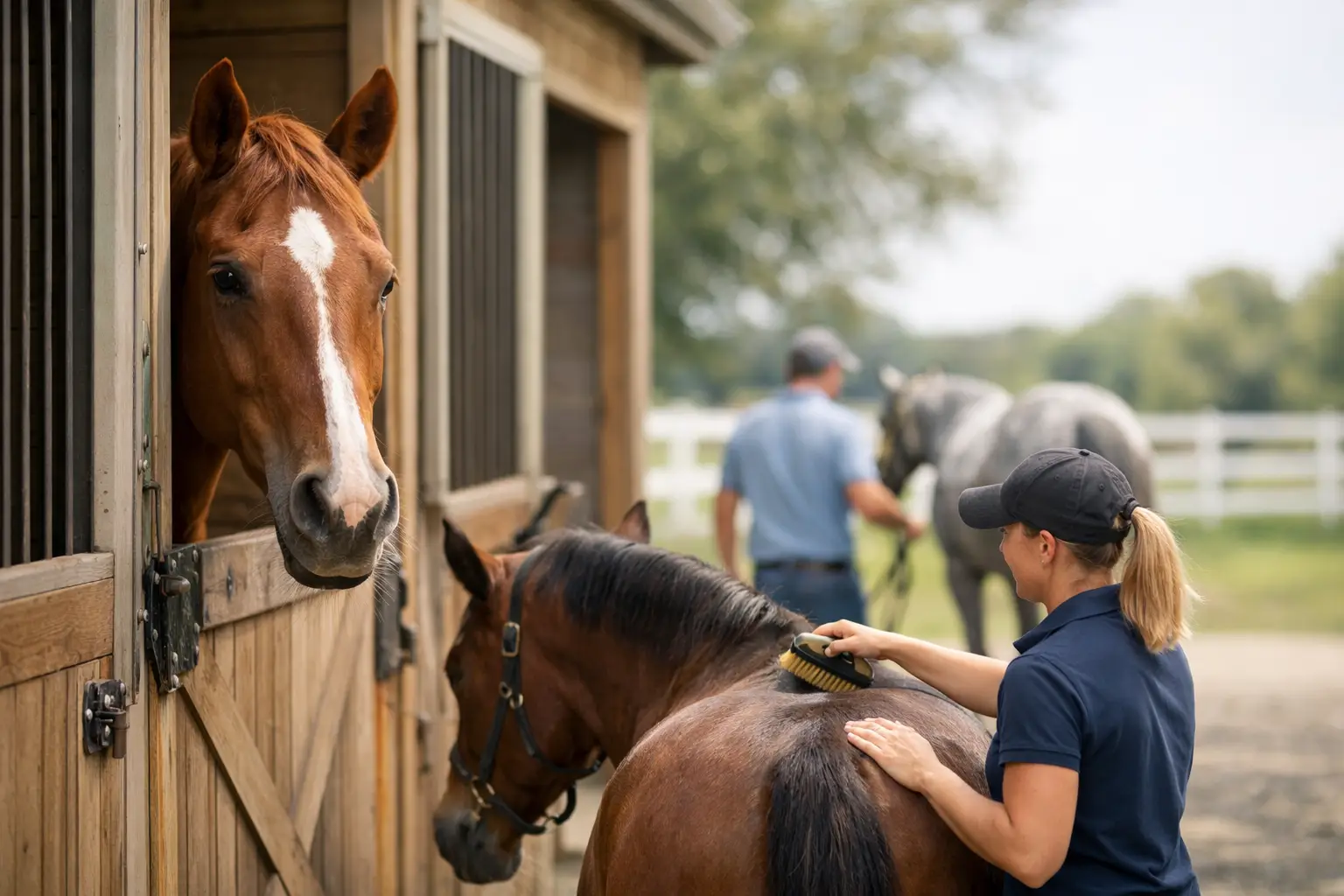
When your horse lives at a boarding facility, the biggest question is rarely just price. It is whether your horse will be cared for with the same consistency, attention, and horsemanship you would want to provide yourself. That is why many owners ask, what is full care boarding, and what does it actually include from day to day?
Full care boarding usually means the barn handles the core daily needs of your horse. That often includes feeding, watering, stall cleaning, turnout, basic wellness monitoring, and general management of your horse’s routine. In practical terms, it is designed for owners who want professional, reliable care in place every day, not just when they can make it to the barn.
That sounds simple enough, but full care boarding is not identical everywhere. The term can cover a broad range of services, standards, and levels of attention. For horse owners and parents investing in a horse for a young rider, understanding those differences matters.
What is full care boarding, exactly?
At its core, full care boarding means your horse’s essential daily care is managed by the facility staff. Instead of renting a stall and doing the labor yourself, you are paying for an established care program overseen by experienced horse professionals.
Most full care arrangements include hay and feed given on a set schedule, clean water, stall or paddock cleaning, turnout and bringing horses back in, and routine observation for signs of illness, injury, or behavior changes. Many programs also include blanketing changes when needed, fly mask management, and coordination with outside providers such as veterinarians or farriers.
The real value is not only that the chores get done. It is that they are done consistently. Horses thrive on routine, and consistency plays a major role in digestion, soundness, stress levels, and overall well-being.
For many owners, especially those balancing work, school, travel, or family commitments, full care boarding offers peace of mind. Your horse is not waiting on your schedule to be fed, turned out, or checked. There is a system in place every day.
What full care boarding usually includes
A quality full care program generally covers the foundational parts of horse management. Feeding is one of the most obvious pieces. Horses are typically fed hay and grain according to the barn’s schedule, with adjustments made for individual needs when appropriate.
Stall care is another standard part of full care boarding. Clean stalls are not just about appearance. They affect respiratory health, hoof condition, comfort, and overall hygiene. If horses live outside, paddock maintenance and manure management still matter for the same reasons.
Turnout is often included as well, although the amount and style of turnout can vary quite a bit. Some horses do best with generous daily turnout, while others need more controlled arrangements based on age, soundness, training level, or social compatibility.
Daily wellness oversight is one of the most valuable parts of full care and one that newer owners sometimes overlook. Experienced staff may notice reduced appetite, stiffness, unusual manure, swelling, small cuts, or behavior changes before they become larger problems. Early observation can make a meaningful difference.
Some full care programs also include holding your horse for the farrier or vet, administering owner-provided supplements, or managing basic approved medications. These services may be included or may come with additional fees. That is why asking for specifics is so important.
What full care boarding does not always include
One of the most common misunderstandings is assuming full care means absolutely everything related to horse ownership. Usually, it does not.
Veterinary bills, farrier work, dental care, emergency medical treatment, bodywork, and training rides are often separate. Supplements may or may not be included. Special grain, senior diets, ulcer support, or individual feeding beyond the barn’s standard program may carry additional cost.
Riding instruction is also generally separate unless you are in a combined training or lesson package. If your goal is rider development, horse training, or competitive preparation, it is worth asking how boarding works alongside instruction and training support.
This is especially relevant for families with children or teens in a structured riding program. A horse can be very well cared for physically, but if there is no coordinated plan for the rider’s progress, you may still feel like key pieces are missing.
Why owners choose full care boarding
For some people, the appeal is convenience. For others, it is quality control.
A full care setup can make horse ownership more realistic for busy adults and growing families. You can still enjoy your horse, ride regularly, and stay involved without needing to manage every feeding, turnout shift, and stall cleaning task yourself.
For newer owners, full care boarding can also provide a safer learning environment. Horse ownership has a steep learning curve, and even very responsible owners benefit from experienced eyes on their horse every day. That support can reduce stress and help owners build confidence over time.
For competitive or goal-oriented riders, full care often works best when it is paired with strong communication and professional guidance. Horses in active programs benefit from coordinated care, especially when fitness, nutrition, turnout, and training all need to support one another.
How to tell if a full care program is truly high quality
The phrase full care sounds reassuring, but the standard behind it is what really matters.
A strong program has consistent routines, clean and functional facilities, and a team that knows the horses as individuals. Staff should be able to explain feeding schedules, turnout practices, how they handle weather changes, and what happens if a horse seems off.
It is also worth paying attention to how communication works. Owners should know who to contact, how updates are shared, and how concerns are handled. Good horse care is hands-on, but good client care matters too. Clear communication builds trust and prevents small issues from becoming frustrating ones.
You should also ask how the facility approaches safety. That includes fencing, turnout group management, supervision, footing, barn organization, and emergency procedures. For many families, especially parents of young riders, this is not a minor detail. It is central to the decision.
Another sign of quality is whether the care feels individualized rather than generic. Not every horse needs the same feeding approach, turnout schedule, or workload. A thoughtful program respects routine while still making room for the horse in front of them.
Questions to ask before you commit
If you are evaluating what is full care boarding at a specific facility, ask for details rather than broad promises. Find out exactly what is included in the monthly rate and what costs extra. Ask about hay, grain, turnout, stall cleaning frequency, blanketing, supplement administration, and how medical concerns are handled.
You should also ask who is on-site daily and how often horses are checked. If instruction or training matters to you, ask how those services integrate with boarding. For a horse-and-rider pair, care and progress should support each other rather than operate as separate systems.
If possible, notice the horses themselves. Do they look relaxed, appropriately conditioned, and well cared for? Is the environment calm and organized? The answers often show up in the horses before they show up in the sales language.
Is full care boarding worth it?
That depends on your goals, schedule, budget, and level of experience. For some owners, self-care arrangements make sense because they want total control and have the time to be present every day. For many others, full care is worth the investment because it creates consistency, oversight, and a more sustainable ownership experience.
It can be especially worthwhile when the facility combines horse care with professional instruction and a thoughtful horsemanship culture. That kind of environment supports not only the horse’s health, but the rider’s development and the owner’s confidence as well.
At a boutique program like Eden Hills Equine, that difference is often felt in the details - individualized attention, a safety-first setting, and a care standard that treats each horse as more than a stall number. For owners who value both premium care and meaningful progress, those details matter.
If you are asking what is full care boarding, the best answer is this: it is not just a list of chores included in a monthly fee. It is a care structure that should protect your horse’s well-being, support your goals, and give you confidence every time you leave the barn.