

Horse Boarding in Wimberley Texas: 7 Questions
Choosing horse boarding Wimberley Texas owners can trust means looking beyond a stall to daily care, safety, training support, and clear communication.
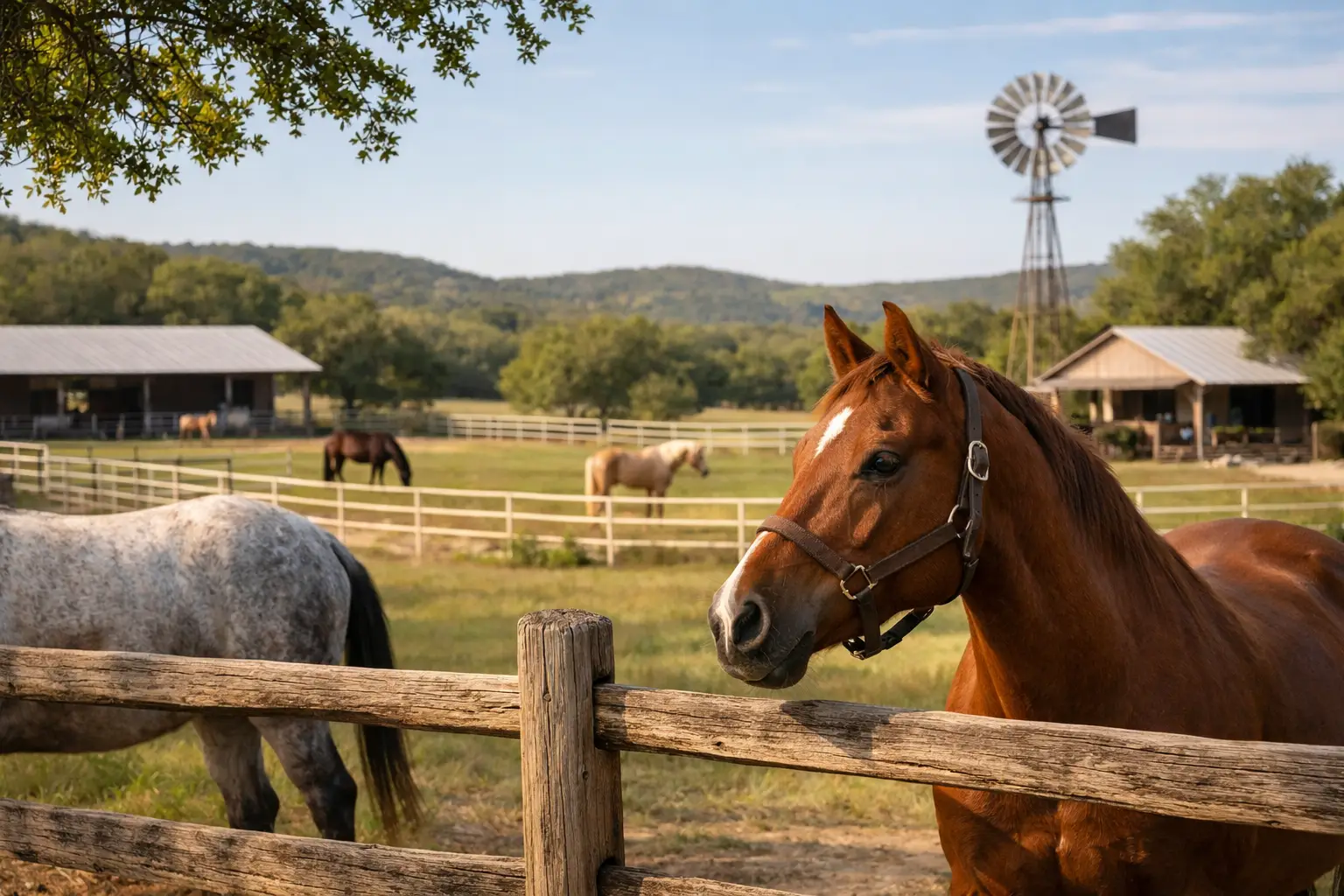
A beautiful Hill Country setting is a welcome part of horse ownership, but it cannot replace thoughtful daily management. When considering horse boarding Wimberley Texas owners can feel confident about, the most meaningful questions are often practical: Who is watching your horse each day? How is turnout managed? What happens when something changes? The answers reveal far more than a tidy aisle or a scenic view.
For families, adult amateurs, and dedicated owners, boarding is not simply a place to keep a horse. It is a partnership that affects a horse’s health, behavior, training consistency, and the rider’s peace of mind.
Start With the Standard of Daily Care
Full-care boarding should make the essentials clear rather than leaving owners to guess. Ask how and when horses are fed, what forage is provided, how water sources are checked, and how staff monitor changes in appetite, manure, soundness, or attitude. Horses often communicate discomfort quietly at first. A barn team that knows each horse’s normal habits is better positioned to recognize when something is off.
It also helps to ask how individual needs are handled. A horse on a special feeding plan, medication schedule, or restricted turnout routine needs more than a generic promise of care. The best arrangement has enough structure to keep routines dependable and enough attention to adjust when the horse’s needs change.
Clean stalls and fresh water matter, of course, but the real question is consistency. Care should remain steady on busy days, hot Texas afternoons, and during a stretch of changing weather.
Ask How Safety Shapes the Property
A safe ranch design supports good decisions before an emergency ever occurs. Look at the condition of fencing, gates, footing, aisleways, stall doors, and turnout areas. Consider whether horses can be moved safely, whether riders have room to mount and dismount without congestion, and whether the property’s layout reduces avoidable risks.
Safety also includes supervision and barn culture. Clear rules around turnout, helmets, riding areas, guest access, and handling practices help protect both people and horses. This is especially important for young riders, who learn as much from the standards around them as they do during a lesson.
No facility can eliminate every risk inherent to horses. What responsible boarding can offer is a well-maintained environment, sensible procedures, and people who respond calmly and promptly when a concern arises.
Consider Turnout as Part of Horse Wellness
Turnout is not a minor detail on a boarding agreement. Movement, social interaction, and time outside can influence a horse’s physical comfort and mental well-being. Still, there is no single turnout plan that suits every horse. Age, soundness, herd behavior, feeding requirements, and training goals all matter.
Ask whether turnout is individual, paired, or group based, and how compatible horses are selected. Find out how the schedule changes during extreme heat, storms, wet footing, or seasonal shifts. A horse that is comfortable in a group may thrive with pasture time, while another may need a more controlled arrangement to stay safe and settled.
The most reassuring answer is rarely a one-size-fits-all policy. It is a thoughtful process that considers the horse in front of them.
Look for Training Support That Fits Your Goals
Many owners choose boarding because they also want a consistent training environment. If you ride English, ask whether the facility can support your intended discipline and whether the riding spaces are maintained with that work in mind. Jumping and dressage require different exercises, but both depend on safe footing, thoughtful arena use, and a program that values correct fundamentals.
For a developing rider, training support should feel encouraging without becoming vague. Private instruction gives the trainer an opportunity to address position, confidence, communication, and horse management in a focused way. For experienced riders, individualized coaching can help refine specific goals while respecting the horse’s fitness and education.
At Eden Hills Equine, the boutique approach is built around this kind of individual attention, pairing premium horse care with personalized instruction and training support. That model can be particularly valuable when a horse-and-rider pair needs a plan instead of a crowded, generalized program.
Understand What Communication Really Looks Like
Good communication is not constant messaging. It is knowing that the right information will reach you promptly and clearly. Before choosing a boarding program, ask who contacts owners about injuries, illness, lost shoes, changes in behavior, or veterinary concerns. Ask whether the facility has preferred professionals and how owner approval is handled in urgent situations.
It is equally useful to understand how routine questions are addressed. Can you discuss changes to feed, turnout, or training? Do you know whom to contact after hours? Are expectations around visits, riding times, and scheduling explained from the beginning?
Clear communication builds trust because it prevents small uncertainties from turning into frustration. Owners should feel informed, respected, and comfortable asking questions about their horse’s care.
Review the True Scope of Full-Care Boarding
The phrase “full care” can mean different things in different programs. Before making a decision, request a clear explanation of what is included and what is billed separately. This may cover grain, hay, stall cleaning, blanketing, fly protection, holding for routine services, medication administration, training rides, or coordination with veterinarians and farriers.
Price matters, but value depends on what the monthly rate actually supports. Lower cost can be a reasonable choice for an owner who wants to provide more hands-on care or whose horse needs fewer services. Premium full-care boarding may be a better fit for owners who prioritize close monitoring, professional oversight, dependable routines, and access to a more complete support system.
The right choice depends on your horse, your schedule, and how involved you want or need the barn team to be.
Observe the Environment at a Normal Time
A planned tour is helpful, but the best information often comes from seeing a facility in its regular rhythm. Notice whether horses appear settled, staff move with purpose, and riders have enough space to work safely. Listen to how people speak to horses, children, and one another. A polished facility matters, yet a respectful, organized atmosphere is what makes it sustainable.
For parents, observe whether young riders are being taught to lead, groom, tack up, and think through safety rather than simply being put on a horse. Strong horsemanship education builds responsibility and confidence that carry beyond the saddle.
For owners, watch whether the barn’s pace feels attentive rather than hurried. A smaller program can offer valuable personal connection, though it may also have more limited availability. That trade-off is often worthwhile when individualized care and trainer access are high priorities.
Horse Boarding Wimberley Texas Owners Can Feel Good About
Choosing a boarding home is a decision that deserves more than a quick comparison of stalls and monthly rates. Your horse’s routine, physical comfort, and training progress will be shaped by the people and practices behind the property every day.
Bring your questions, describe your horse honestly, and pay attention to how thoroughly the program wants to understand your goals. A boarding relationship should leave you feeling that your horse is known, your concerns are welcome, and your next ride begins with a horse that has been cared for with purpose.