

How Horse Leases Help Beginners Build Skills
Learn how horse leases help beginners gain confidence, build consistent riding habits, and practice thoughtful horsemanship with guided support each week
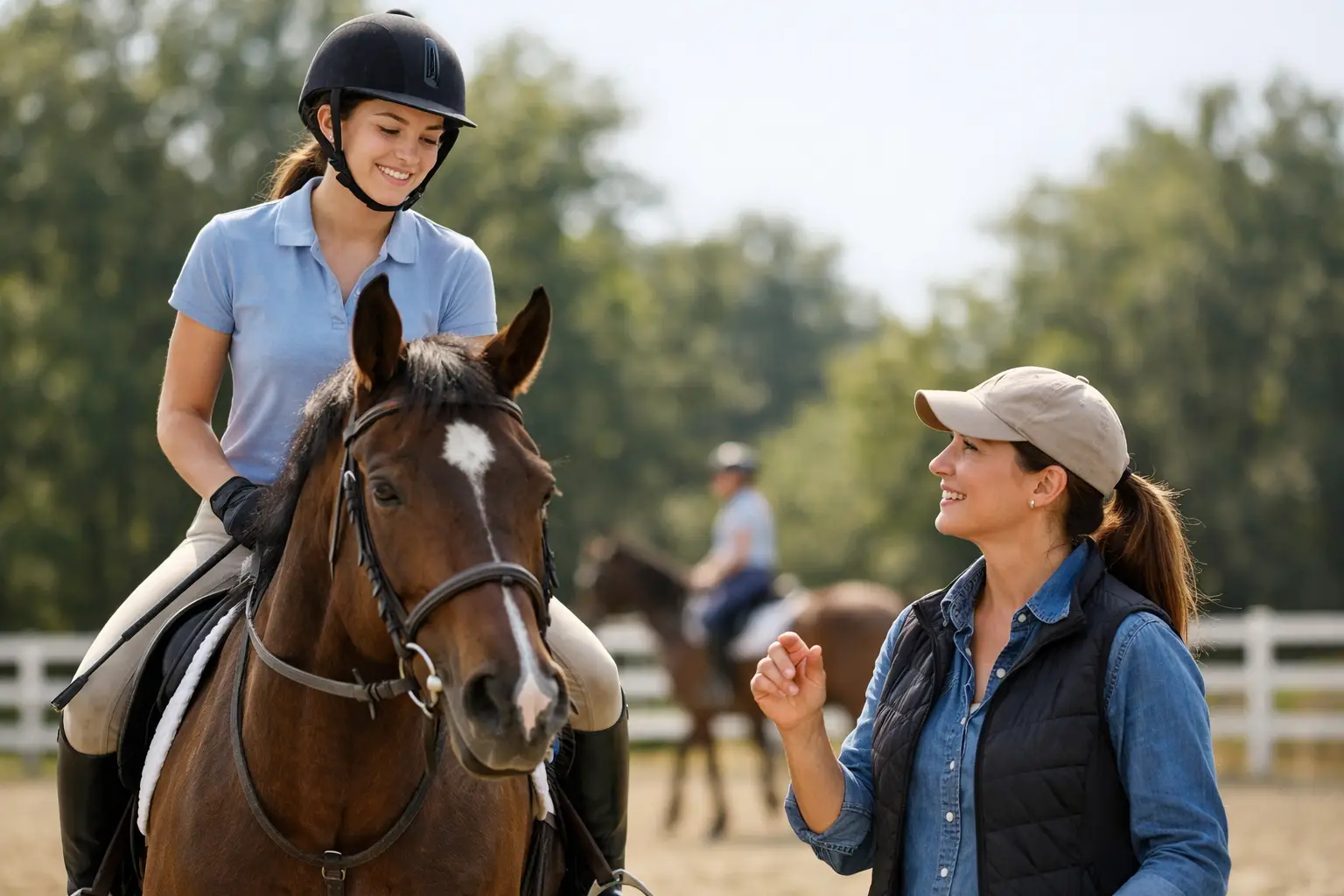
A rider can have a wonderful lesson once a week and still feel as though every visit starts from the beginning. They may remember the steps of grooming, but need a reminder about saddle fit. They may ride a balanced circle one day, then feel uncertain about steering or posting the next. Understanding how horse leases help beginners starts with this gap between learning a skill and practicing it often enough for it to become familiar.
A horse lease gives a developing rider more consistent time with a specific horse without the full financial and daily responsibility of ownership. For children, teens, and adult amateurs, it can be a meaningful next step after private lessons. Done thoughtfully, with trainer guidance and a suitable horse, leasing builds riding confidence while teaching the steady habits that good horsemanship requires.
How Horse Leases Help Beginners Learn Consistently
Riding is a physical skill, but it is also a relationship-based one. A rider learns more when they can recognize a horse's normal behavior, understand its preferences, and notice small changes in how it moves or responds. Leasing the same horse regularly creates that continuity.
Instead of meeting a different lesson horse each week, a beginner begins to understand one horse's walk, trot rhythm, personality, and care routine. That familiarity can reduce anxiety. A rider who already knows how a horse responds to a quiet leg aid or where that horse tends to lose balance in a corner can devote more attention to their own position and timing.
Consistency also makes progress easier to see. A private instructor can build on prior lessons, setting clear goals that match the rider's current ability. Perhaps the first month centers on confident grooming, leading, mounting, and balanced walk-trot work. Later, the rider may practice transitions, poles, correct diagonals, or introductory dressage and jumping exercises. The pace should reflect the individual rider, not a one-size-fits-all timeline.
A Lease Adds Purpose Between Lessons
A well-structured lease does not mean a beginner is simply left to figure things out alone. The safest and most productive arrangements have clear expectations about when the rider may ride, what activities are appropriate, and when an instructor must be present.
That structure gives riders a reason to apply what they learn in lessons. They can practice the correct grooming order, review how to pick out hooves safely, or spend quiet time learning to read a horse's body language. These are not minor details. They are part of becoming a capable horseperson.
For many young riders, a lease also creates a healthy sense of ownership without suggesting that the horse is theirs to manage independently. They learn to arrive prepared, care for shared equipment, follow barn rules, and leave the horse comfortable and settled. Parents often appreciate that this responsibility is meaningful but still supported by experienced adults and professional horse care.
Confidence Grows Through Familiarity, Not Pressure
Beginners are sometimes eager to advance quickly, especially if they have fallen in love with riding. But confidence is not built by rushing from one challenge to the next. It grows when riders repeat foundational skills successfully and understand why each step matters.
A suitable lease horse can offer a calm, dependable partner for that work. With the right match, a rider can practice independent steering, transitions, arena awareness, and basic position without feeling overwhelmed by a horse that is too sensitive, green, or physically demanding.
This does not mean every ride will be perfect. Horses have opinions, changing energy levels, and occasional distracted days. Learning to stay calm, listen to instruction, and adjust thoughtfully is part of the value. A lease gives beginners enough exposure to normal ups and downs that they become more resilient without being placed beyond their ability.
For adult beginners, this can be particularly helpful. Many adults worry about making mistakes or feeling behind. Familiar time with a trusted horse offers a lower-pressure setting to revisit skills, ask questions, and develop comfort around horses at a pace that feels manageable.
Horsemanship Happens on the Ground, Too
A lease is often where a rider begins to understand that riding is only one part of equestrian life. Before the reins are picked up, there are safety checks, grooming, tacking up, and thoughtful observation. After the ride, there is cooling out, untacking, checking the horse's condition, and returning equipment neatly.
These routines teach riders to look beyond their own experience. Is the horse relaxed or tense? Does the girth need checking? Is the horse drinking, moving comfortably, and behaving normally? A beginner will not be expected to diagnose health concerns, but learning to notice and report changes is an essential early horsemanship skill.
A lease also teaches respect for the horse as a living partner. The goal is not to use a horse like sporting equipment. It is to learn how careful handling, clear communication, good riding, and consistent care affect a horse's comfort and willingness.
The Right Lease Depends on the Rider
Leasing is not automatically the right next step for every beginner. A rider who is still nervous around horses, struggling with basic safety procedures, or unable to commit to regular visits may benefit more from continued private lessons first. There is no disadvantage in taking the time to establish a solid foundation.
The right time for a lease usually comes when a rider can follow directions reliably, handle basic grooming and leading with supervision, and show a genuine interest in learning beyond the lesson itself. Availability also matters. A lease should support a family's schedule, not create stress around school, work, travel, or other commitments.
The horse match matters just as much. Beginners generally need a patient, experienced horse whose training and temperament suit the rider's goals. A horse appropriate for an advanced jumper may not be appropriate for a child learning to canter. A thoughtful program will consider the rider's confidence, physical coordination, experience, and the type of riding they hope to pursue.
Questions Families Should Ask Before Leasing
Before entering a lease, families should understand the arrangement clearly. Ask how many riding days are included, whether lessons are required, and what level of supervision is expected. It is also helpful to clarify what uses are permitted, such as flatwork, jumping, trail riding, or participation in certain programs.
Families should also ask what happens if the horse is unavailable because of health needs, training needs, or scheduled time off. Horses deserve rest and individualized care, so flexibility is sometimes necessary. A quality lease arrangement puts the horse's well-being first while communicating expectations clearly to the rider.
Finally, be realistic about the commitment. Leasing can be an excellent way to explore whether a family is ready for eventual ownership, but it is not a shortcut to owning a horse. Ownership includes far broader financial, medical, scheduling, and management responsibilities. A lease offers valuable perspective before that larger decision.
A Thoughtful Next Step for Growing Riders
At a boutique program such as Eden Hills Equine, a lease can fit naturally into a rider's individualized development plan. Private instruction helps ensure that added riding time reinforces correct fundamentals rather than allowing unhelpful habits to take hold. The focus remains on steady progress, safe practices, and a positive partnership with the horse.
The greatest benefit of a beginner lease may be the quiet confidence it creates. Over time, the rider who once needed help finding every brush may walk into the barn prepared, observant, and eager to care for their horse well. That kind of growth reaches far beyond the arena - and it begins with showing up, paying attention, and learning to put the horse first.