

How to Teach Children Horse Safety Well
Learn how to teach children horse safety with calm, age-appropriate routines that build confidence, respect, and responsible horsemanship from day one.
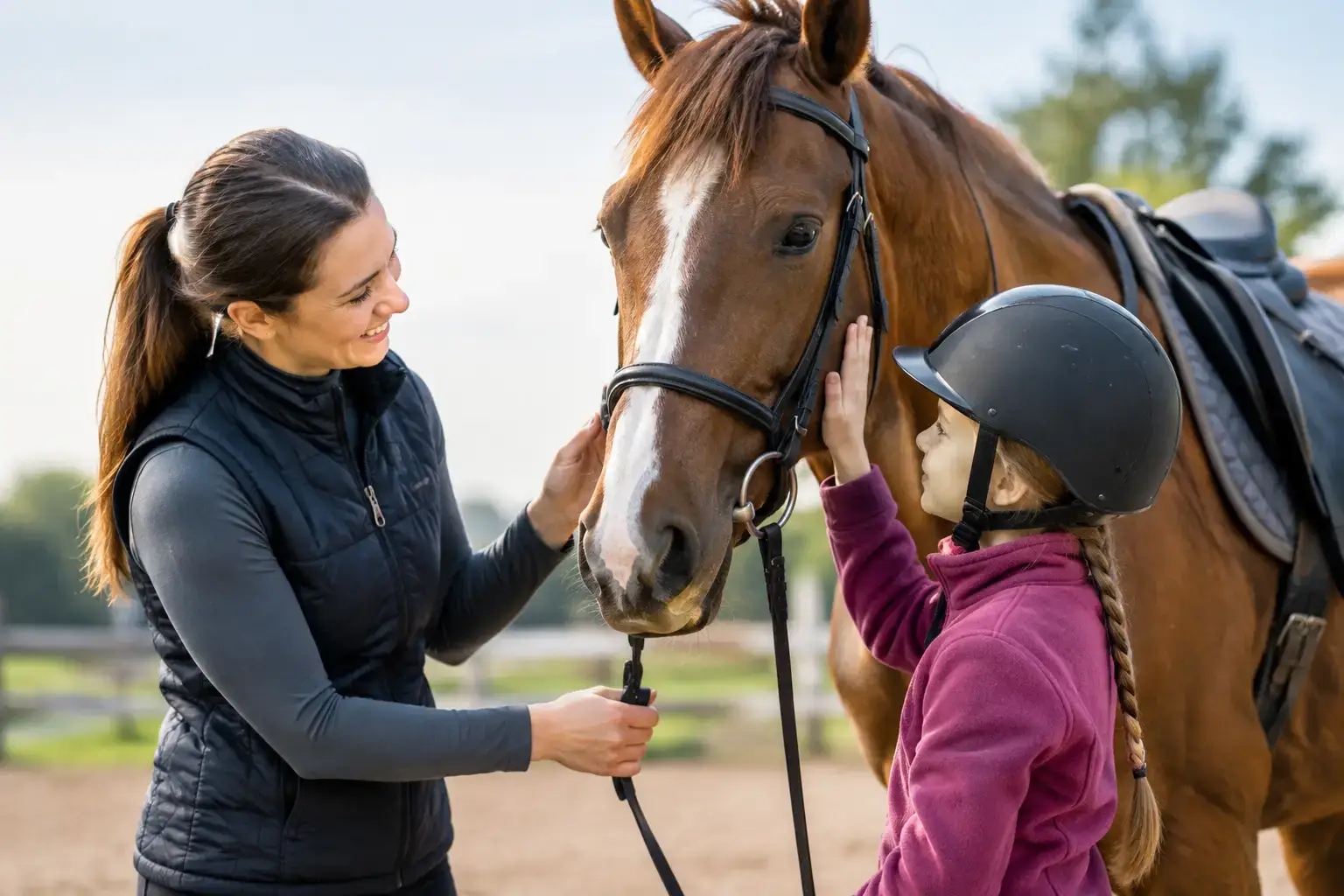
A child’s first lesson in horse safety often happens before they touch a horse. It happens when they learn to pause at the gate, look for an instructor, and notice what the horse is doing. That calm attention is the foundation of how to teach children horse safety: not through fear, but through clear habits that help young riders feel capable around animals much larger and stronger than they are.
Horses can be gentle, patient partners, but they are also prey animals with quick reactions and individual preferences. Children do not need to be frightened by that reality. They need adults who explain it clearly, demonstrate the right choices, and give them plenty of supervised practice. When safety becomes part of every interaction, it supports both rider confidence and thoughtful horsemanship.
Start With Respect, Not Fear
Children learn best when rules have a reason. Rather than saying, “Don’t stand there,” explain that a horse may not see directly behind itself and could kick if startled. Instead of simply insisting on quiet voices, help a child understand that sudden yelling or running can make a sensitive horse worry.
Use plain, consistent language. A young child can understand that horses have big bodies, sensitive ears, and feelings about the space around them. An older child can begin learning about body language, including a swishing tail, pinned ears, a tense neck, or a horse that is trying to move away.
The goal is not to teach children that every movement means danger. A tail may swish because of flies, and an alert horse is not necessarily an unsafe horse. Context matters. Still, teaching a child to notice changes in a horse’s expression and posture creates a valuable habit: observe first, then act with guidance.
Build a Routine Before Every Horse Interaction
Predictable routines reduce rushed decisions. Before approaching a horse, children should know where they may walk, when they need an adult, and what equipment belongs on their bodies.
A properly fitted, ASTM/SEI-certified riding helmet should be worn whenever a child mounts. Closed-toe boots with a defined heel help protect feet and prevent a foot from sliding through the stirrup. Long pants are practical for comfort and protection. Gloves can be helpful for handling lead ropes, especially for older children, but they do not replace correct handling.
Before a lesson, have the child check in with the instructor, secure loose items such as scarves or dangling jewelry, and put away snacks and toys. A horse should not be approached while a child is distracted, carrying something awkward, or trying to manage a phone. These expectations can feel small, but they set a professional standard from the beginning.
For younger riders, repeat the same sequence each time: helmet on, boots checked, instructor check-in, then approach the horse. Repetition turns safety from a list of warnings into a familiar part of riding day.
How to Teach Children Horse Safety on the Ground
Ground skills deserve as much attention as riding skills. Many preventable incidents happen during leading, grooming, tacking up, or moving through a busy barn aisle. Children should learn these basics beside a qualified adult and with a horse selected for their experience level.
Approach from the side, near the shoulder, where the horse can see and hear them. Encourage children to speak softly as they come near, particularly if the horse is turned away or resting. They should avoid walking directly behind a horse. If they must pass behind one under supervision, they should either stay well outside kicking range or move close enough to maintain a hand on the horse’s hindquarters while passing calmly. An instructor can show which choice is appropriate for the horse and setting.
Leading requires more than holding a rope. A child should walk beside the horse’s shoulder rather than ahead of it or directly in front of it. Teach them to hold the lead rope with two hands and keep a safe amount of slack without loops wrapped around fingers, wrists, or hands. A child should never coil or tie a lead rope around their body, and they should never attempt to pull against a frightened or determined horse.
When grooming, children need a designated safe space and a clear understanding that they do not crawl under a horse, sit on its feet, or duck beneath its neck or belly. They should ask before entering a stall, opening a gate, picking up a hoof, or bringing feed or treats near any horse. These are not chores to rush through. They are opportunities to practice awareness and patience.
Make Four Non-Negotiable Rules Easy to Remember
Children retain rules better when they are short, specific, and repeated in the same words. At Eden Hills Equine, safety instruction is woven into the learning process because dependable habits allow riders to progress with greater confidence.
- Wear a properly fitted riding helmet before mounting.
- Ask an instructor before approaching, leading, feeding, or mounting a horse.
- Walk calmly in the barn and keep a safe distance from horses.
- Keep hands, feet, and lead ropes clear of places where they can become trapped.
These rules should be reinforced without shaming a child for forgetting. A quiet correction, followed by a chance to do it correctly, teaches far more than a sharp reprimand. If a child repeatedly struggles to follow a rule, reduce the task to a simpler, closely supervised step until the habit is established.
Teach Safe Riding in Manageable Stages
A child’s first mounted safety lesson should cover stopping, steering, balanced posture, and what to do when they feel unsure. New riders should know that they may say “I need help” at any time. Giving children permission to speak up is an essential part of safe instruction.
Explain what to do if a horse stops to graze, turns its head, becomes distracted, or walks faster than expected. The correct response varies by the horse, the rider’s skill, and the situation, so this is where individualized instruction matters. A child should not be expected to solve a problem beyond their experience. A qualified instructor can step in early, adjust the exercise, or choose a quieter task.
Children also need to learn arena etiquette. They should keep space between horses, look where they are going, listen when an instructor calls directions, and avoid cutting across another rider’s path. As they advance into trot work, poles, jumping, or dressage patterns, these habits become even more important.
Do not mistake bravery for readiness. A child who wants to canter or jump may be enthusiastic, but enthusiasm alone is not a safety qualification. Progress should follow secure basics: a balanced position, reliable steering and stopping, an understanding of arena rules, and the emotional ability to listen when a plan changes.
Let Children Practice Responsibility With Supervision
Horse safety is not only about preventing accidents. It also teaches children to be observant, accountable, and considerate of another living being. Age-appropriate barn jobs can support those lessons. A young child might help place brushes back in a grooming tote, while an older rider may learn to check a saddle pad, organize tack, or assist with supervised grooming.
The key is matching responsibility to maturity. Children should not be left to handle a horse independently simply because they have taken several lessons. Confidence can grow quickly, while judgment takes longer. Even experienced young riders benefit from regular reminders, especially around unfamiliar horses, new environments, weather changes, or busy activity at the barn.
Parents can support the same message by asking specific questions after lessons: What did your horse’s ears tell you today? Where did you stand to groom? What did you do before you mounted? These questions invite children to reflect on their choices rather than treating safety as a lecture they must endure.
Respond Calmly When a Child Is Nervous
Some children become cautious after a horse spooks, steps away during grooming, or simply seems much bigger up close. Others may hide nerves by acting silly, rushing, or insisting they are ready for more. Both responses deserve calm, respectful attention.
Avoid forcing a child to continue an activity when they are overwhelmed. At the same time, avoid making every moment of uncertainty a reason to stop riding altogether. Often, the best next step is smaller: grooming with an instructor nearby, leading a steady horse for a few minutes, practicing a correct mount, or riding at the walk in a controlled setting.
Confidence grows when a child experiences success after following a safe process. The lesson is not that horses are perfectly predictable. It is that good preparation, clear instruction, and thoughtful decisions give riders a dependable way forward.
The most lasting horse safety lesson is simple: slow down enough to pay attention. When children learn to notice the horse, follow their instructor, and take pride in doing the small things correctly, they gain more than safer riding habits. They begin building the judgment and respect that make a true horseperson.