

Choosing a Jumping Trainer for Amateur Riders
Choosing a jumping trainer for amateur riders means finding personalized instruction, safe progress, and horsemanship that lasts beyond the arena daily.
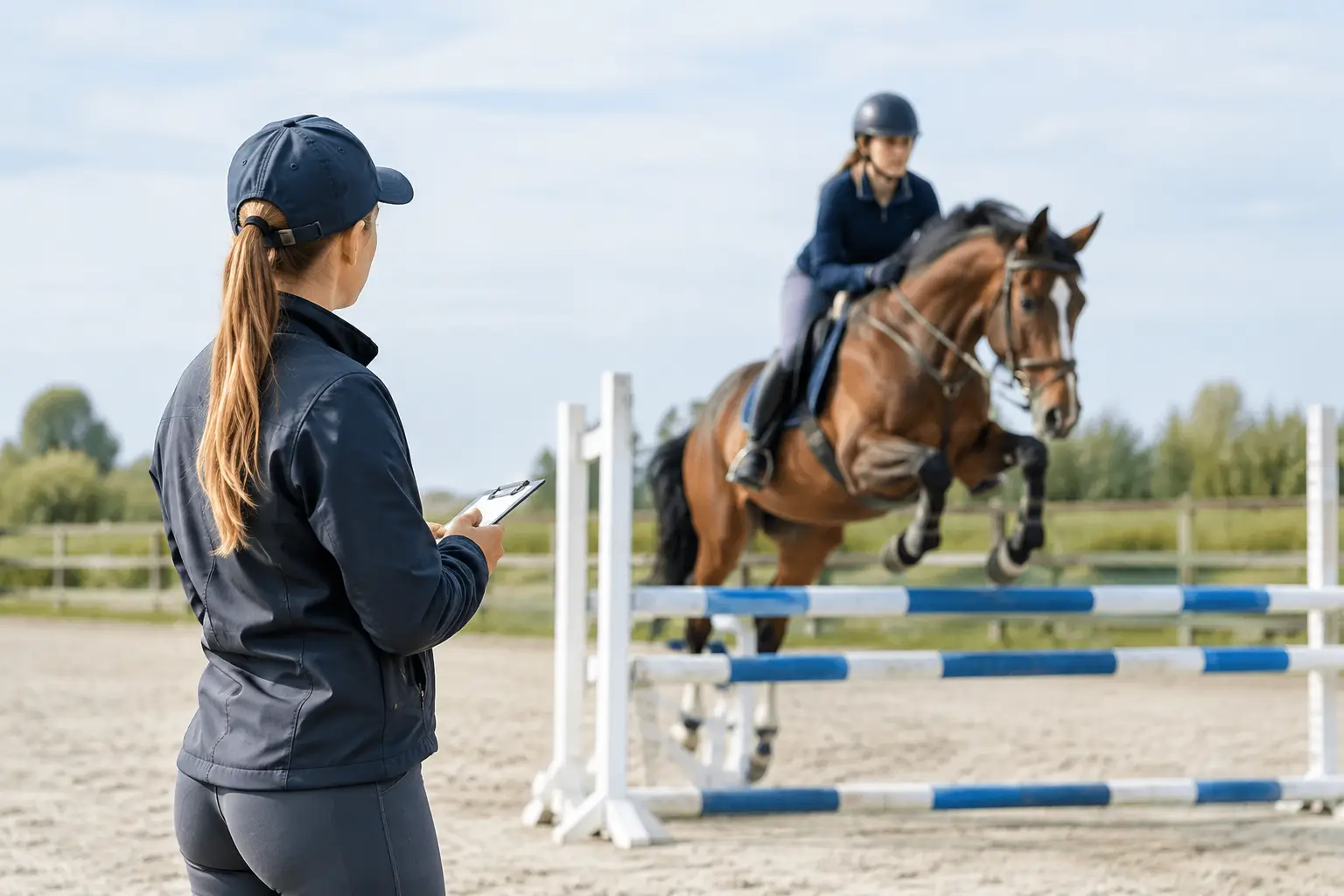
A course can look simple from the rail: a line of fences, a turn, a few strides between jumps. For an amateur rider, however, every fence asks several questions at once. Is the pace correct? Is the horse straight? Where should the rider look? When should they wait, support, or stay out of the way? A qualified jumping trainer for amateur riders helps turn those rapid-fire decisions into calm, repeatable habits.
The right instruction is not about pushing riders to jump bigger before they are ready. It is about building the position, judgment, communication, and confidence that allow a horse-and-rider pair to progress safely. Whether the rider is a child learning to canter poles or an adult returning to riding after years away, individualized coaching makes a meaningful difference.
What amateur riders need from jumping instruction
Amateur riders often balance riding with school, careers, family life, and other responsibilities. They may ride once or twice a week rather than every day, which means lessons need to be especially purposeful. A trainer should recognize that limited saddle time does not mean limited potential. It does mean that fundamentals deserve consistent attention.
Good jumping instruction begins well before the first fence. Riders need an independent, balanced position at the walk, trot, and canter. They need to understand how rhythm feels, how to ride a corner, how to maintain a line, and how their eyes and body influence the horse. A rider who can quietly organize the canter is better prepared for a small crossrail than a rider who has simply been pointed at a larger jump.
For parents, this foundation is reassuring. A structured program gives young riders clear skills to practice, realistic goals to pursue, and an understanding that responsible riding includes care on the ground as well as success in the arena. For adult amateurs, it creates the confidence to ask questions, slow down when needed, and develop without comparison to more experienced riders.
A jumping trainer for amateur riders should teach the why
Instructions such as “heels down” and “look up” are useful reminders, but they are not a complete lesson. Riders make faster progress when they understand why a correction matters.
For example, a trainer may ask a rider to keep their shoulders back during an approach. The reason is not simply to create a prettier position. A balanced upper body helps the rider follow the horse’s motion without getting ahead, pulling on the reins, or shifting weight onto the forehand. Likewise, riding a straight line after a jump teaches more than steering. It helps preserve balance, encourages clear communication, and prepares the pair for the next question on course.
This kind of education matters when riders eventually ride independently, lease a horse, attend a show, or face an unexpected moment in the saddle. They are less likely to rely on memorized commands and more likely to recognize what the horse is telling them.
Progress should be measured, not rushed
In jumping, height gets attention, but it is only one measure of advancement. A rider may be making significant progress when they can maintain a steady rhythm to a pole exercise, identify a correct takeoff spot, recover after an imperfect jump, or ride a course with a thoughtful plan.
A trainer should set goals that fit the individual rider and horse. One student may be ready to introduce simple combinations. Another may benefit more from strengthening their two-point position and practicing transitions. Neither path is lesser. Both are part of developing capable equestrians.
The horse also has a voice in the timeline. A green horse, a horse returning to work, or a horse with a more sensitive temperament may need a quieter, more gradual program. Thoughtful instruction protects the partnership instead of treating every horse-and-rider pair the same.
Look for individual attention and clear communication
Private jumping lessons offer an important advantage for amateur riders: the trainer can see the details. A slight shift in a rider’s weight, a drifting shoulder, a loss of impulsion, or a horse that becomes tense in a particular exercise can be addressed in the moment.
Focused attention also allows lessons to change when they need to. If a young rider arrives nervous after a difficult school day, the best lesson may emphasize confidence, flatwork, and a few successful efforts over poles. If an adult rider has made a breakthrough in their canter work, the trainer may build on that skill with a carefully designed grid or line. Flexible instruction is not a lack of structure. It is structure applied with good judgment.
Communication should extend beyond calling out directions from the center of the arena. Riders and parents benefit from knowing what is being taught, what the next milestone looks like, and how to support progress between lessons. Clear expectations around attire, punctuality, horse handling, and safety also create a more productive learning environment.
Safety is part of quality instruction
Jumping carries inherent risk, and a trustworthy trainer does not minimize that reality. Instead, they create systems that manage risk through preparation, appropriate equipment, arena awareness, and sound decision-making.
A rider should learn to check their tack, wear a properly fitted helmet, warm up thoughtfully, and understand basic arena etiquette. They should be taught how to approach a new exercise, what to do if a distance does not appear as expected, and how to regain control without panic. These skills support safety long after a particular lesson is over.
The lesson environment matters, too. Horses should be suitable for the rider’s experience level and prepared for the work being asked of them. Jumps, standards, footing, and riding spaces should be maintained with both horse welfare and rider safety in mind. At Eden Hills Equine, this attention to detail is part of creating a setting where riders can concentrate on learning with confidence.
Horsemanship makes better jumping riders
The strongest amateur jumpers are not only riders who can find a distance. They are horse people who notice when a horse is tired, understand the value of a proper warm-up and cool-down, and recognize that performance depends on daily care.
A complete program should include horsemanship alongside riding instruction. Grooming, leading, tacking up, cooling out, hoof care basics, feeding considerations, and respectful barn behavior all help riders become more responsible partners. Children gain independence and accountability. Adults gain a deeper understanding of the animal they are asking to perform.
This knowledge also improves the ride itself. A rider who understands how a horse moves and thinks is more likely to notice a change in behavior early, adjust their expectations fairly, and communicate with patience rather than frustration.
Questions worth asking before choosing a trainer
Choosing a trainer is a relationship decision as much as a technical one. Observe a lesson if possible. Notice whether the trainer gives specific, constructive feedback and whether riders appear supported rather than intimidated. Look at how horses are handled before and after they enter the arena.
It is also reasonable to ask how lessons are tailored for different experience levels, how the trainer approaches a rider who is nervous, and how progress is assessed. Families may want to ask about communication, scheduling, show goals, leasing opportunities, and the expectations for participation in horse care.
A good fit does not require a rider to be fearless or already polished. It requires a program where questions are welcomed, standards are clear, and growth is approached with patience. The right trainer will challenge a rider while preserving the confidence that makes them want to return to the saddle.
A well-ridden course begins long before the first jump. Give yourself or your child the time to learn the quiet skills behind it: balance, rhythm, responsibility, and trust in the horse beneath you.