

Private Horseback Lessons in Texas Hill Country
Private horseback lessons Texas Hill Country families value for safe, personalized English riding instruction, lasting confidence, and true horsemanship.
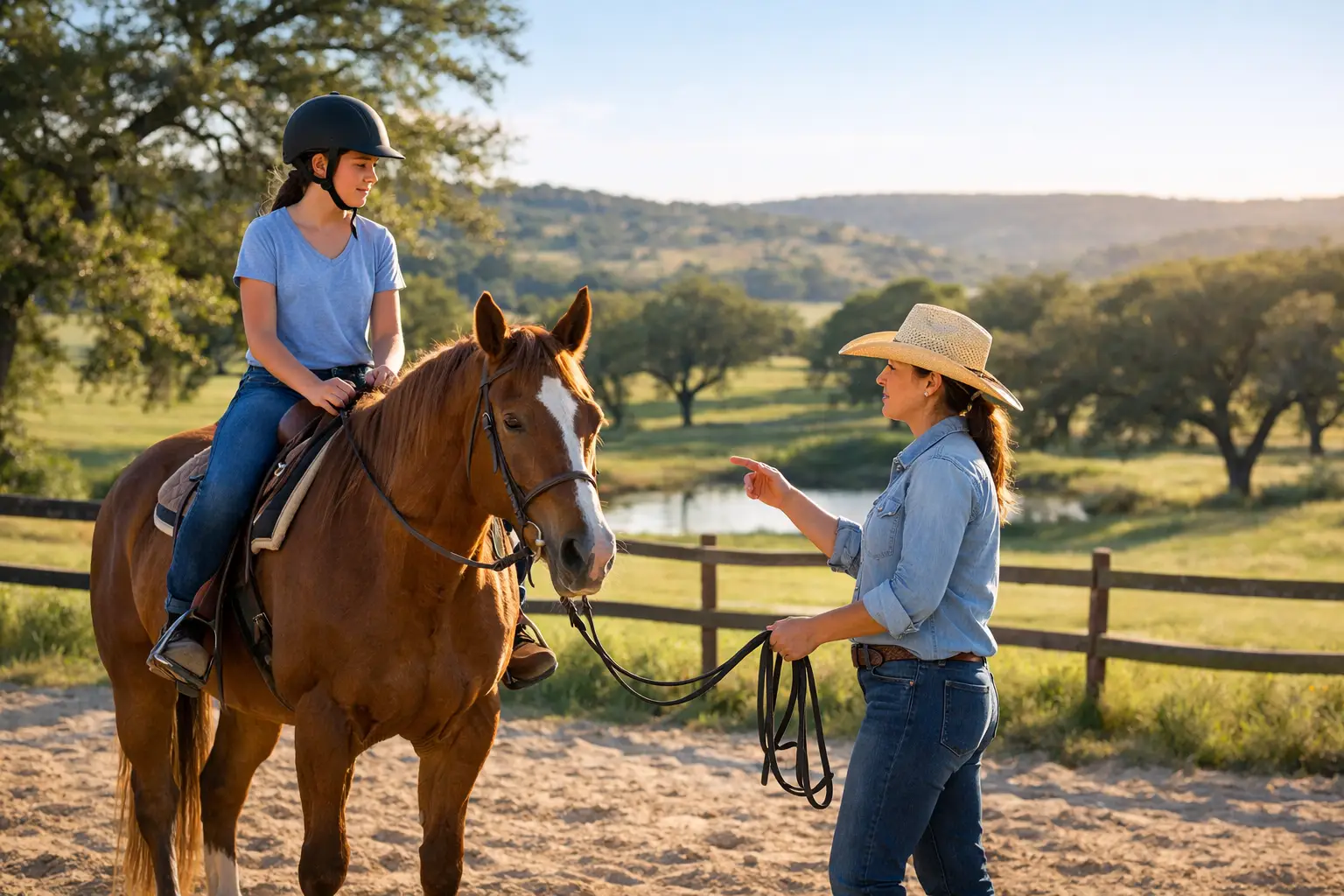
A child who is eager to trot for the first time, an adult returning to riding after years away, and a competitive rider refining a course all need something different from the saddle. That is why private horseback lessons Texas Hill Country families can rely on should begin with focused attention, clear instruction, and a program built around the individual rider rather than a crowded lesson schedule.
Private instruction gives riders room to learn at an appropriate pace. It also gives the instructor time to watch the details that shape safe, confident riding: position, balance, communication with the horse, decision-making, and care on the ground. For families seeking more than a brief recreational experience, that personal approach can make a meaningful difference.
Why Private Horseback Lessons Matter
In a group lesson, riders can benefit from watching one another and sharing a barn community. Group instruction has a place, especially for riders who are ready to practice independently in a structured setting. But it can be difficult for an instructor to address every rider's needs equally when several horse-and-rider pairs are working at once.
Private lessons create a different learning environment. The instructor can adjust the lesson in real time, whether a beginner needs more time establishing balance at the walk or an experienced rider needs precise feedback on a dressage movement or jumping line. The horse's needs are considered, too. A good lesson is not simply about asking more of the rider. It is about creating clearer, kinder communication between horse and rider.
For young riders, individual coaching can be especially valuable. Children often develop confidence at different rates. One may be ready to learn steering and posting while another needs reassurance mounting, stopping, and sitting quietly in the saddle. A private setting allows progress without comparison or pressure.
What a Quality Private Lesson Should Include
A strong private lesson is more than time spent riding in an arena. It should provide a structured education that builds skills from one lesson to the next. Riders should understand what they are practicing, why it matters, and how it connects to their long-term goals.
Safety Begins Before the Rider Mounts
Safety is not a single rule delivered at the start of a lesson. It is a system of good habits. Riders should learn how to approach a horse thoughtfully, lead safely, adjust tack correctly, and recognize when a horse may need extra space or a quieter approach.
For parents, this matters because true horsemanship develops responsibility alongside riding ability. A child who understands how to groom, pick feet, check a girth, and move safely around horses gains knowledge that carries into every future barn experience. Helmets, suitable footwear, attentive supervision, and well-maintained riding spaces are equally essential.
Clear Goals for Each Rider
The best private horseback lessons in Texas Hill Country are shaped by the rider's starting point and destination. A first-time rider may focus on comfort around horses, independent steering, and balanced transitions. An intermediate rider may be working toward a more consistent leg position, accurate circles, or confident canter work. Advanced riders may need targeted support in jumping, dressage, show preparation, or the development of a young horse.
Goals should be specific enough to guide instruction but flexible enough to respect the reality of horses and learning. Some days, a rider makes a major breakthrough. On others, the most productive work may be a quieter lesson focused on rhythm, patience, or returning to a foundational skill. Consistency matters more than rushing.
Instruction That Teaches the Why
Riders make faster, more lasting progress when they understand the reason behind a correction. Rather than only hearing, “heels down,” a rider benefits from learning how a stable lower leg supports balance and gives clearer aids. Instead of simply being told to look up, they should understand how their eye line affects posture, direction, and confidence.
This kind of instruction also helps riders become more thoughtful partners for their horses. They learn to notice rhythm, tension, responsiveness, and relaxation. Over time, riding becomes less about memorizing commands and more about developing feel.
Choosing the Right Program for Your Family
The right lesson program should feel organized, welcoming, and appropriately challenging. Before committing, consider what kind of experience your rider needs now and what you hope they will gain over time.
For a young beginner, look for an environment where foundational skills are taken seriously. Early lessons should not be rushed toward jumping or faster gaits before the rider has secure balance, effective steering, and an understanding of safety. The excitement of riding is important, but confidence lasts longer when it is built on real ability.
For teens and adults with previous experience, individualized instruction can help identify habits that may have gone unnoticed in larger programs. Perhaps a rider wants to return after time away, prepare for a lease, or build the skills needed to pursue dressage or jumping more seriously. A thoughtful trainer can assess where the rider is today and create a plan that feels encouraging without being easy.
Horse owners also benefit from a private lesson setting. Lessons on an owner's own horse can support more consistent communication and help address issues that arise in everyday riding. When instruction, training, and horse care are viewed as connected pieces, both horse and rider receive more informed support.
The Value of a Boutique Barn Experience
A smaller, attentive equestrian program offers an advantage that is easy to feel from the beginning: riders are known. Their goals, confidence level, learning style, and relationship with their horse are not lost in a busy rotation.
At Eden Hills Equine, private instruction is designed to support individualized rider development in a professional, family-oriented setting. Riders can build a foundation in horsemanship while working toward English riding goals in jumping or dressage. The emphasis remains on thoughtful progress, safe practices, and the kind of personal attention that helps riders stay engaged.
A boutique environment can also be reassuring for parents. They want to know who is teaching their child, how horses are being managed, and whether the facility is organized for safety. Clean, functional spaces and accessible trainer guidance support confidence for the entire family, not only the rider.
How Often Should Riders Take Private Lessons?
The answer depends on the rider's goals, schedule, budget, and access to horses outside of lessons. For many beginners, one consistent private lesson each week provides enough repetition to build familiarity while giving them time to absorb what they have learned. Weekly attendance is usually more productive than occasional lessons because riding skills depend on physical coordination and steady practice.
Riders pursuing faster advancement may benefit from additional rides, a structured training program, camps, homeschool classes, or a horse lease when appropriate. Leasing can offer valuable practice time and help riders deepen their understanding of routine horse care and responsibility. It is not necessary for every rider, especially at the beginning, but it can be a natural next step for committed students.
More lessons do not automatically mean better results. A rider who feels overwhelmed, fatigued, or anxious may need a pace that supports confidence. The right program balances challenge with readiness and recognizes that every horse-and-rider partnership develops differently.
Signs of Meaningful Progress
Progress in riding is not measured only by moving from walk to trot or from trot to canter. Those milestones matter, but the quieter changes are often just as valuable. A beginner who can calmly catch and groom a horse, remember arena etiquette, or recover after a mistake is building skills that will serve them for years.
For more experienced riders, progress may look like softer transitions, improved rhythm, more accurate courses, or a stronger ability to adjust without becoming frustrated. Parents may notice their child becoming more patient, responsible, and willing to work through challenges. Those outcomes are part of horsemanship, too.
The goal of private instruction is not to make every lesson feel effortless. It is to give riders the guidance, structure, and encouragement to meet each next challenge with better skills than they had before. When a rider feels safe enough to ask questions, patient enough to practice the basics, and proud of steady improvement, they are building a relationship with horses that can last a lifetime.