

Private Riding Lessons for Beginners
Private riding lessons for beginners build confidence, safety, and real skills with one-on-one coaching tailored to each rider's pace and goals.
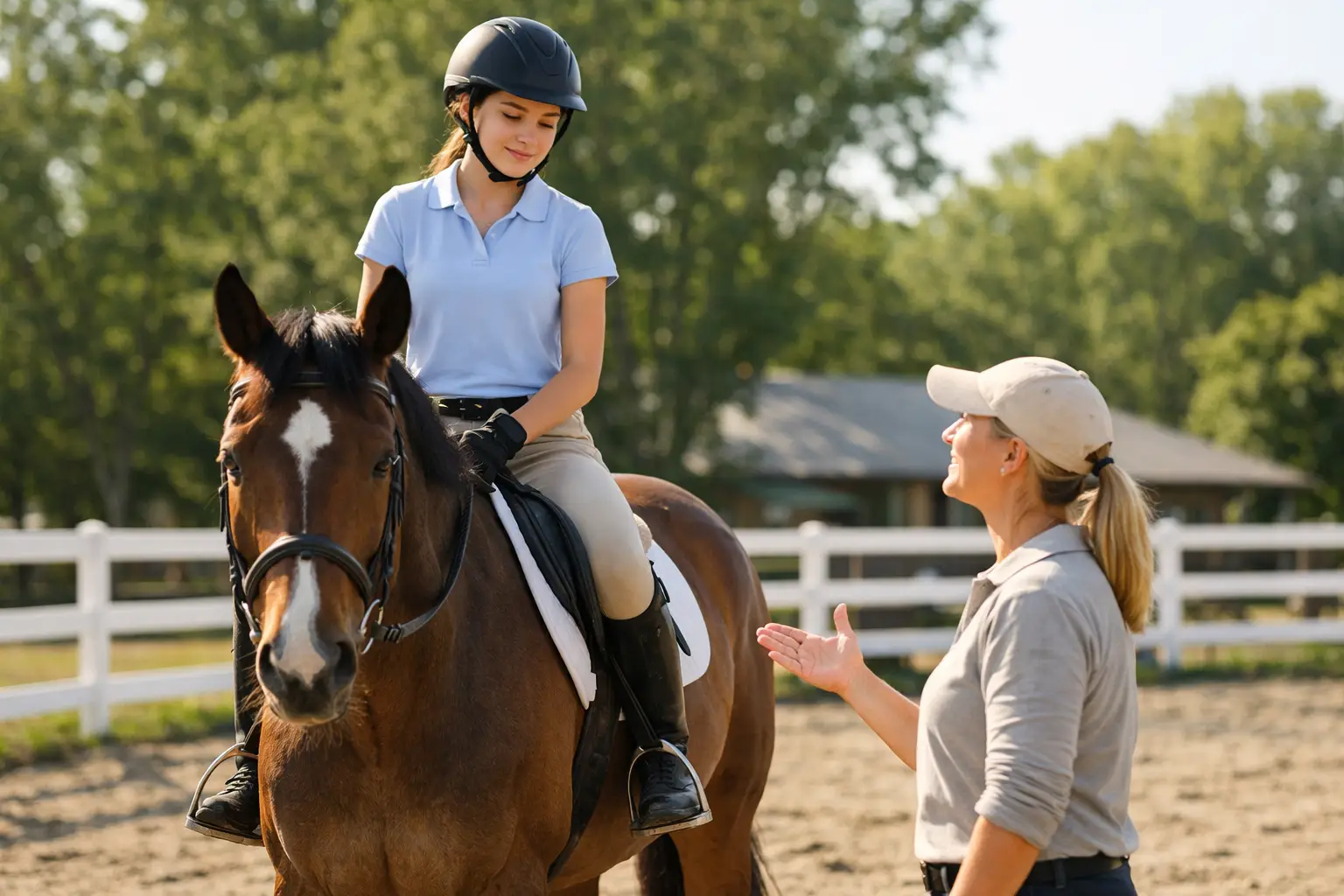
The first few minutes around a horse tend to answer a big question quickly: does a new rider feel curious, or overwhelmed? For many beginners, it is both. That is exactly why private riding lessons for beginners can make such a meaningful difference. Instead of trying to keep up with a group, a new rider gets calm, focused instruction that matches their age, confidence level, and pace of learning.
A beginner is not just learning how to sit in the saddle. They are learning how to approach a horse, how to listen, how to follow directions, and how to stay safe while doing something that is exciting and unfamiliar. In a one-on-one setting, those early lessons tend to feel clearer and more manageable. That matters for children, teens, and adults alike.
Why private riding lessons for beginners work so well
Beginning riders usually need more than a quick explanation and a lap around the arena. They need repetition, reassurance, and room to ask questions without feeling behind. Private riding lessons for beginners create that space.
With individual instruction, the trainer can adjust every part of the lesson in real time. If a rider is nervous about mounting, more time can be spent at the block. If steering clicks quickly but balance does not, the focus can shift. If a child learns best through simple, step-by-step coaching, the lesson can stay structured and predictable. If an adult wants more explanation about horse behavior and tack, that can be built in naturally.
This personalized approach often leads to better habits from the start. Beginners are less likely to rush through basics or copy mistakes from riders around them. They learn where their hands belong, how their leg should rest, how to breathe, and how to respond when the horse moves off. Those details may seem small, but they shape confidence and safety later on.
There is also an emotional benefit. New riders can feel self-conscious. A private lesson removes the pressure of performing in front of others and replaces it with direct coaching in a supportive environment. For many families, that alone makes the experience more positive and more sustainable.
What beginners actually learn in a private lesson
Parents sometimes picture a riding lesson as mostly time in the saddle, but quality instruction starts before the horse even moves. True beginner education includes horsemanship, not just riding.
In early lessons, a rider may learn how to approach a horse safely, where to stand, how to lead correctly, and how to understand basic horse body language. They may be introduced to grooming tools, simple tack terminology, and the reasons routines matter. These are not extra details. They help beginners become thoughtful, capable riders who respect the animal they are working with.
Once mounted, the focus usually stays on foundation skills. That often includes posture, balance, rein contact, steering, stopping, and learning to walk with control. As confidence builds, riders begin to develop rhythm at the trot and a better feel for how their body affects the horse. Progress may look gradual from the outside, but each correct repetition builds a safer and more independent rider.
Some beginners move quickly. Others need more time before each new skill feels secure. Neither path is wrong. Good instruction recognizes the difference between pushing progress and supporting it.
Safety is not a side note
For new riders, safety should never feel like a speech given at the beginning and forgotten later. It should be part of every lesson.
That includes proper horse selection, a well-managed lesson environment, clear communication, and instruction that stays appropriate for the rider's level. It also includes teaching beginners how to handle normal nerves. A rider who understands what to expect is usually calmer and more responsive than one who feels surprised by every movement.
In a private setting, safety concerns are easier to catch early. A trainer can see when a rider is gripping, leaning, losing focus, or getting mentally tired. Adjustments can be made before frustration turns into fear. For children especially, that close attention helps build trust.
What to expect from private riding lessons for beginners
A strong beginner program should feel organized, not improvised. That does not mean every lesson is identical. It means there is a thoughtful progression behind the scenes.
Most private lessons begin with a brief check-in. The trainer may ask how the rider felt after the last lesson, whether anything feels confusing, or what the plan is for the day. From there, the lesson may include grooming or tacking at an age-appropriate level, mounted work, and a few minutes of review at the end.
That review matters. It helps riders remember what they learned and gives parents clearer insight into progress. Instead of hearing only, "It went well," they can understand whether the rider worked on steering, transitions, balance, or horse handling.
Private instruction also allows for measurable development. Because the trainer sees the rider one-on-one, patterns become obvious. Maybe a student consistently tips forward at the trot. Maybe they are ready for more responsibility on the ground. Maybe they need another month of basics before adding complexity. Personalized coaching makes those decisions more accurate.
The right pace is different for every rider
One of the biggest misconceptions about beginner riding is that faster progress is always better. In reality, rushed progress often creates shaky basics.
A child who looks brave one week may need a quieter lesson the next. An adult beginner may be physically capable but need more time to develop confidence. A naturally athletic rider may pick up posting quickly but still need work on patience and horse awareness. Progress in riding is rarely perfectly linear.
That is one reason private lessons are so valuable. They allow the lesson plan to fit the rider instead of asking the rider to fit a preset group pace. Over time, that usually leads to stronger fundamentals and a better overall experience.
How parents and adult beginners can choose wisely
If you are considering lessons for your child or for yourself, it helps to look beyond the idea of simply getting time on a horse. The quality of the instruction matters just as much as the experience itself.
Look for a program that treats beginners with seriousness and care. That means a clean, well-managed facility, horses that are suitable for teaching, and instructors who can explain clearly without overwhelming the rider. It also means lessons that build horsemanship alongside riding skills.
Ask how beginners are introduced to horses, what safety practices are in place, and how progress is evaluated. Notice whether the environment feels calm and attentive. Boutique programs often appeal to families for a reason: lower-volume instruction can create more consistency, more access to the trainer, and more thoughtful rider development.
For many students, especially those who hope to ride long term, the early foundation shapes everything that comes after. A beginner who learns to be balanced, respectful, and attentive will be in a much better position to explore jumping, dressage, leasing, or ownership in the future.
When private lessons are the best fit
Not every rider needs private instruction forever. Some eventually enjoy a small group setting and benefit from riding with peers. But for a true beginner, private lessons are often the clearest starting point.
They are especially helpful for young children, nervous riders, adult beginners returning after many years, and students who want a more tailored path. They also make sense for families who value close communication and a more polished, individualized experience from the start.
At a boutique program such as Eden Hills Equine in Wimberley, that one-on-one format supports more than skill-building. It creates a setting where riders are known, horses are carefully managed, and each lesson can build on the last with intention. For beginners, that kind of consistency can turn a tentative first ride into a lasting sense of confidence.
Learning to ride should feel challenging in the right ways - not chaotic, rushed, or confusing. When beginners receive patient instruction, appropriate horses, and room to grow at their own pace, they do more than learn the basics. They begin to develop judgment, discipline, and genuine connection with the horse, which is where good riding really starts.