

Private Riding Lessons vs Camps: Which Fits?
Private riding lessons vs camps: compare safety, progress, social learning, and schedules to choose the right horse program for your rider's goals today.
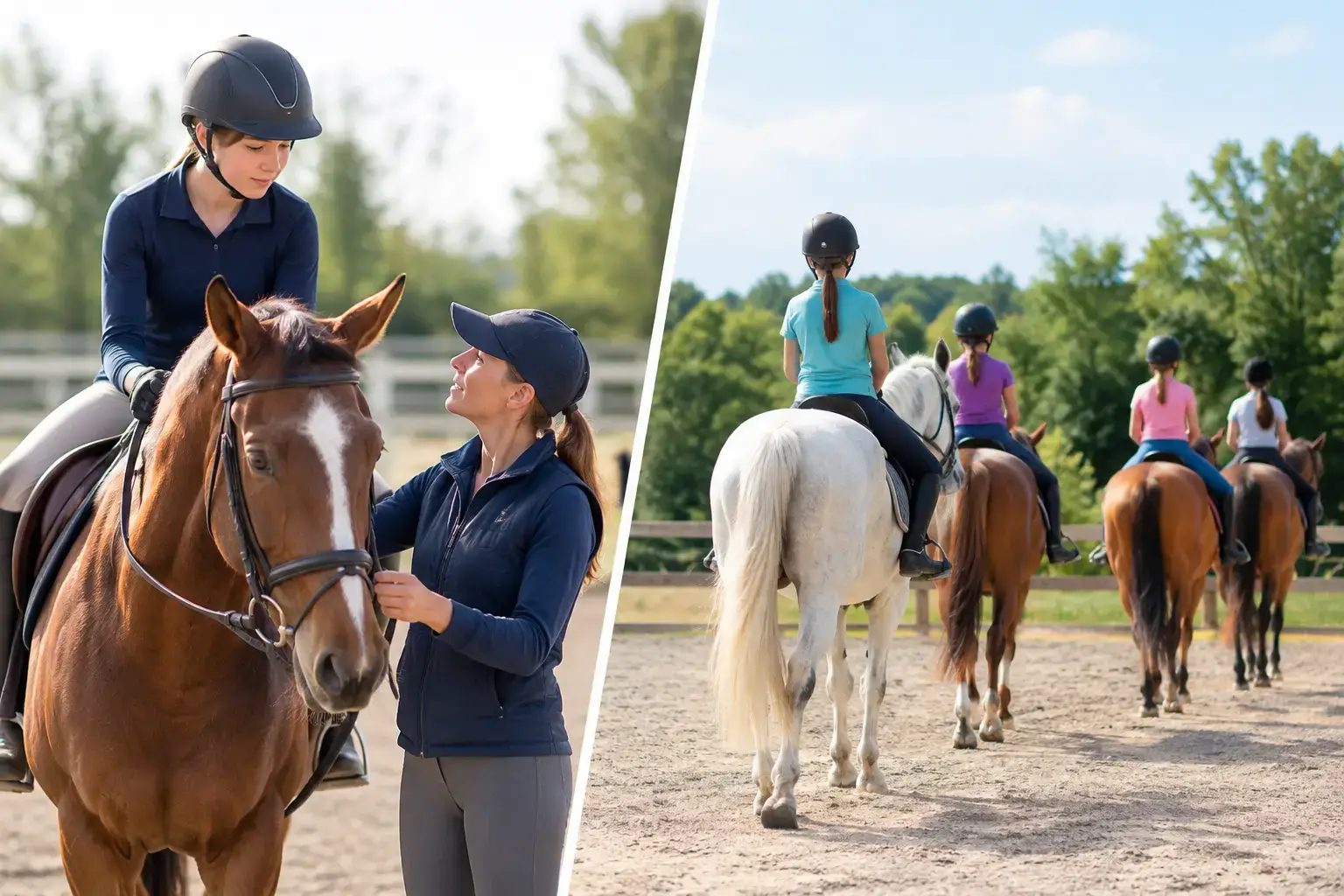
A child comes home from a horse camp glowing after a week of pony games, grooming lessons, and new friends. Then, a few months later, they ask to learn how to steer confidently, post the trot, or jump a small course. That is when many families begin weighing private riding lessons vs camps. Both can be valuable, but they are designed to accomplish different things.
The best choice depends on your rider's experience, goals, temperament, and schedule. For some children, camp is the perfect introduction to the barn. For others, especially riders who want steady skill development and individualized guidance, private instruction offers a clearer path forward.
Private Riding Lessons vs Camps: The Core Difference
Private lessons are built around progression. The instructor can evaluate one rider's balance, confidence, position, understanding of the horse, and current skill level, then tailor the lesson accordingly. A new rider may spend time learning safe leading, mounting, stopping, and steering. An experienced rider may focus on effective aids, flatwork, jumping exercises, or dressage fundamentals.
Camps are typically designed as an immersive group experience. They often include mounted time alongside grooming, horse care, crafts, games, educational activities, and opportunities to build friendships. That broader format can make camp exciting and memorable, particularly for children who are curious about horses but have not yet committed to regular riding.
Neither option is automatically better. They simply serve different purposes. Camp offers exposure and enthusiasm; private lessons provide consistency, precision, and a personal training plan.
When a Riding Camp Makes Sense
Camp can be a wonderful starting point for a horse-loving child. It gives riders time to see what barn life involves beyond sitting in the saddle. They may learn how to approach a horse safely, use grooming tools, identify basic tack, clean up after themselves, and participate as part of a group.
For families who are unsure whether their child is ready for ongoing lessons, a camp session can provide useful insight. Does the rider listen carefully around horses? Are they comfortable being outdoors in Texas weather? Do they enjoy the responsibility that comes with horse care, not just the idea of riding? A well-structured camp can help answer those questions.
The social experience matters, too. Some children gain confidence when they learn beside peers who share their interest. Camps can create positive early memories and help riders understand that horses require patience, kindness, and attention.
Still, a camp's schedule limits how individualized the riding portion can be. In a group setting, instructors must manage varying ages, confidence levels, and experience. Safety requires clear structure, which means the lesson content may need to move at a pace appropriate for the group rather than one specific child.
Why Private Lessons Build Skills More Efficiently
In a private lesson, the rider has the instructor's focused attention from start to finish. Small habits can be spotted early: gripping with the knee, looking down, pulling on the reins for balance, leaning ahead of a fence, or losing rhythm at the trot. Correcting those details promptly helps riders develop safer, more effective habits before they become difficult to change.
This attention is especially valuable for beginners. Horses respond to body position, balance, and consistency, but those concepts take time to feel. A private instructor can explain one idea, observe the rider try it, adjust the exercise, and explain it another way if needed. There is room for questions, repetition, and calm encouragement.
For intermediate and advanced riders, private lessons allow training to become more specific. One rider may need to improve straightness approaching jumps. Another may be working on transitions, connection, or confidence after time away from riding. Individual instruction makes it possible to address the actual issue rather than follow a general group exercise.
At Eden Hills Equine, private instruction is centered on this kind of intentional development. Riders are not expected to fit a one-size-fits-all program. Their instruction can evolve as their knowledge, confidence, and goals grow.
Safety benefits of individualized instruction
Horseback riding is rewarding, but it requires attentiveness and sound decision-making. Riders need to learn how to read a horse's body language, use tack correctly, maintain safe space around horses, and respond calmly when something feels unfamiliar.
A private lesson gives the instructor more opportunity to match the horse and lesson plan to the rider. A thoughtful match supports confidence without asking a beginner to manage more than they are ready for. It also allows the instructor to pause immediately when a rider needs a clearer explanation or a reset.
This does not mean camps cannot be safe. A quality camp should have careful supervision, suitable horses, clear rules, and structured activities. The distinction is that private lessons provide a deeper level of real-time coaching for one rider's decisions and physical skills.
Consider Your Rider's Goal, Not Just Their Excitement
Many young riders want both: the fun of camp and the pride that comes from becoming capable in the saddle. Families do not always have to choose one forever. Camp may introduce the horse world, while recurring private lessons create the foundation for lasting progress.
If your child says, "I want to ride horses," it helps to ask a few follow-up questions. Do they want a fun school-break activity, or are they asking to learn a new sport? Are they excited about caring for horses, competing someday, or simply spending time at the barn? Do they become discouraged when a new skill takes several tries, or do they enjoy working toward a goal?
A rider who wants regular progress usually benefits from a predictable lesson schedule. Riding once every week or two allows skills to build on one another. The rider remembers their instructor's feedback, develops trust with their horse, and begins to recognize their own improvement. A concentrated camp week can be engaging, but it may not provide the same long-term repetition.
The Schedule and Budget Question
Camps and private lessons also fit family life differently. Camp is often a defined commitment during summer, school breaks, or selected holidays. It can be convenient for parents seeking a meaningful daytime activity and may be an appealing way to try horses without an ongoing schedule.
Private lessons require more consistency, but that consistency is part of their value. Regular instruction helps children practice commitment, arrive prepared, care for equipment, and work patiently toward skills that do not happen overnight. Those habits often carry into school, sports, and other responsibilities.
Budget should be considered honestly as well. A camp fee generally covers a set block of time and multiple activities. Private lesson pricing reflects individualized instructor time, suitable lesson horses, facility upkeep, and the detailed attention each rider receives. Rather than comparing only the cost per hour, consider the intended outcome. One option may be better for an introduction; the other may deliver more measurable growth for a rider with continuing goals.
Choosing the Right Next Step
For a first-time rider, camp can be an inviting, low-pressure way to experience horses. Look for a program that treats safety and horsemanship as central parts of the day, not as brief instructions before riding. Children should learn that horses are partners deserving calm, respectful care.
For a rider who is ready to develop real competence, private lessons are often the stronger choice. The rider receives guidance at the pace they need, and parents can see a more defined path from basic control to confident, thoughtful riding. This is particularly helpful for riders interested in English disciplines such as jumping or dressage, where balance and correct fundamentals shape everything that comes later.
The most meaningful question is not whether camp or private lessons sounds more exciting this season. It is what will help your rider feel safe, capable, and eager to keep learning. When a child is given the right level of challenge, patient instruction, and time to build trust around horses, enthusiasm has room to become genuine horsemanship.