

Questions to Ask a Riding Instructor First
Use these questions to ask a riding instructor before your first lesson, so you can choose a safe, supportive program built for real progress and steady growth.
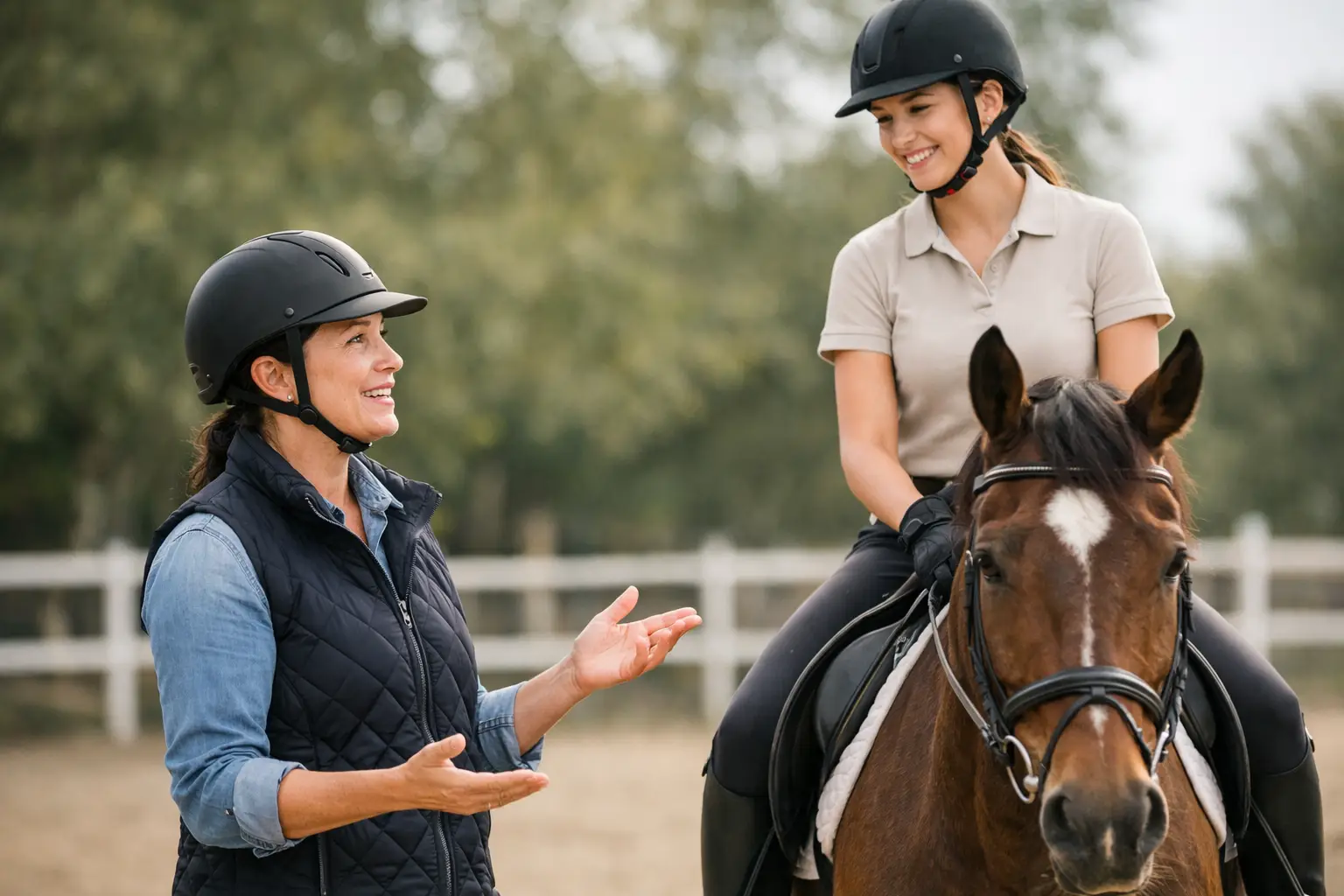
A riding lesson should feel purposeful from the moment you arrive. For a child taking their first independent steps around a pony, an adult returning after years away, or an experienced rider refining a jumping or dressage skill, the right instructor sets the tone for confidence, safety, and progress. Knowing the right questions to ask a riding instructor can help you look beyond a friendly first impression and choose a program that genuinely supports your goals.
A good instructor will welcome thoughtful questions. In fact, clear communication at the beginning often leads to a better partnership between rider, family, trainer, and horse.
Questions to Ask a Riding Instructor Before You Begin
What is your teaching background and area of focus?
Ask about the instructor's riding and teaching experience, as well as the disciplines they know best. English riding covers a wide range of goals, from foundational flatwork and horse care to dressage, jumping, and competition preparation. A trainer does not need to have the same long-term goals you do on day one, but they should be equipped to guide the path you hope to take.
For parents, it is reasonable to ask how long the instructor has taught children and how they adapt lessons for different ages and learning styles. Young riders need clear boundaries, engaging instruction, and patient repetition. Adult amateurs may need a different pace, especially if they are rebuilding confidence or balancing lessons with a busy schedule.
Experience matters, but so does the ability to explain. The most accomplished rider is not automatically the best instructor for every student. Look for someone who can break a skill into understandable steps and celebrate progress without overlooking the details that keep riders safe.
How do you evaluate a new rider?
Every rider arrives with a different history. One beginner may be comfortable around horses but nervous in the saddle. Another may have taken lessons elsewhere and be ready to work on position, steering, or canter transitions. An experienced rider may be changing disciplines or returning after an injury.
Ask how the instructor assesses a rider's current skills and develops a plan from there. A thoughtful program does not simply place every new student into the same lesson sequence. It considers riding ability, confidence, physical coordination, goals, and understanding of horsemanship.
At Eden Hills Equine, private instruction allows the trainer to observe the individual rider closely and adjust coaching in real time. That focused attention can be especially valuable for riders who benefit from a quieter learning environment, as well as those working toward specific performance goals.
Will lessons be private, semi-private, or group-based?
The lesson format affects how much direct instruction a rider receives. Private lessons give the trainer the opportunity to focus entirely on one horse-and-rider pair. This can be ideal for beginners learning core skills, riders addressing a particular challenge, or competitors pursuing a customized program.
Semi-private and group lessons can also be valuable when riders are well matched in ability and objectives. They can build camaraderie and teach riders how to work thoughtfully around others in an arena. The trade-off is that the instructor's attention is shared.
Ask how riders are grouped, how often lesson formats change, and whether private lessons are available when a rider needs more focused support. There is no single right answer. The best format depends on the rider's stage of development and the quality of instruction within that format.
How do you match riders with lesson horses?
A lesson horse is a teacher, not simply a means of transportation. The right horse helps a rider develop feel, balance, responsibility, and confidence. Ask how horses are selected for riders and whether the instructor changes mounts as skills progress.
A suitable match considers more than size. Temperament, training level, movement, responsiveness, and the rider's confidence all matter. A very quiet horse may help a nervous beginner feel secure, while an intermediate rider may need a more responsive partner to practice accurate transitions, bends, and patterns.
It is also appropriate to ask about the horses' workload and care. Well-managed lesson horses need adequate rest, soundness monitoring, proper tack, turnout, and attentive daily care. A quality lesson program respects what these horses give to riders every day.
What safety standards do you expect?
Safety should be discussed plainly, not treated as an afterthought. Ask whether certified riding helmets are required, what footwear is appropriate, and how the instructor handles mounting, dismounting, and arena etiquette. Families should also understand what supervision is provided before and after lessons, particularly for younger children.
Ask how the facility manages weather, emergencies, and unexpected horse behavior. Horses are living animals, and even the most dependable school horse can have an off day. A prepared instructor adjusts the plan when needed, whether that means changing horses, modifying an exercise, or moving from riding to unmounted horsemanship work.
A safety-first environment should still feel encouraging. The goal is not to make riders fearful of horses. It is to teach them how to read situations, make good choices, and build confidence through knowledge and preparation.
Questions to Ask About Progress and Goals
What will my rider learn beyond riding skills?
Strong equestrians understand more than how to steer, trot, or jump. Ask how the program teaches grooming, tacking up, horse behavior, stable manners, basic anatomy, and care routines. These skills help riders become more capable around horses and develop the responsibility that families often hope riding will encourage.
For children, horsemanship lessons can be just as meaningful as time in the saddle. Learning to approach a horse respectfully, check tack carefully, and care for equipment reinforces patience and attention to detail. For adult riders and horse owners, this knowledge builds independence and makes communication with trainers, veterinarians, and farriers more informed.
How do you measure progress?
Progress in riding is not always a straight line. A rider may master posting the trot one week and struggle with it the next on a different horse. That does not mean the lesson failed. Horses respond to their environment, riders have good and difficult days, and real learning requires repetition.
Still, a good instructor should be able to describe what progress looks like. Ask how they set goals and how they communicate milestones. For a beginner, that may mean independent steering, correct position, and safe horse handling. For a more advanced rider, it may involve improved flatwork, stronger course accuracy, better connection, or competition readiness.
Clear goals give riders something meaningful to work toward. They also help parents understand why a lesson may focus on small details that are not immediately visible from outside the arena.
How often should we take lessons?
Lesson frequency depends on goals, budget, schedule, and the rider's experience. Weekly lessons are a consistent starting point for many students, particularly beginners who are developing balance and muscle memory. Riders pursuing more ambitious goals may benefit from multiple rides each week, a lease arrangement, or a structured monthly training program.
Ask the instructor what they recommend and why. Be wary of promises that fast results are guaranteed. Riding is a partnership with a horse, and lasting confidence is built through steady practice rather than rushing from one milestone to the next.
How do you communicate with parents and riders?
Communication is especially important when a child is the student and a parent is coordinating schedules, payments, clothing, and transportation. Ask how the instructor shares updates, handles cancellations, and discusses concerns. It is helpful to know whether parents may observe lessons and when it is best to ask questions without interrupting instruction.
For riders of every age, feedback should be honest and constructive. The right instructor can name what needs work while making the rider feel capable of improving it. That balance keeps standards high without turning a challenging lesson into a discouraging experience.
What to Notice During a Visit
Your questions matter, but your observations matter too. Notice whether horses appear comfortable and appropriately cared for, whether the facility is organized, and whether riders receive clear direction. Watch how the instructor speaks to both horses and people. Calm, respectful communication is often a sign of thoughtful horsemanship.
Pay attention to the atmosphere. A boutique program should feel attentive rather than hurried. Riders should have room to learn, ask questions, and make mistakes safely. At the same time, a welcoming barn can still have expectations for punctuality, proper attire, horse care, and respectful behavior.
The best riding instructor is not simply someone who can help a rider achieve a particular skill. They are someone who sees the rider in front of them, protects the horse's well-being, and creates a path forward that feels challenging, safe, and worthwhile. Ask thoughtful questions, trust what you observe, and choose the environment where your rider can grow with confidence.